Berks County Community Foundation, in partnership with Northern Berks Connects (formerly the Hamburg Area School District Initiative), invites proposals from schools, and nonprofit entities to support a one-year pilot program.
The selected organization will provide and oversee staff responsible for developing and maintaining a localized resource guide for the Hamburg area and its surrounding municipalities, coordinating community networking events, and supporting collaboration among community leaders. This initiative seeks to improve access to essential resources for basic human needs – including food & water, shelter & housing, health & medical resources, transportation services and safety & security issues.
Applicants are expected to demonstrate the capacity to carry out the following activities:
Coordinate, plan, and host two to three (2–3) Northern Berks Connects networking events annually.
Collaborate with the Northern Berks Connects Steering Committee to respond to identified community needs.
Create and maintain a Northern Berks Connects website and localized digital and printed resource guide.
Regularly update and maintain the web-based and printable resource guide.
Distribute resource information to participants in Northern Berks Connects.
Explore strategies to support the sustainability of the initiative over the next two to three years.
Proposals are due by May 18th.Visit the foundation’s Grant Application Portal or click below to submit your organization’s proposal now.
Our 2025 Annual Report: A Year of Connection is here
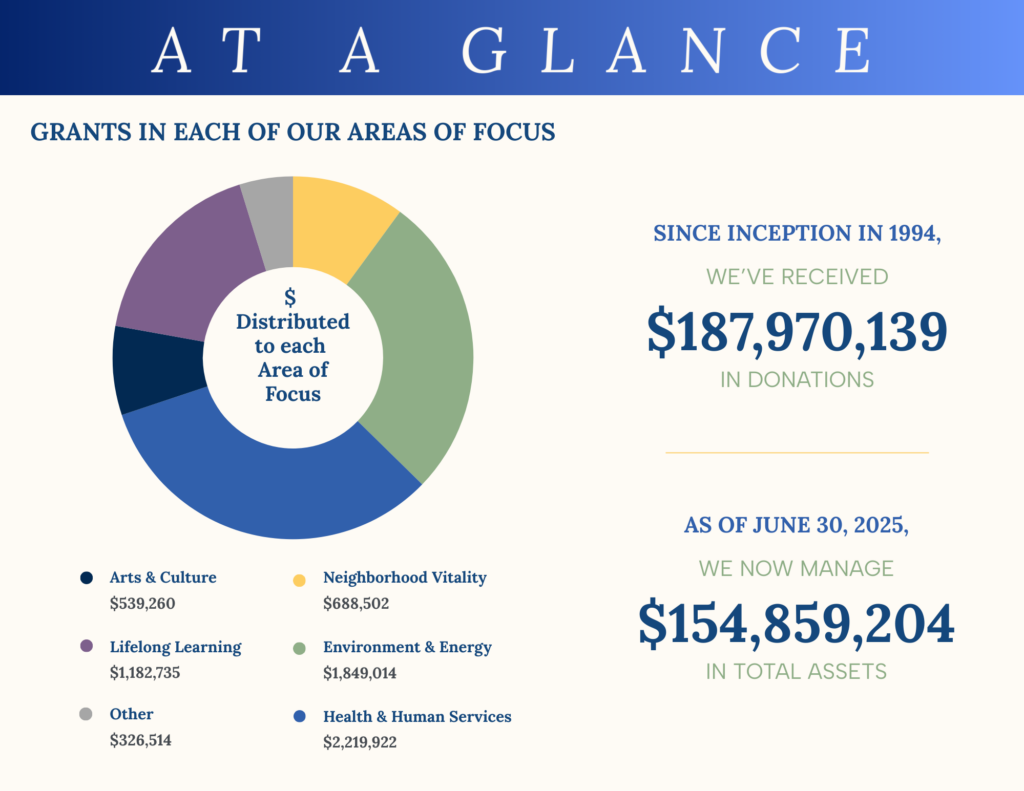
In Fiscal Year 2025, Berks County Community Foundation distributed over $6.8 million in grants and scholarships to support the community. While grantmaking is “what we do,” connecting to the community is at the heart of our work.
Berks County Community Foundation connects donors, grantees, and community partners to one another in the pursuit of the greater good. Our Program Team, comprised of experts in their fields of interest, made quarterly site visits to local institutions to learn about their operations, needs, and impact on Berks County. During the federal government shut down and Pennsylvania state budget impasse, the communication and program team engaged a local reporter to investigate how government cuts affect Berks nonprofits. Connecting with people, sharing expertise, and learning from one another, is how communities thrive.
“While distributing grants and scholarships is a core part of our mission,” says Kevin Murphy, President and CEO of Berks County Community Foundation, “none of our work would be possible without the relationships we build throughout Berks County.”
The Annual Report highlights our mission of promoting philanthropy and improving the quality of life for the residents of Berks County. The team works hard to bring organizations and individuals together for collaboration to spark change in the community. This year’s Annual Report provides detailed stories and data behind these achievements, underscoring the powerful impact of donor support in the community.
To read the full report, take a look below or click here.
The Met-Ed/Penelec Sustainable Energy Fund will make grants to fund a variety of energy efficiency projects to nonprofits, government entities, and small-businesses within the Met-Ed and Penelec utility areas. Funding is only available to existing buildings (not new construction) and to organizations that own their buildings (not lease). A preliminary energy assessment must be completed to be considered for funding. If you have not had an energy assessment completed, contact fund staff to be connected with technical assistance.
There is $500,000 available per utility area ($1,000,000 total). Grants will typically range from $25,000 to $100,000.
Eligible projects include:
Replacement of existing lighting with more energy-efficient lighting (more information here)
LOIs open April 15; Due May 15. See note below for details.
Announcement of invitation to submit an application by May 30
Application opens on June 1; Due July 15
Funding decisions announced by September 30
Note: The LOI form is available online. Projects in the Met-Ed territory should fill out the form in Berks County Community Foundation’s grant portal. Projects in the Penelec territory should fill out the form in the Community Foundation for the Alleghenies’ grant portal. If invited to submit an application, applications will also be available in each grant portal.
An advisory board will review the applications and decide which projects will receive grant funding.
In the Met-Ed rate district, please contact Emily Smedley: Environment and Energy Program Officer, Berks County Community Foundation Fund Manager, Met-Ed Sustainable Energy Fund Emilys@bccf.org
In late 2025, the program and communication teams of Berks County Community Foundation spent two days in the Kutztown area. There, they visited local institutions that contribute to the area’s vitality.
The foundation conducts these site visits to gain knowledge about the communities we serve. Some institutions have received gifts from various funds the foundation manages. Other institutions simply enrich the cultural, educational, or religious life of the county.
This blog post is part two of a two-part series on the Kutztown tour. Read part one, available here.
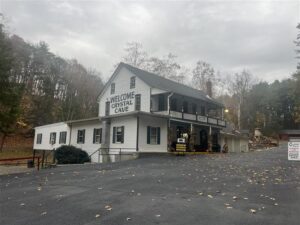
The second half of the Kutztown site visit started one cold November morning at Crystal Cave, one of the oldest tourist landmarks in Berks County. Discovered on November 12, 1871, our team toured the first “show cave” in Pennsylvania on the 154th anniversary of the cave’s discovery.
The welcome center and inn giftshop at Crystal Cave were once a hotel which accommodated guests traveling from far distances.
The cave was discovered by William Merkel and John Gehret while they were blasting for limestone. After the smoke cleared, the pair descended 125 feet into damp, underground darkness. Although the pair didn’t come to purchase the cave, their initials are etched into one of the cave’s rock formations. With some formations aging more than half a million years old, it is safe to say that Merkel and Gehret’s legacies will endure for generations to come.
William Merkel and John Gehret etched their names into a rock formation upon discovering Crystal Cave on November 12, 1871.
Human influence—and intrusion—are common traits in Crystal Cave’s history as a “show cave”. Immediately after Merkel and Gehret’s discovery, Berks County residents began to brave the impenetrable darkness of the cave, in search of souvenirs. Frustrated with the damage, Samuel D. F. Kohler bought the cave, built an official entrance, and started charging guests 25 cents for admission.
The ancient appeal of Crystal Cave brought tourists from all over the country, which ushered in a time of economic growth for Kohler. Improvements were made inside the cave for safety purposes, a hotel was built for guests, and a stagecoach was purchased to expand access across the region.
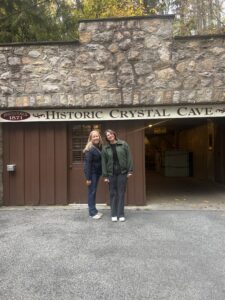
Foundation team members standing at the opening of Crystal Cave, which was created for guests to safely enter the cave.
As business expanded, the Kohler family tested the limits of the cave. Hoedowns, weddings, and baptisms took place in the “Crystal Cave Ballroom”, complete with a bar for liquor, live band, and dance floor. Amid renovations and celebrations, David Kohler (son of Samuel) sold Crytal Cave to J. Douglas Kaufman.
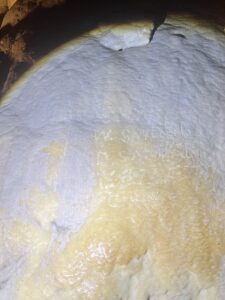
The stalagmite “altar”, which was used in Marion Kurtz’s wedding to Francis Finley on October 15th, 1919, was removed from its original site in Crystal Cave. Without a stalactite dripping mineral water on the stalagmite altar, the altar decays. The intervention of oils from a human hand also contribute to the decay of these rock foundations.
In more recent years, Crystal Cave, Inc. has adapted as an attraction that celebrates nature and educates visitors on the fragility of the cave’s rock formations. When touring the cave, guests are asked to not touch the rock formations, as human touch can interfere with their growth—a big change from the days of removing crystals from the cave as a souvenir.
Now, Crystal Cave attracts the public through their scenic hiking trails, educational group tours, historical museum and much more.
To learn more about Crystal Cave or plan your next excursion, visit Crystal Cave’s website.
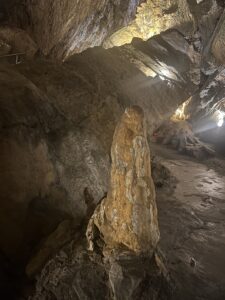
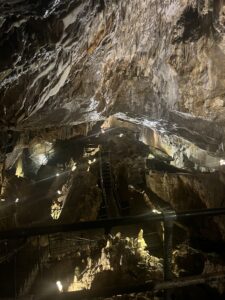
A large portion of Crystal Cave, with added walkways and lighting to make the tour safer for visitors.
The Council of Three Rivers American Indian Center is a nonprofit whose mission is to promote the socio-economic development of the Native American community and others who experience similar types of economic difficulties in the Greater Pittsburg metropolitan area.
The tribes most associated with Berks County include the Susquehannock, Lenape, and Iroquois peoples. Today, only 1.4% of Berks County’s population identifies as an American Native. The impact of native lives, however, can be found all over the county: what we now know as Maxatawny, Neversink, Saucony, and Tulpehocken were once Machksithanne, Navesink, Saconk, and Tulpewahaki, respectively.
The second day of our Kutztown tour concluded with a brief visit to shops along Main Street and the surrounding Kutztown area. Find the list of shops the foundation team visited below:
Casa de Empanada
Saucony Creek Brewing Company
Sorrelli Jewelry
Kutztown Tavern
Young Ones Records
Paisley & Company
Dietrich’s Meta’s and Country Store
Firefly Bookstore
Interested in having the foundation visit your nonprofit or organization? Reach out!
Thanks to the United Way of Lancaster County, 211 services are available in Berks County.
What is 211?
211 is a free, confidential, and comprehensive informational/referential service for individuals looking for a broad range of health and human services. Dial 211, text your zip code to 898211, or live chat or search at pa211east.org to find information on a broad range of services.
The services 211 can help you locate and navigate include:
Housing Support: access payment assistance, eviction and other landlord/tenant issues, emergency shelter and subsidized housing
Utility Assistance: includes mediation assistance and help with water, gas, fuel, phone and electric bills
Family Resources: find childcare, online learning resources, camps, child development and emergency family support
Food Security: locate local food pantries, home delivered meals, sit down meals, assistance programs and pet care
Elder care: includes in-home assistance, health and nutrition, caretaker support and transportation
Health Services: includes physical, mental and dental health, medical transportation, vaccines and insurance
After-school programs for at-risk children
Please note: 211 is not an emergency services provider. If your needs are emergent, call 911.
Who is 211 PA East?
211 PA East is a program of United Way of Lancaster County whose 211 services extend to all of Berks County. When Berks residents dial 211, they connect with professionally trained resource navigators, who will gain knowledge of the caller’s needs, identify solutions, and connect the caller with local services they require. Help is available in multiple languages and is completely confidential.
Dialing 211 also keeps our communities safer and healthier. When first responders react to non-emergent calls, they are unable to meet community needs as intended. By calling 211 for social service assistance, our 911 emergency dispatch system does not get overwhelmed with non-emergent calls.
211 PA East was made possible, in part, by the Home Health Care Foundation Permanent Fund of Berks County Community Foundation. If you’re passionate about improving the health and quality of life for Berks County residents, consider donating to the fund.
The DentaQuest Fund of Berks County Community Foundation, along with the PA Chapter of American Academy of Pediatrics (PA AAP), recently helped bring the Oral Health Story Kit program and dental screenings to the Bethel-Tulpehocken Public Library.
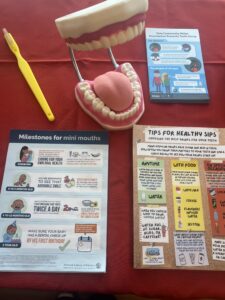
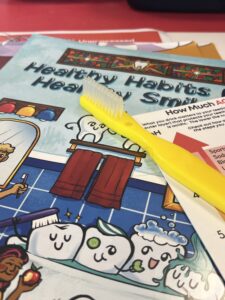
Take-home supplies from the Oral Health Story Kit included a tooth cleaning tools and educational materials.
A lack of access to care can impede oral health, especially in children. With many Americans living in a ‘dental desert’, the demand for local dentists is high. Compounded with expensive treatment costs, many individuals lack necessary, preventative care, resulting in emergency dental service and/or untreated oral diseases.
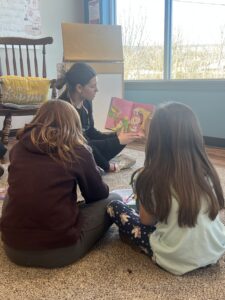
A volunteer dental student interested in pediatric dental care reads a book about oral health to an audience of children.
The PA Chapter of American Academy of Pediatrics (PA AAP) is a nonprofit organization whose mission is to promote the equitable health and well-being of all Pennsylvania children; they accomplish this by implementing community programs of education, support, and advocacy. As experts in pediatric healthcare, they are committed to fostering collaboration among pediatricians, families, and community partners.
The Oral Health Story Kit is just one PA AAP program that promotes oral health literacy to Berks County residents. In early February, pediatric oral healthcare professionals and their students came to the Bethel-Tulpehocken Public Library to facilitate free oral health story times and screenings for children, and to disperse educational materials to community members.
“Programs like the Oral Health Story Kits help build oral‑health literacy at the earliest ages, which is one of the strongest predictors of long‑term dental health,” says Jacqueline Pugliese, Oral Health Program Manager of PA AAP. “In rural areas of Berks County, where access to providers is limited, giving families clear, engaging tools to understand how to care for their teeth can make a real difference. Libraries are the perfect place to spark that learning—accessible, trusted, and rooted in the community.”
A variety of interactive educational materials were available during the program, including puppets to practice tooth brushing, dioramas on the effects of sugary drinks on teeth, and children’s oral health flyers for families to take with them.
“Many residents in our rural area have large families and limited transportation. There are no local health care or offices for social services,” says Kaitlin Lehman, Director of the Bethel-Tulpehocken Public Library. “Bringing representatives of these organizations closer to people who need them is a big step in improving accessibility. Getting connected to services through a familiar, trusted resource like the library also helps reduce the barrier of fear or uncertainty.”
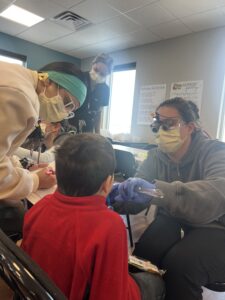
Volunteer dental students conducted basic oral health screenings on young patients.
While access to medical specialists may be lacking, every community in Berks County has a local library. For our rural communities, libraries may be the only communal space to gather—and why it makes sense for PA AAP to meet the community where they already are.
“In our community, there are no other public spaces – no senior center, playground, or rec center. So, people rely on the library not only as a source of information and education, but also for community and connection,” says Lehman. “The library is the only place that people can come and just be, without judgment, and without the expectation of spending money.”
PA AAP and Berks County Community Foundation understand the importance of these programs, and that charitable dollars can never replace government funding. While government funding continues to roll back for health and human services, the nonprofit sector recognizes the need to consolidate resources and provide creative solutions to arising community needs.
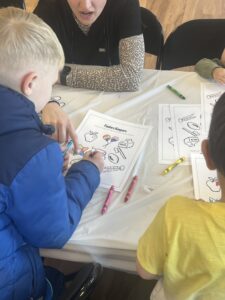
Volunteer dental students used dental-themed coloring book pages to teach children about the impact of oral health.
“Berks County Community Foundation is happy to support programs like the Oral Health Story Kit,” says Cindy Milian, Health and Human Services Program Officer. “There are many ways to build a healthier Berks County, and engaging the youth in conversations about their health can help lay a strong foundation.”
The next Oral History Health Kit program and dental screening will take place at Morgantown Library on February 18th from 10am to 12pm. Walkins are available for this free service. This program was made possible, in part, by the Community General Hospital Health Care Fund of Berks County Community Foundation.
If you are passionate about improving the health and quality of life for Berks County residents, consider donating to the Dental Treatment Fund of Berks County Community Foundation. This fund helps cover the cost of dental treatment for individuals with financial need.
Until this year, when a Pennsylvania resident died without a will and without surviving family, their entire estate was claimed by the Commonwealth and absorbed into the state’s general fund. That changed on January 23, 2026.
Under Act 50, if someone in Pennsylvania dies intestate (without a will) and leaves no heirs, the assets of their estate will now be directed to an endowed fund at the community foundation serving the county of their most recent residence. Instead of disappearing into the state’s general fund, those dollars will stay in the communities where these individuals lived, supporting local nonprofits and strengthening community life for generations to come.
Although these situations are uncommon, they do happen—and until now, the outcomes didn’t reflect the decedents’ lifelong ties to their communities. Many of these Pennsylvanians worked, paid taxes, volunteered, and contributed to their neighborhoods. Yet when they died without family or a valid will, their remaining assets were absorbed by the Commonwealth, separated from the place they once called home.
Act 50 updates Pennsylvania’s Intestate Succession law to provide a more community-centered solution. When no heirs can be located, the estate will now be transferred into an endowed grantmaking fund at the local community foundation. These endowed funds are designed to exist in perpetuity, providing stable, ongoing support to local charities year after year.
To support the new law, the Pennsylvania Community Foundation Association has certified that each county in the Commonwealth is served by a community foundation with a qualifying endowed community fund. This ensures that no matter where someone lived, their final gift will benefit their own community.
Importantly, Act 50 does not replace the need for thoughtful estate planning. Writing a will remains the best way to ensure that personal wishes are honored—especially for those who hope to leave a philanthropic legacy by supporting causes they care deeply about. But when life takes an unexpected turn, Act 50 ensures that dignity, fairness, and community values guide the final outcome.
Berks County Community Foundation, established in 1994, is committed to promoting philanthropy and improving the quality of life for residents of Berks County. Through Act 50, we are honored to help ensure that every Pennsylvanian’s final gift can remain rooted in the place they called home.
It’s never too early for estate planning.
Let’s have a one-on-one conversation about your desired philanthropic legacy.
In late 2025, the program and communication teams of Berks County Community Foundation spent two days in the Kutztown area. There, they visited local institutions that contribute to the area’s vitality.
The foundation conducts these site visits to gain knowledge about the communities we serve. Some institutions have received gifts from various funds the foundation manages. Other institutions simply enrich the cultural, educational, or religious life of the county.
This blog post is part one of a two-part series on the Kutztown tour.
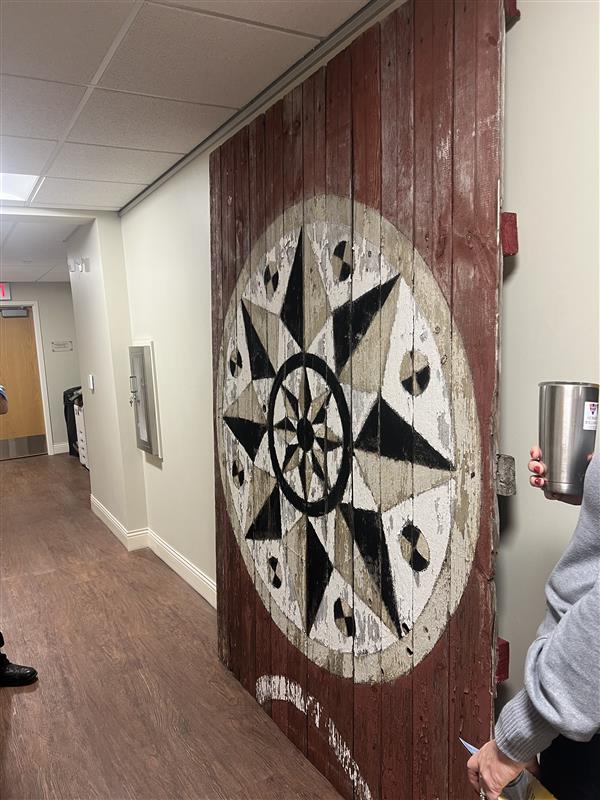
The tour started at the Pennsylvania German Cultural Heritage Center on Kutztown University’s campus. There, our tour guide, Patrick J. Donmoyer, talked about the Berks County art tradition of barn stars, an art form which can be traced back to the late 1700s. Milton J. Hill (1887-1972), the celebrated local artist, was a third-generation barn star painter and native speaker of Pennsylvania Dutch. Hill contributed to dozens of installations of barn stars that are still hanging today. In fact, the Pennsylvania German Cultural Heritage Center offers a free, self-guided tour of the barn stars of Berks County. Berks County is home to the highest concentration of barn stars in Pennsylvania, a testament to the cultural influence of Pennsylvania Germans in the area.
A barn star from a local barn that has been removed for preservation and restoration purposes.
Donmoyer also shared famous Pennsylvania Dutch folklore and traditions with the team. These folk legends included such the sainted healer Mountain Mary and the grumpy Christmas visitor known as the Belsnickel. Donmoyer also shared the Pennsylvania Dutch tradition of herbal healing, quilting, and of course, local cuisine.
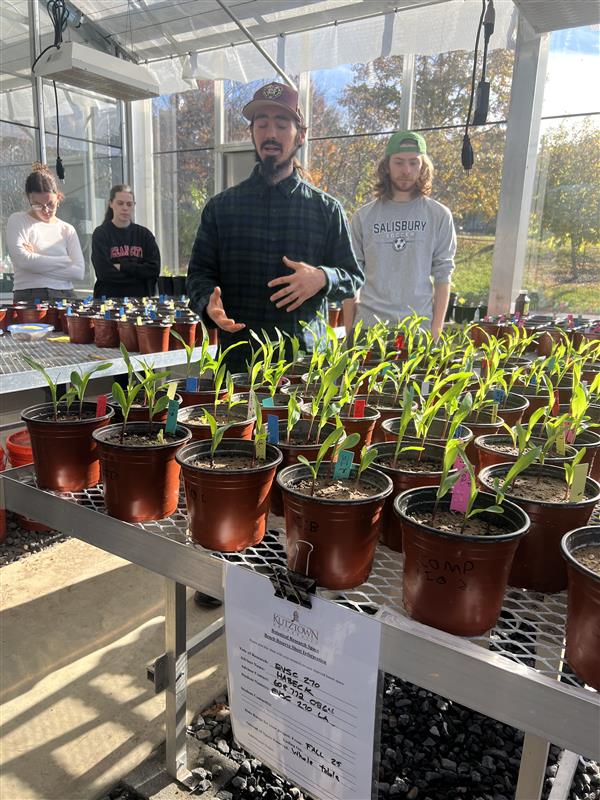
After visiting the Heritage Center, the foundation team briefly joined an undergraduate class at Kutztown University’s Botanical Research Center. Dr. Chris Habeck’s students on the regenerative organic agriculture track presented their projects, which included research on biochar’s effects on soil health and plant growth. In addition, the research done at the center will benefit local partners, namely farmers from the Rodale Institute and beyond.
A student of the Botanical Research Center presents research on biochar.
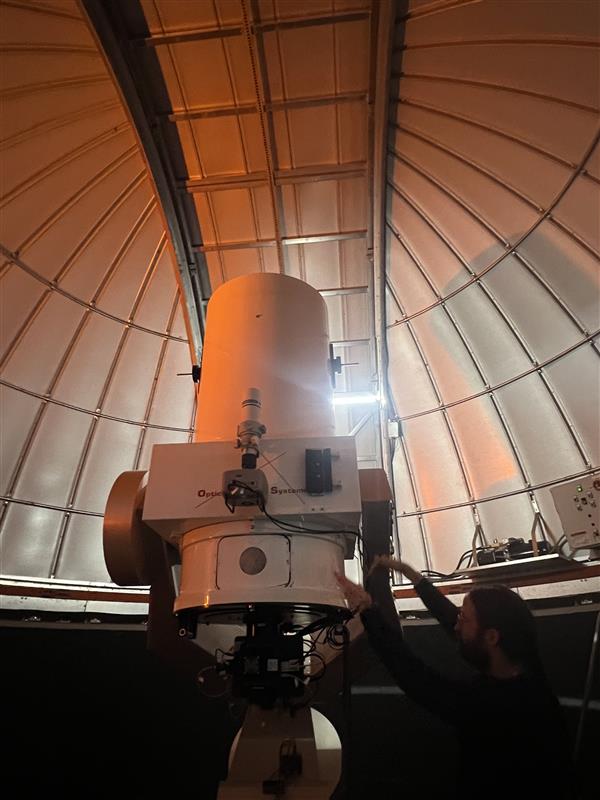
A short walk on Kutztown University’s campus brought the team to the university’s planetarium/observatory. There, Dr. Phill Reed demonstrated the updated technology the planetarium requires to run. The Kutztown University Planetarium is open to the community for various educational and recreational shows. After viewing one of these shows, Reed and the foundation team ascended the stairwell which led to the C.R. Chambliss Astronomical Observatory. There, Reed informed the group of notable research that had been and continues to be conducted using the observatory. Students have identified 15 new exoplanets using the observatory, providing new insight into the architecture of our solar system.
Dr. Phill Reed demonstrates how students use the observatory.
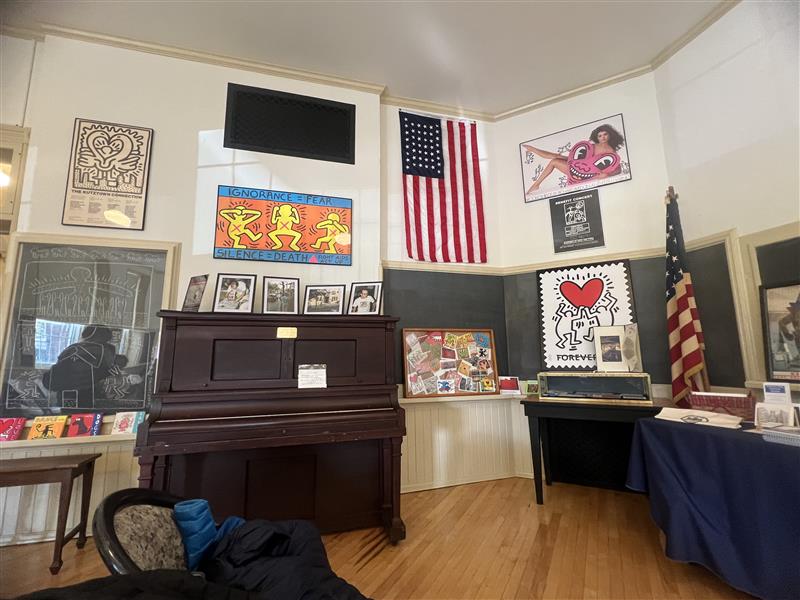
Leaving the university’s campus, the tour continued down Kutztown’s Main Street and into the residential landscape of the area. The Kutztown Area Historical Society is home to many installations, including a miniature train museum, renderings of Victorian-era living spaces, and a room dedicated to the late artist Keith Haring. The Historical Society is open to the public and has community projects in which residents can participate.
A portion of the Keith Haring display at the Kutztown Area Historical Society. The display includes Haring’s artwork using chalk, a temporary display protected by glass.
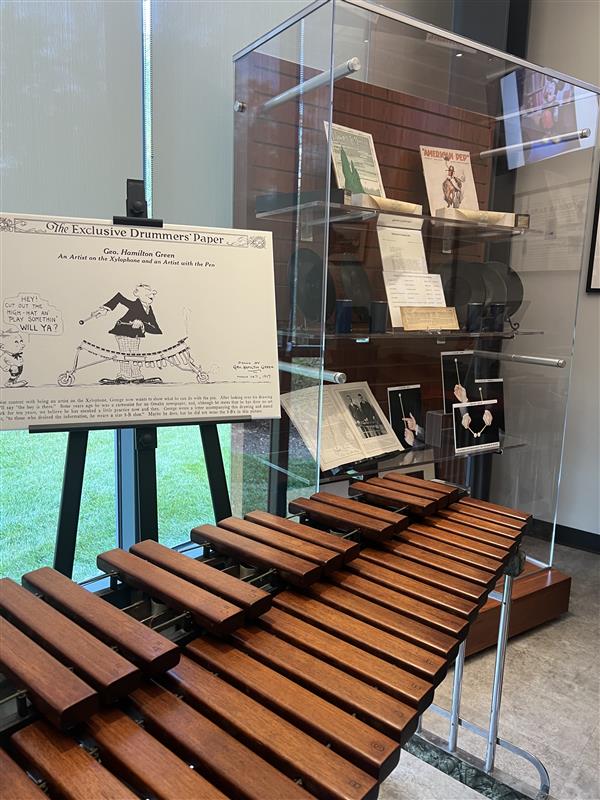
Part one of our Kutztown visit concluded where it began, on Kutztown University’s campus. The Wells-Rapp Center for Mallet Percussion Research boasts an archive of artifacts, instruments, manuscripts, and recordings of mallet percussive pioneers. The center also has a performance hall and rehearsal rooms for Kutztown students and community members. The Kutztown Pipe Band, a Kutztown University and nonprofit community group in the area, utilizes the space. With support from the Juniper Fund of Berks County Community Foundation, the band has grown its membership. Now, they offer free “Intro to Piping” classes for those with no prior experience who may be interested in joining.
A mallet instrument and historical artifacts on display at the Wells-Rapp Center for Mallet Percussion Research.
This concludes part one of the two-part series about the foundation’s site visit to the Kutztown area.
Youth Volunteer Corps (YVC) of Reading collected two awards at this year’s National YVC Summit and presented a workshop on youth mental health. YVC of Reading is a program of VOiCEup Berks, a fund of Berks County Community Foundation that was established in 2016.
Berks County Community Foundation would like to formally congratulate the Youth Volunteer Corps of Reading on their impressive appearance at this year’s National YVC Summit in Kansas City.
YVC of Reading is a program of VOiCEup Berks, engaging youth ages 11-18 in meaningful service projects that address community needs while fostering teamwork, leadership, and compassion.
Three of the corps’ Youth Mental Health Ambassadors led a powerful workshop at Summit focused on mental health education, bridging gaps, and fostering connection. The session was both highly attended and rated among the workshop participants.
YVC of Reading leader and Oley Valley High School alum, EliAnna Bermudez, was named the Youth Volunteer Corps 2025 Distinguished Alumni of the Year, an honor awarded across YVC’s international network. EliAnna was celebrated for her commitment to service, justice, and global citizenship. EliAnna is a co-founder of Stand Together Against Racism (STAR), a collective of VOiCEup Berks and YVC volunteers focused on raising awareness and sharing anti-racist resources for Berks youth. Now, EliAnna is a nursing student serving communities globally; she continues to mentor local youth and volunteer with VOiCEup’s Generation Impact initiative. Read more about EliAnna here.
YVC of Reading was also named International Affiliate of the Year, the top honor among more than 30 YVC programs across the U.S., Canada, and Uganda.
VOiCEup Berks was founded in 2016 as a fund of Berks County Community Foundation. In less than a decade, the YVC of Reading has accomplished more than we could have initially hoped. The foundation looks forward, in confidence, to the future its young changemakers are creating in Berks County.
Congratulations to the Youth Volunteer Corps of Reading on this well-deserved recognition.
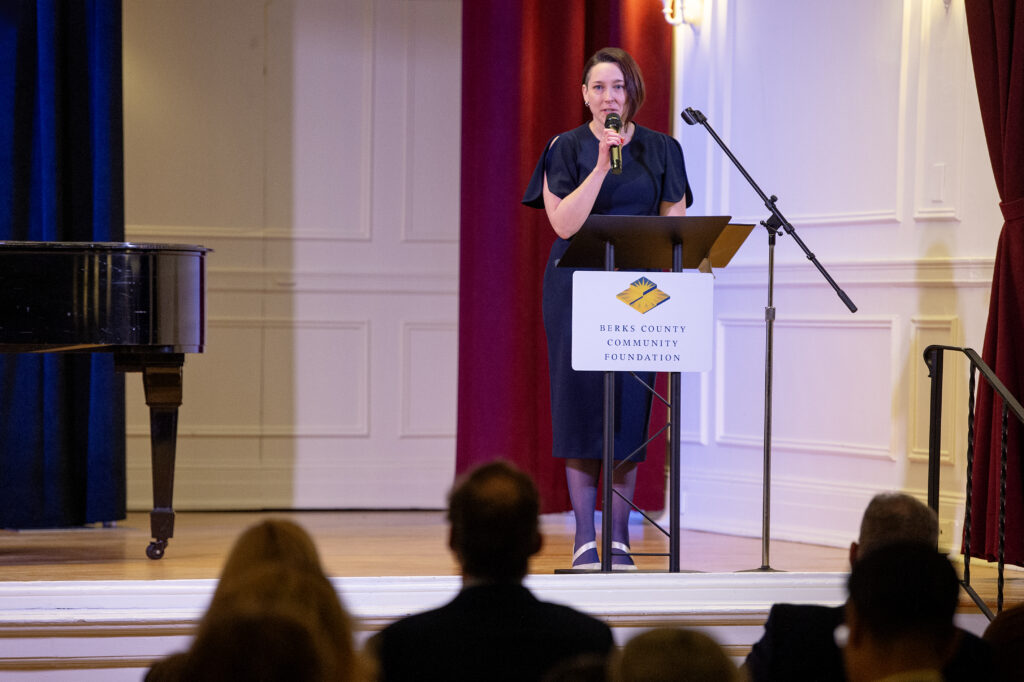
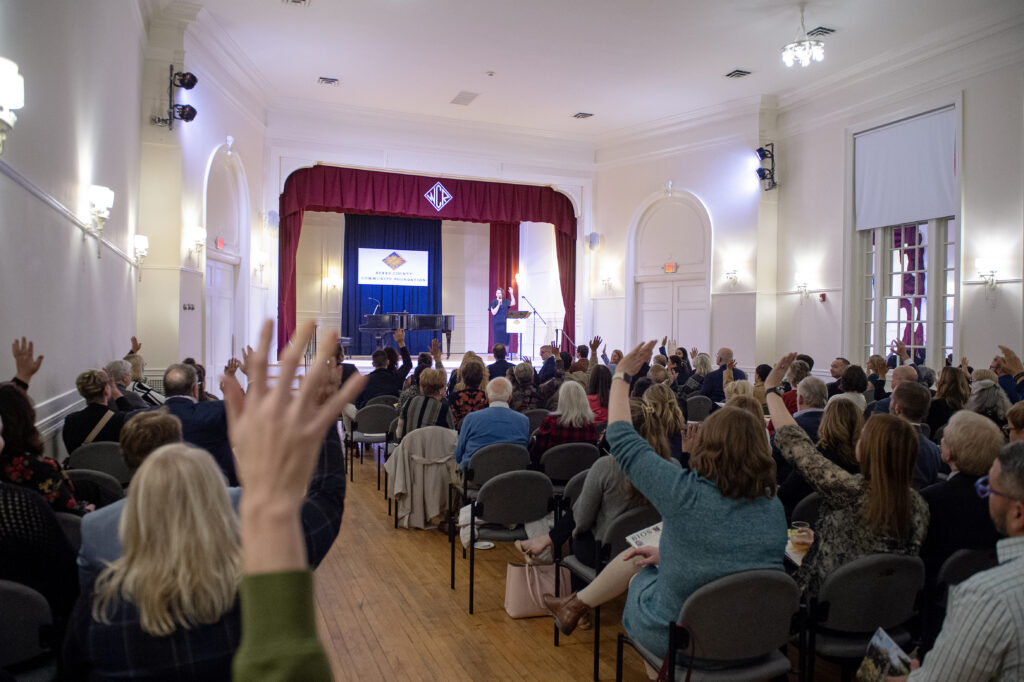
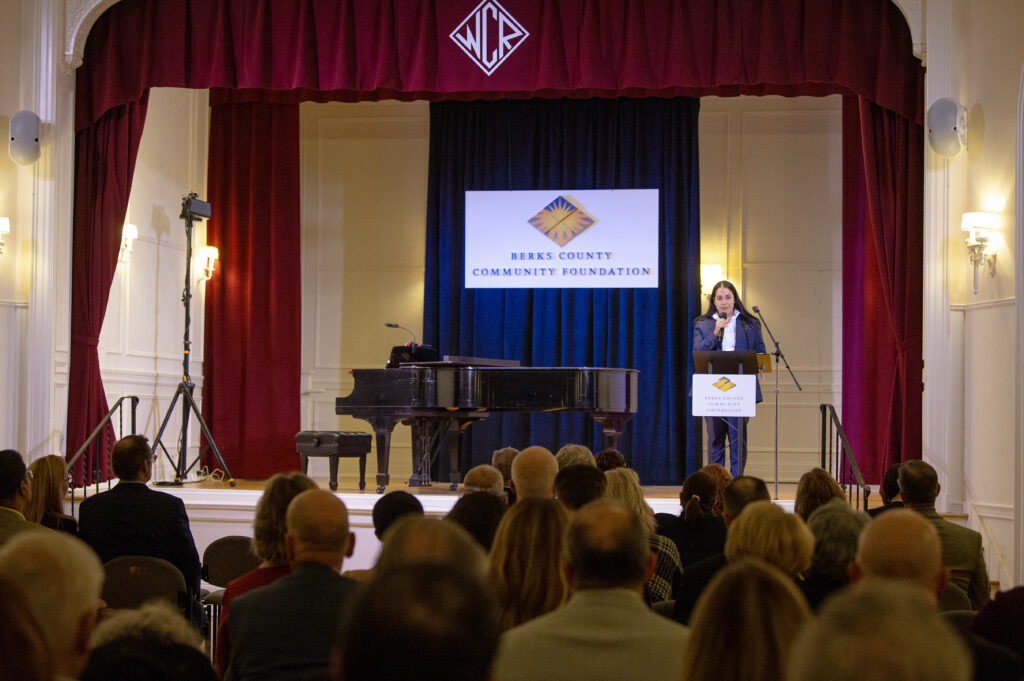
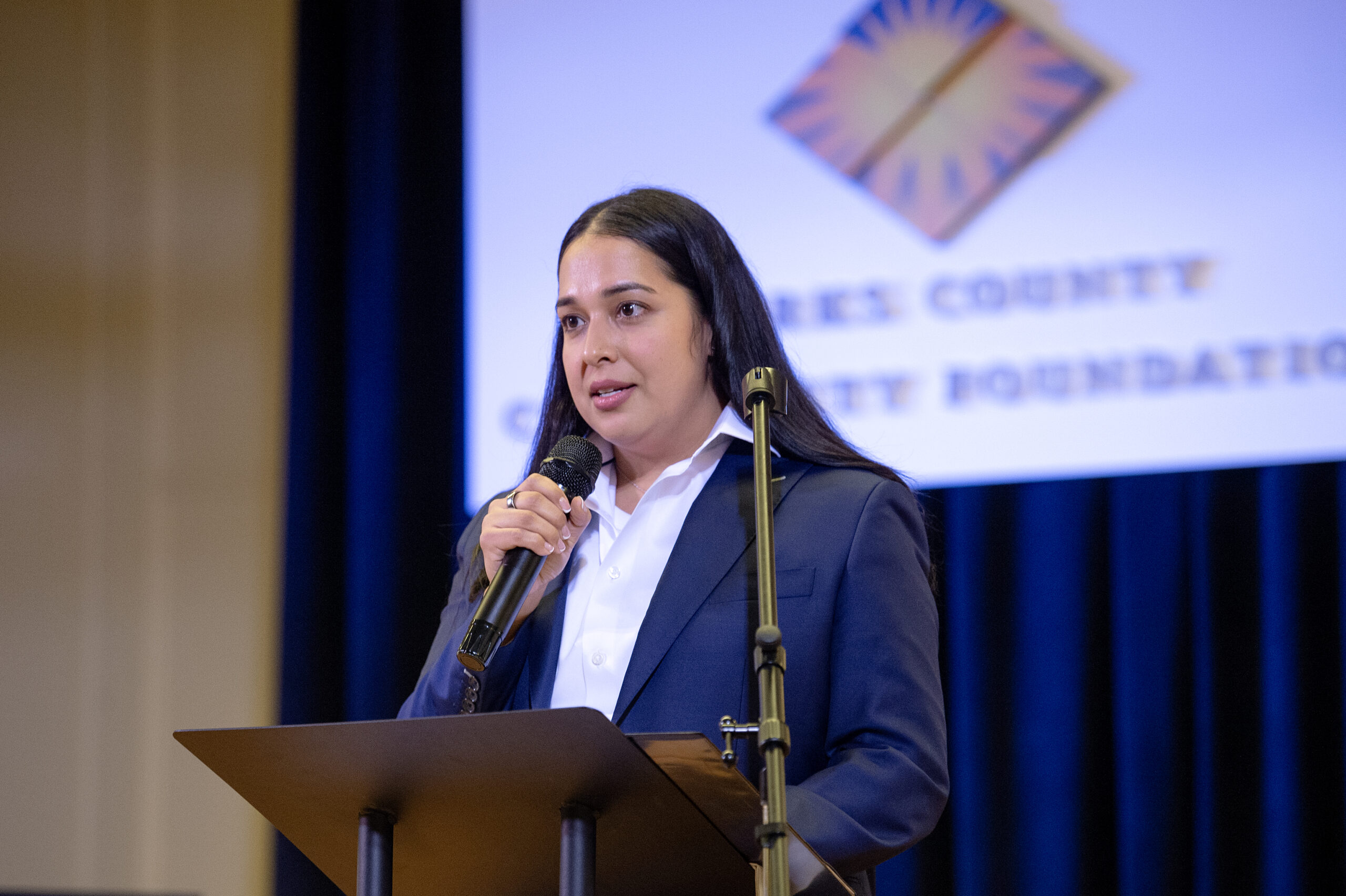
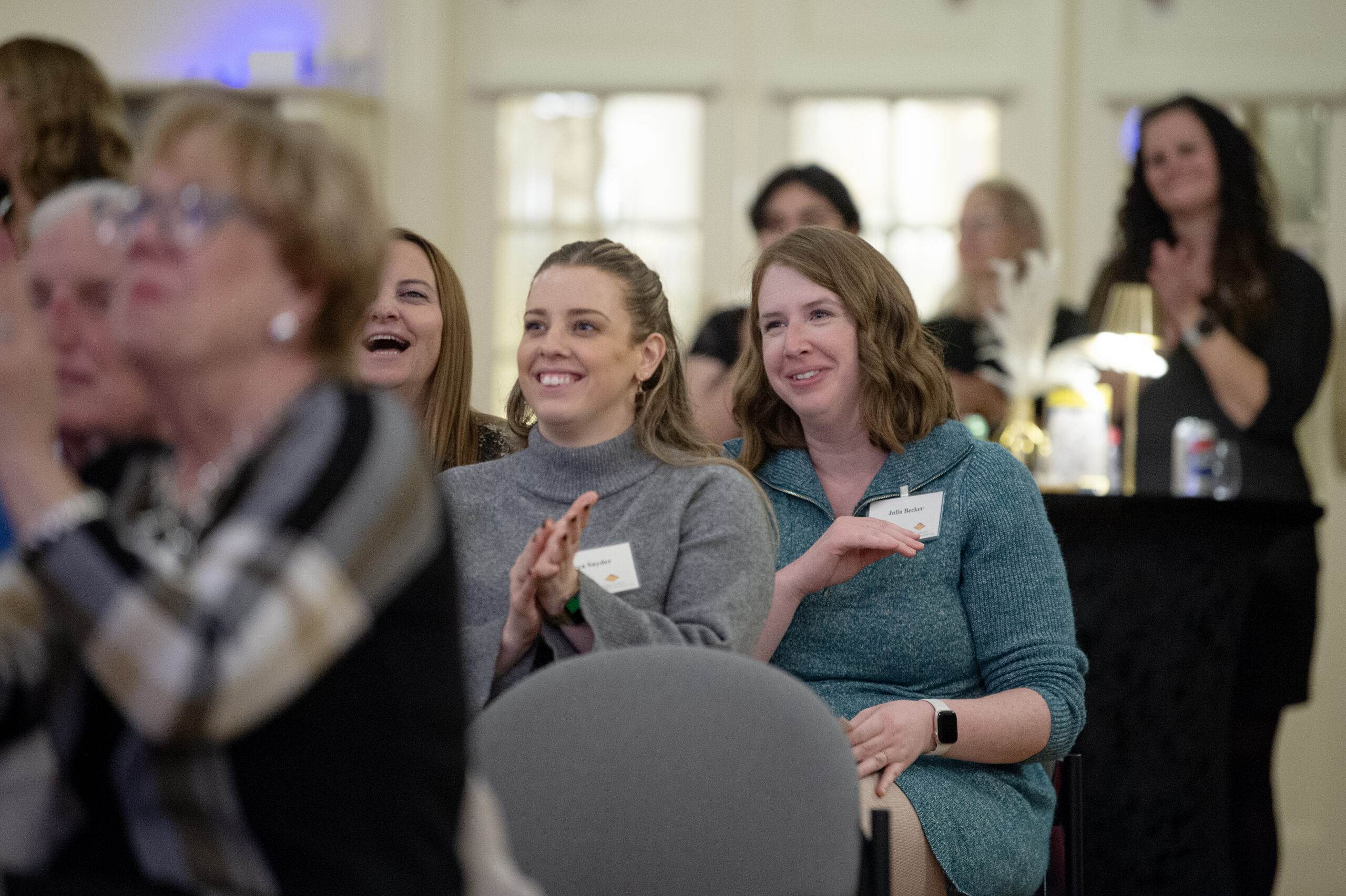
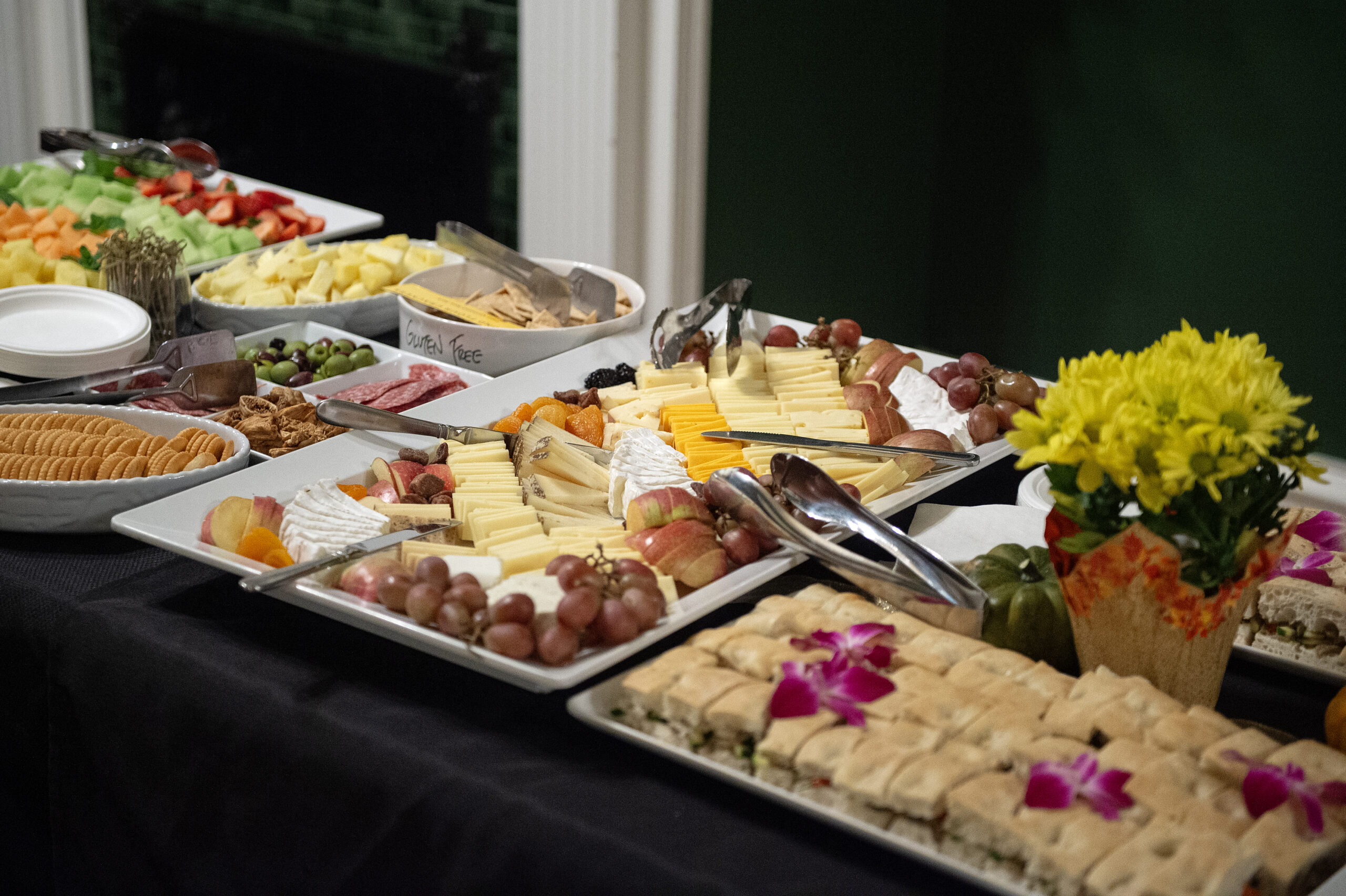
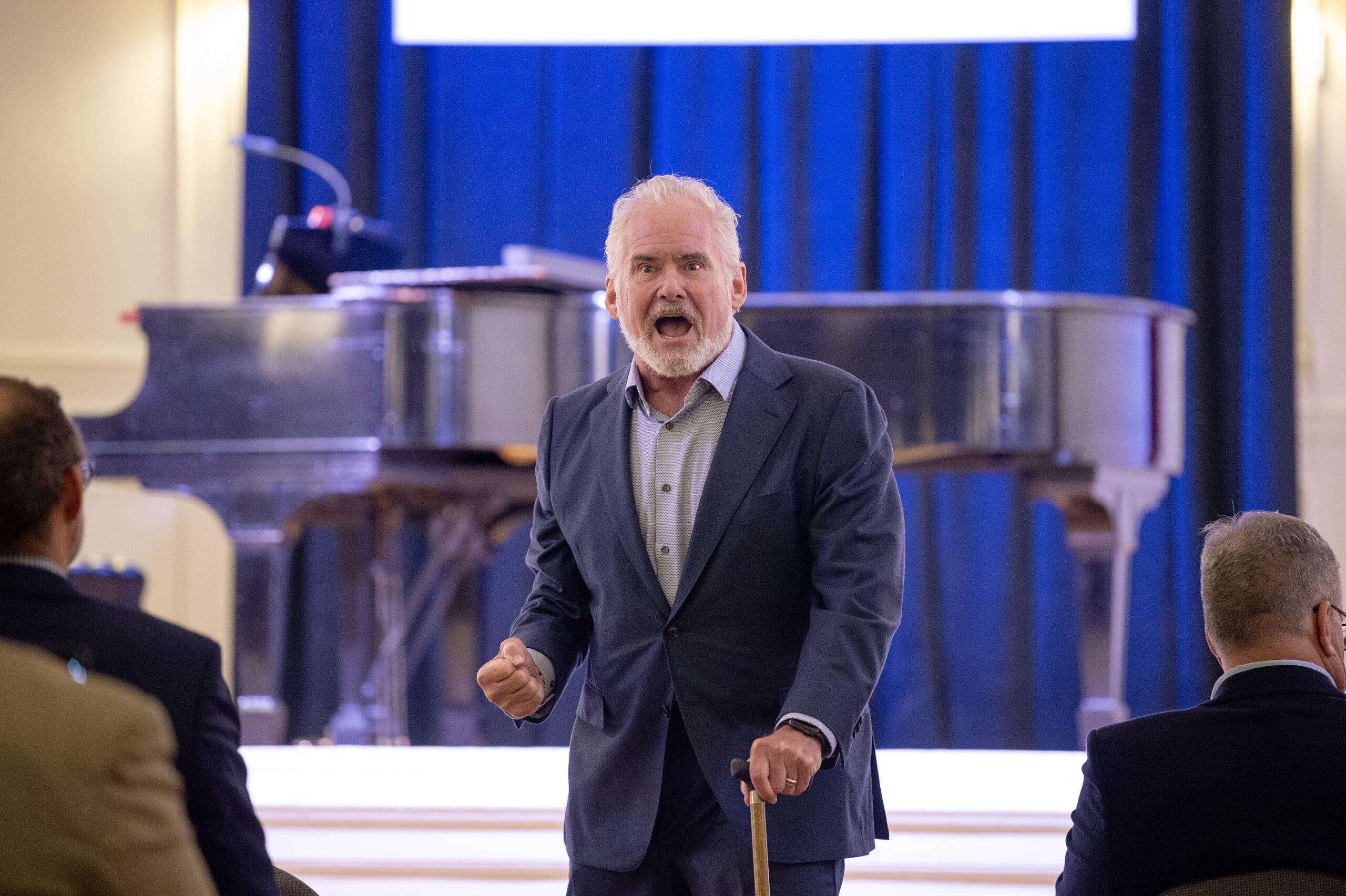
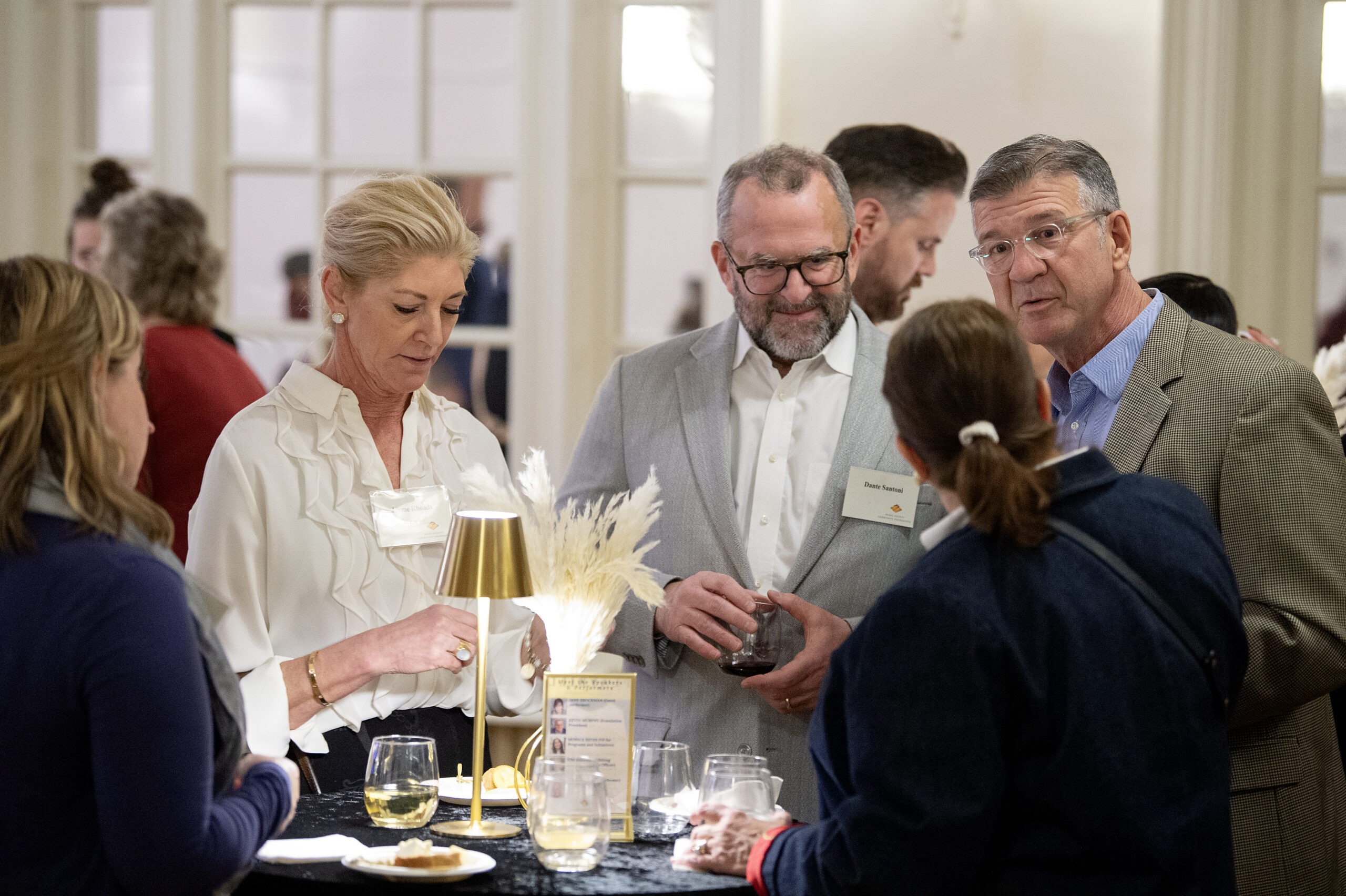
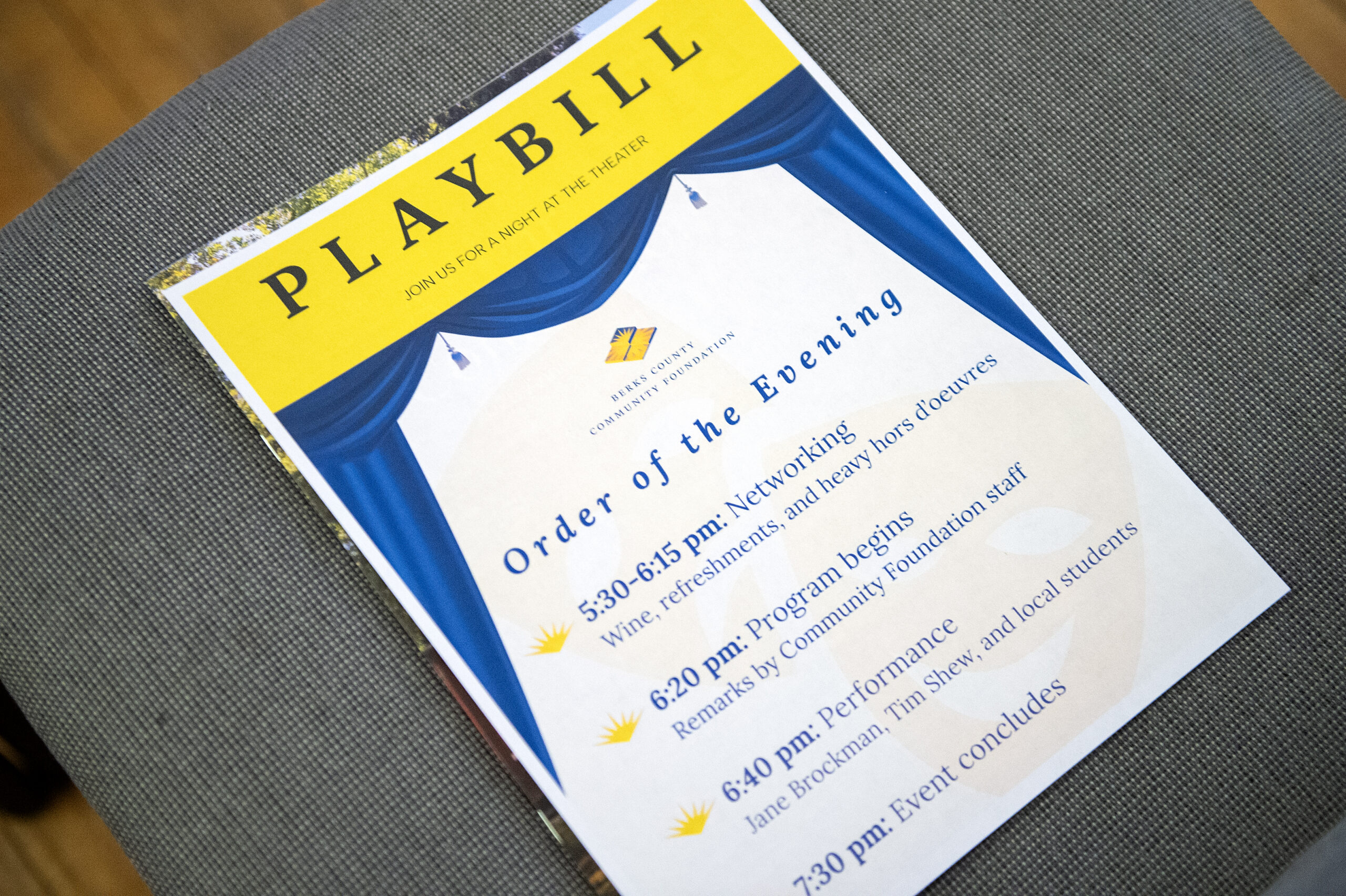
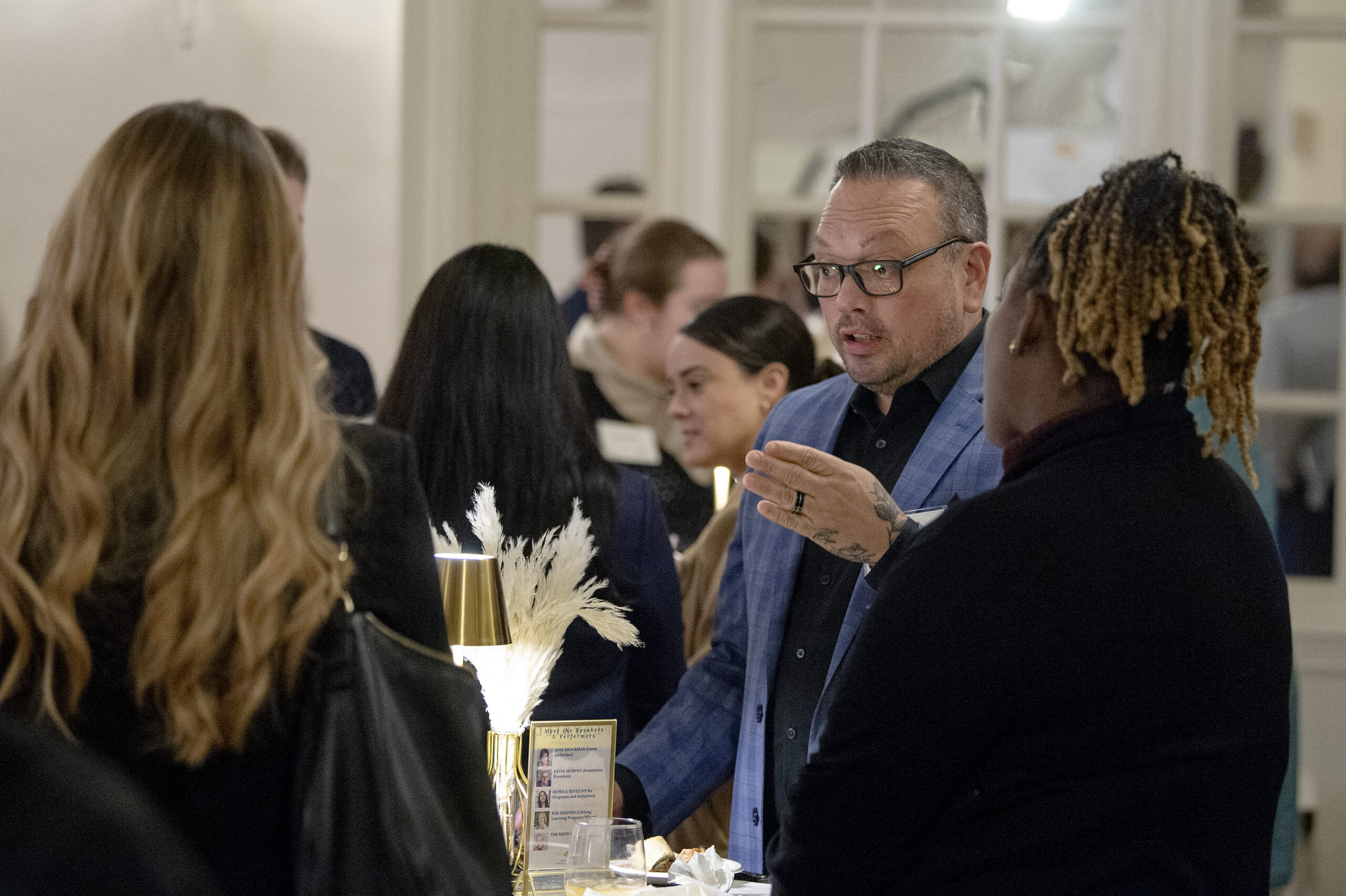
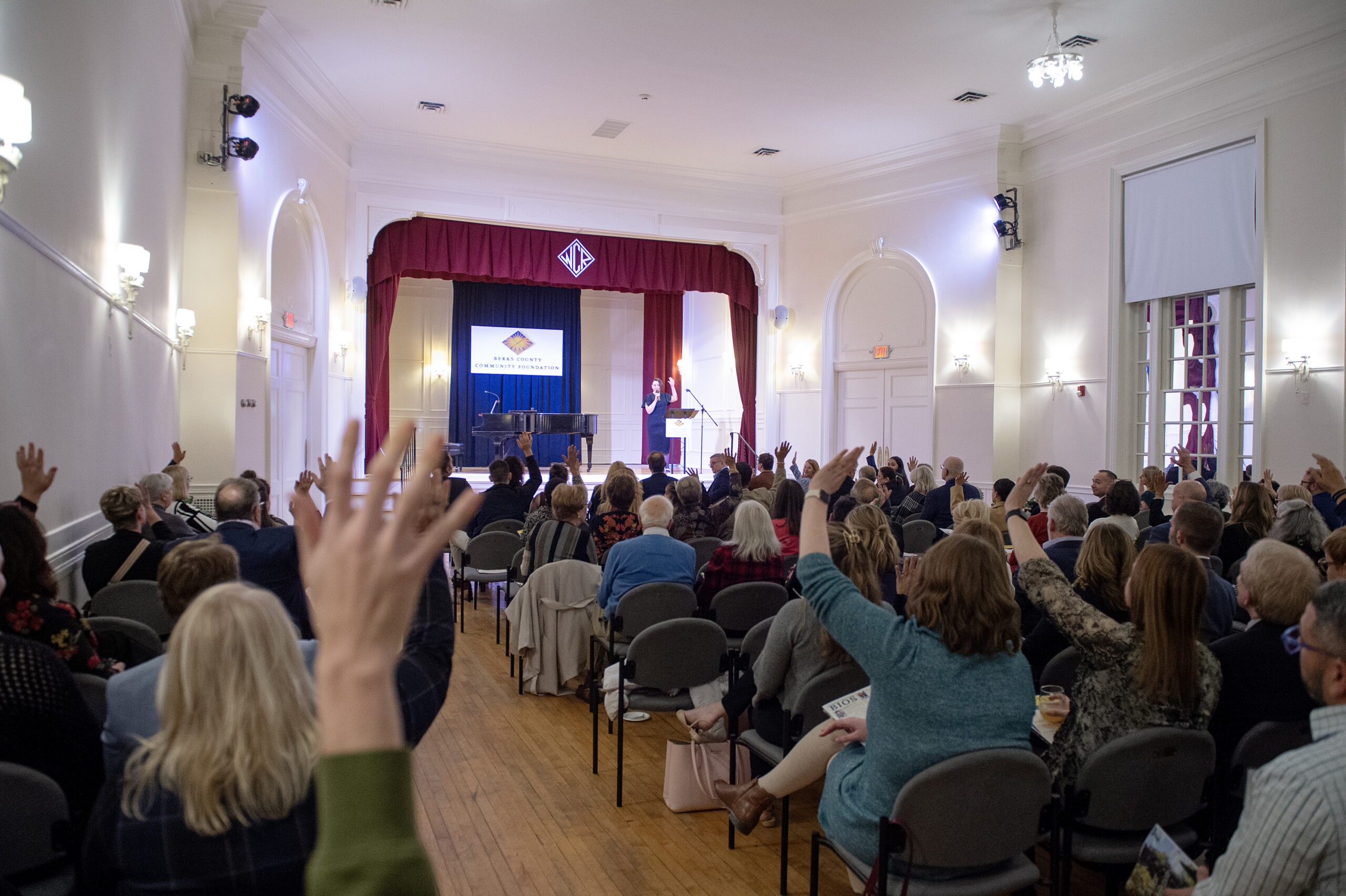
On Wednesday, November 19th 2025, the Berks community gathered at WCR Center for the Arts in Reading, PA, for Berks County Community Foundation’s annual meeting, “A Night at the Theater”.
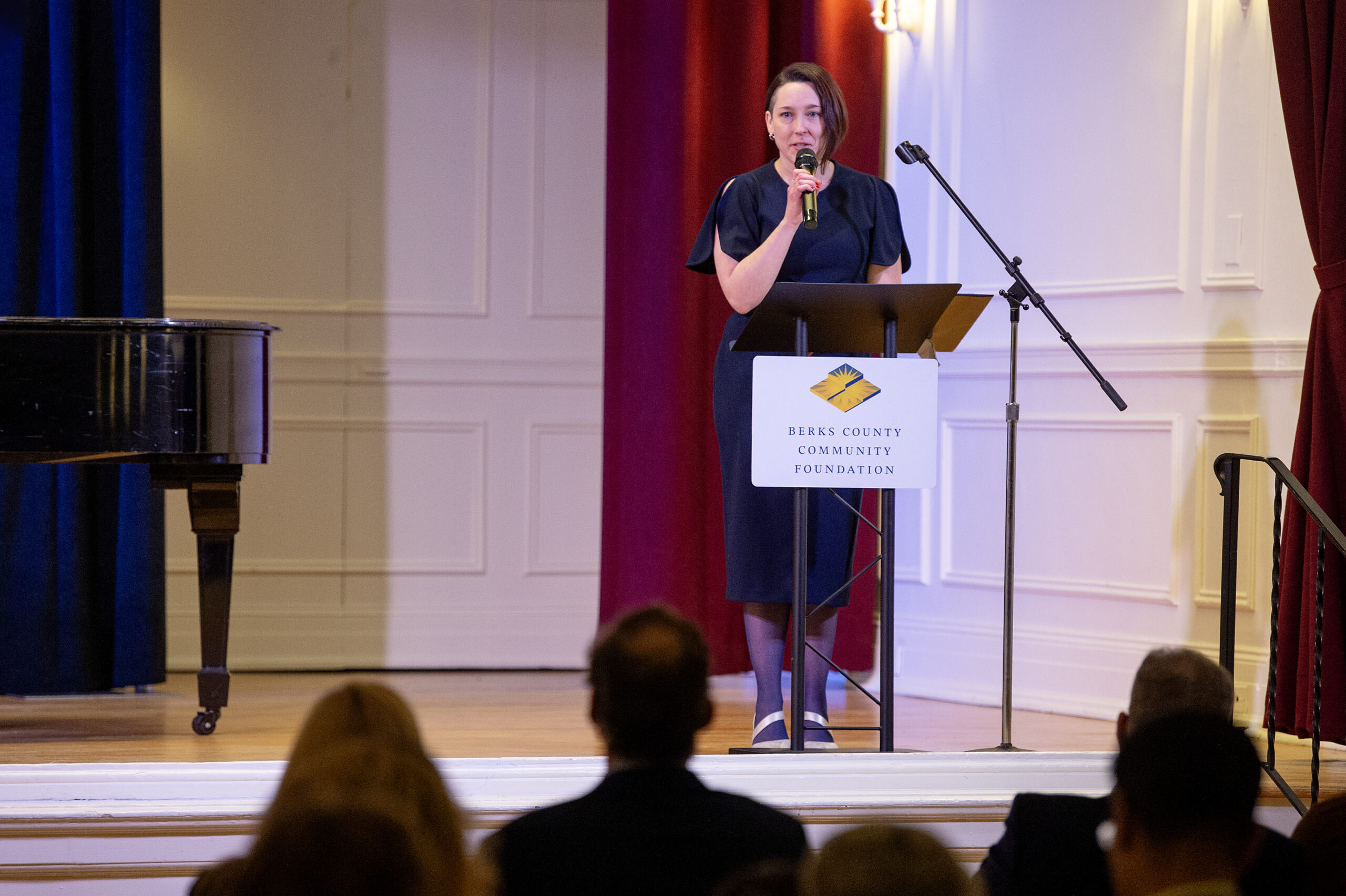
Monica Reyes, Vice President for Programs and Initiatives, welcomes attendees. Photo by Jeremy Drey
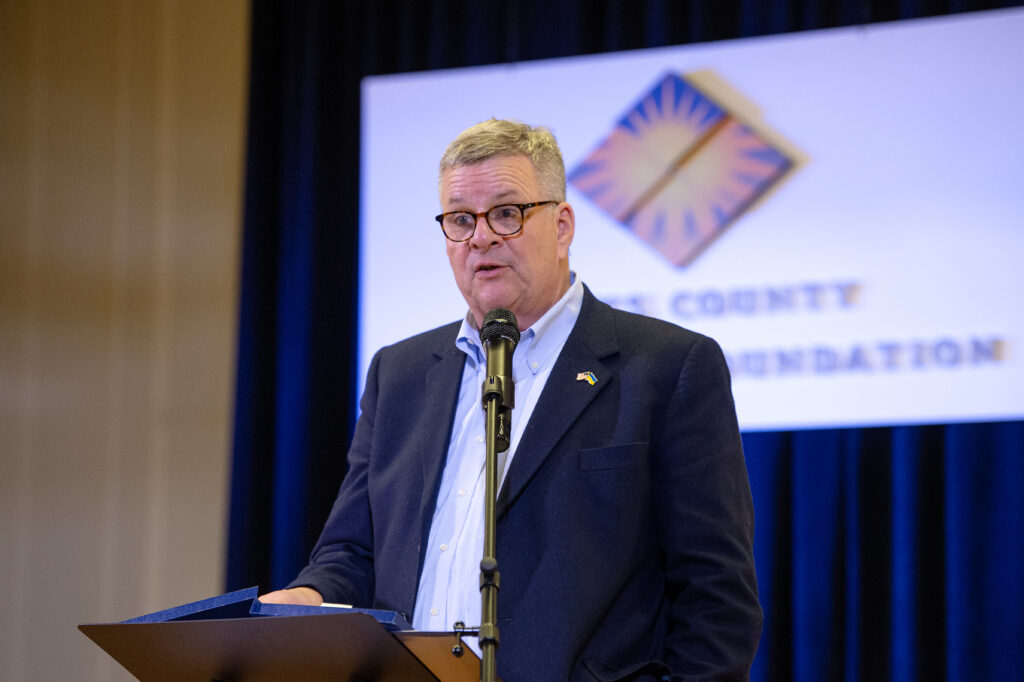
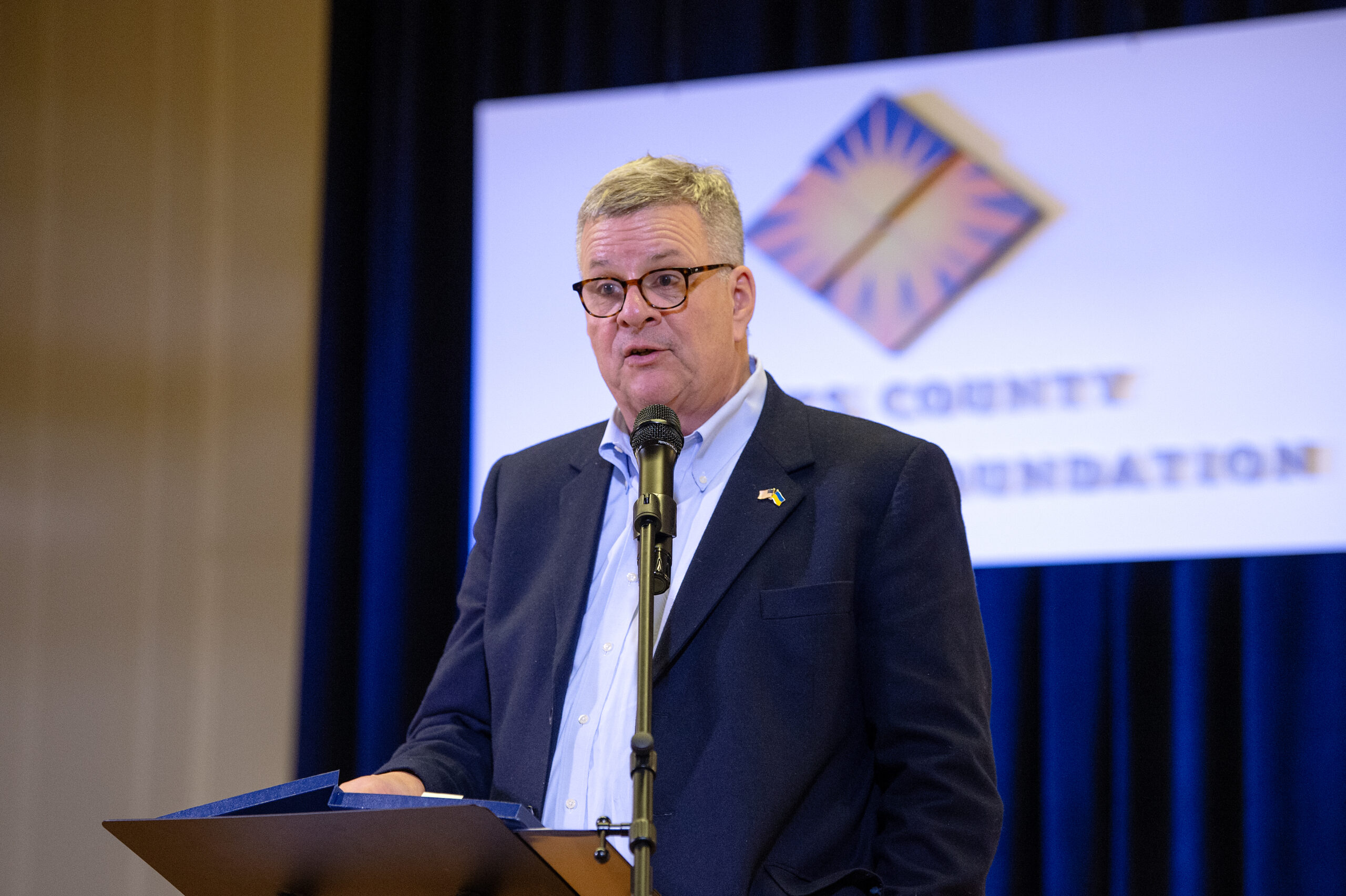
Foundation President Kevin Murphy gave opening remarks and shared a broad overview of the foundation’s work during the previous fiscal year.
“But the assets we manage only represent our potential for making progress,” said Kevin Murphy. “What we do with those assets is what really matters.” Building community partnerships and supporting our local nonprofits are what really matters, now more than ever.
Foundation President, Kevin Murphy, gives opening remarks. Photo by Jeremy Drey
Keynote speaker Kim Sheffer, Lifelong Learning Program Officer at the foundation, expanded on the topic of community engagement and collaboration. Over the past year, Kim convened with local businesses, higher education institutions, and nonprofits to develop a strategic plan for retaining more Berks County college and university graduates.
Kim brought Generation Impact, a program of VOiCEup Berks focused on engaging, connecting, and retaining 18–24-year-olds in Berks County, into the conversation. The foundation is proud to announce that we are supporting Generation Impact’s pilot program, which will hire campus ambassadors, manage annual signature events, and provide networking opportunities for students and employers.
“If our collective goal is to make it compelling for college students and young professionals to say “yes” to Berks,” said Kim Sheffer, “we must work together to make it a vibrant and livable place.”
Kim Sheffer, Lifelong Learning Program Officer, delivers the interactive keynote speech. Photos by Jeremy Drey.
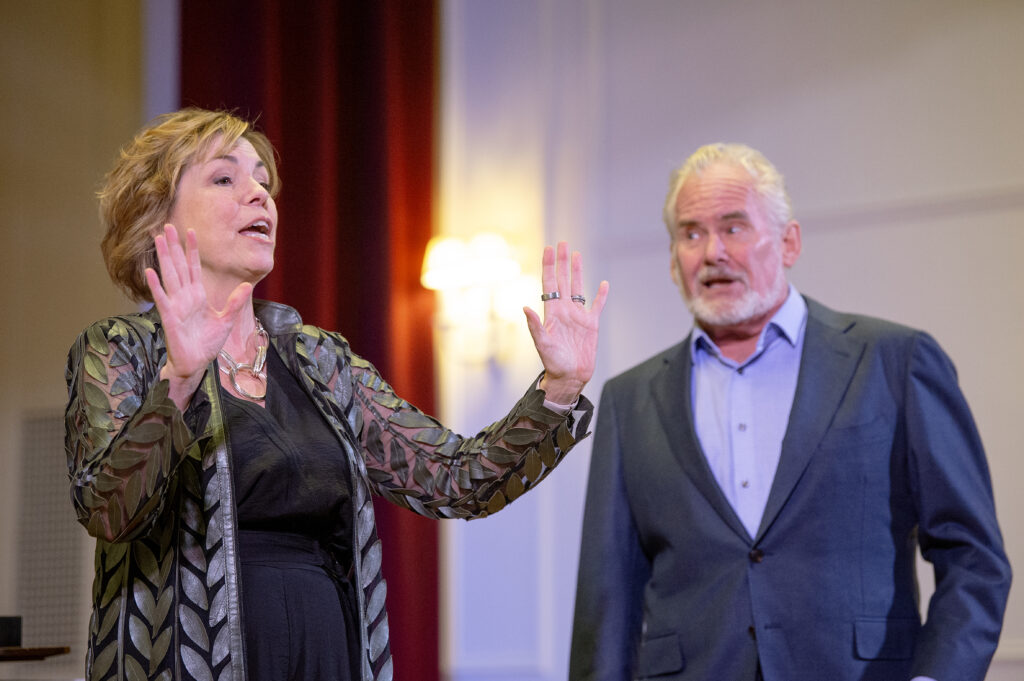
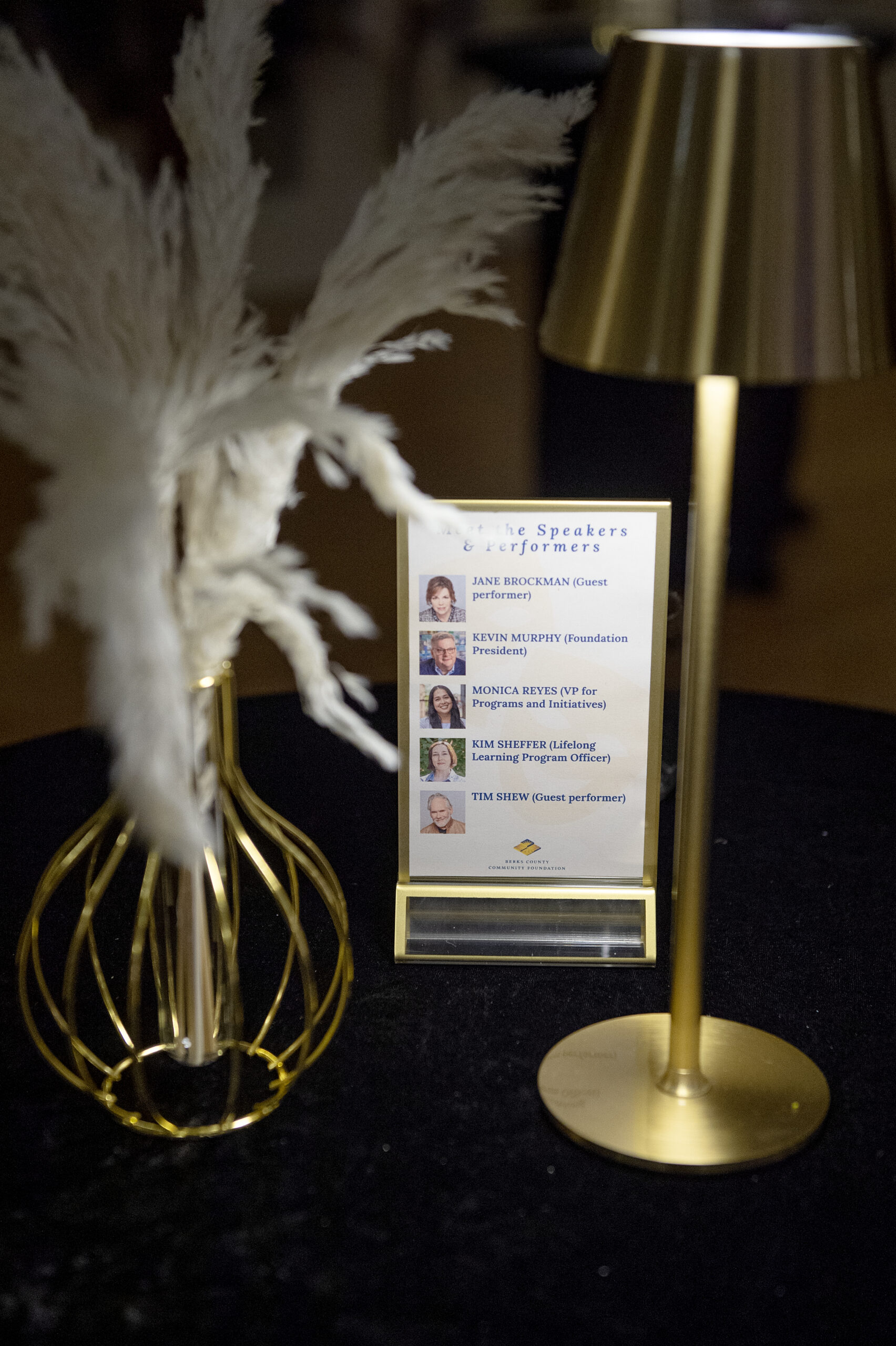
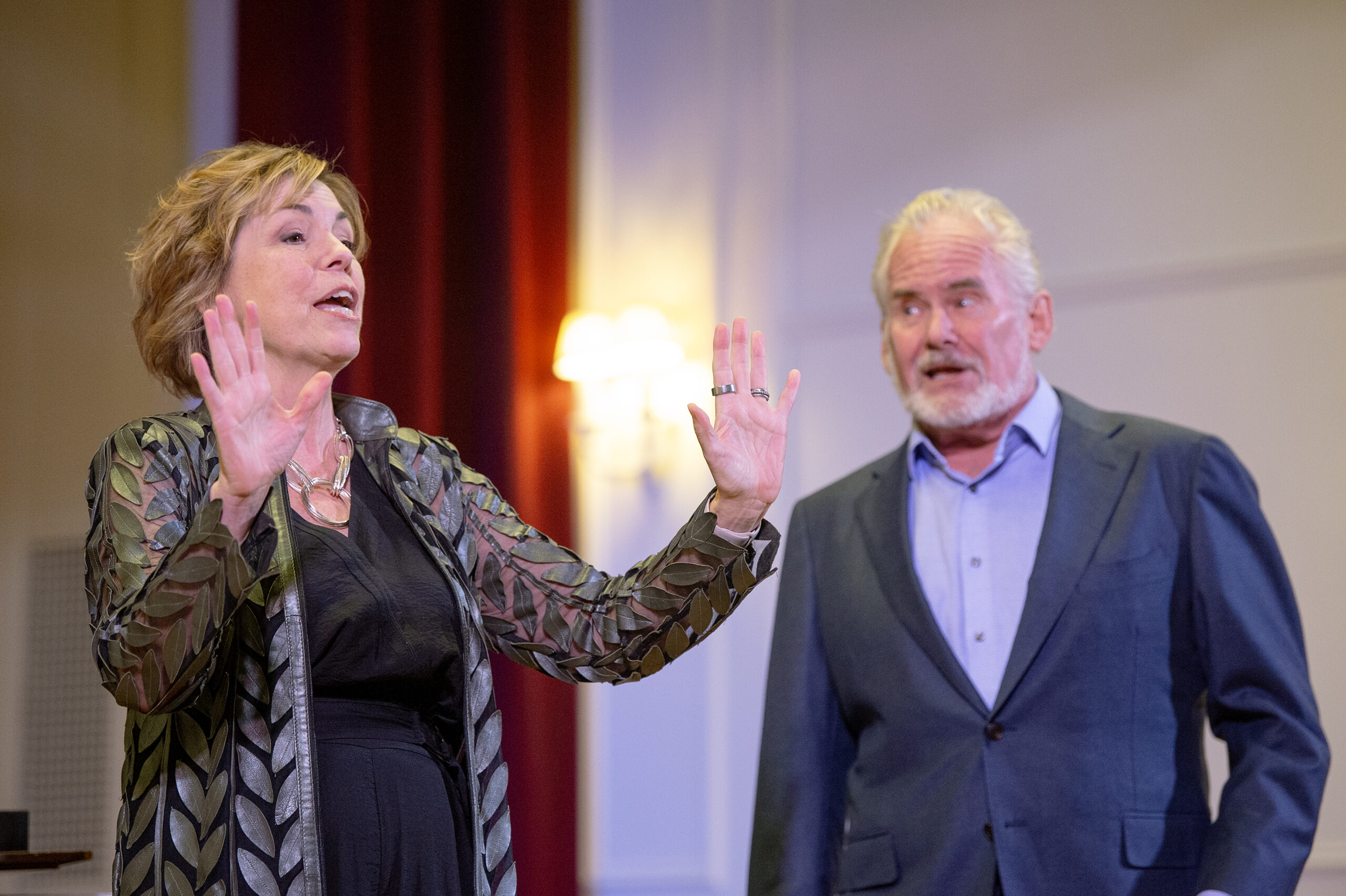
Contributing to our community vibrancy are Tim Shew and Jane Brockman, the guest performers for the annual meeting. Credited with decades of lead roles in Broadway productions, Tim and Jane are experts in their respective fields.
Broadway veterans Tim Shew and Jane Brockman perform a musical number. Photo by Jeremy Drey
They are also the perfect people to host and direct local musical theater workshops—which they are currently doing at Alvernia University. In the spirit of collaboration, these workshops—and the community musical theatre production they will stage in the Spring of 2026—are open for any Berks County college/university student to attend. Independent community actors are also welcome to join.
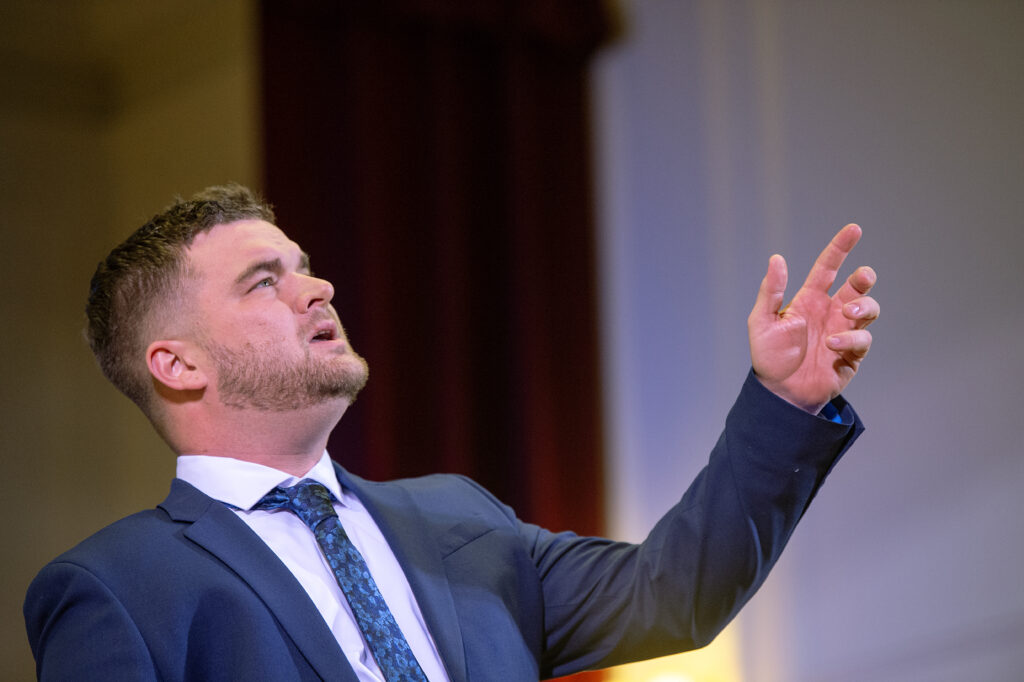
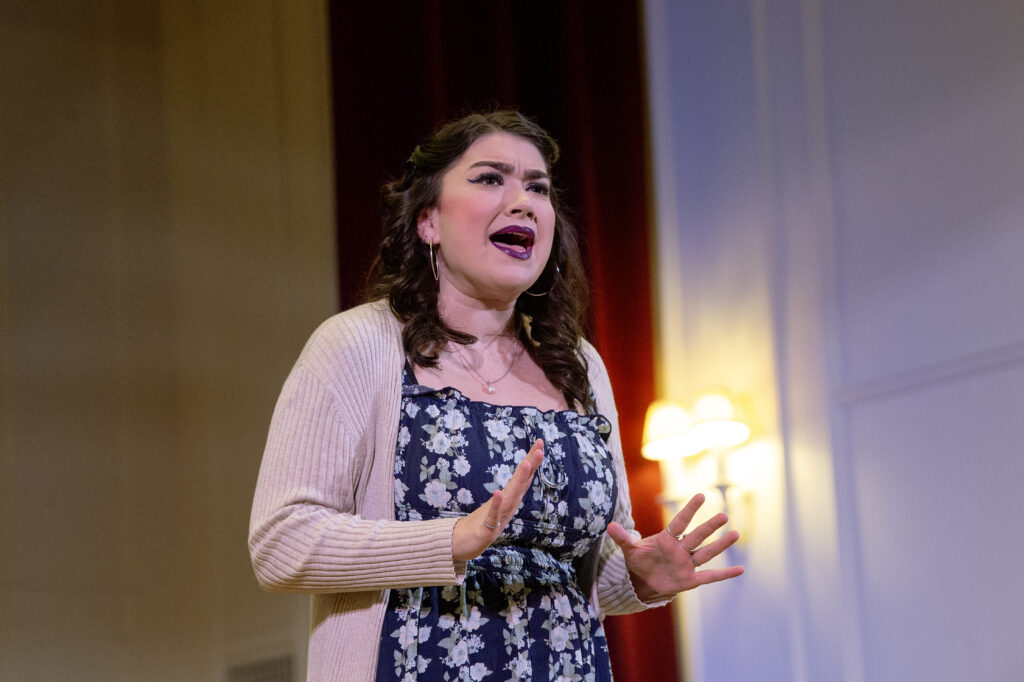
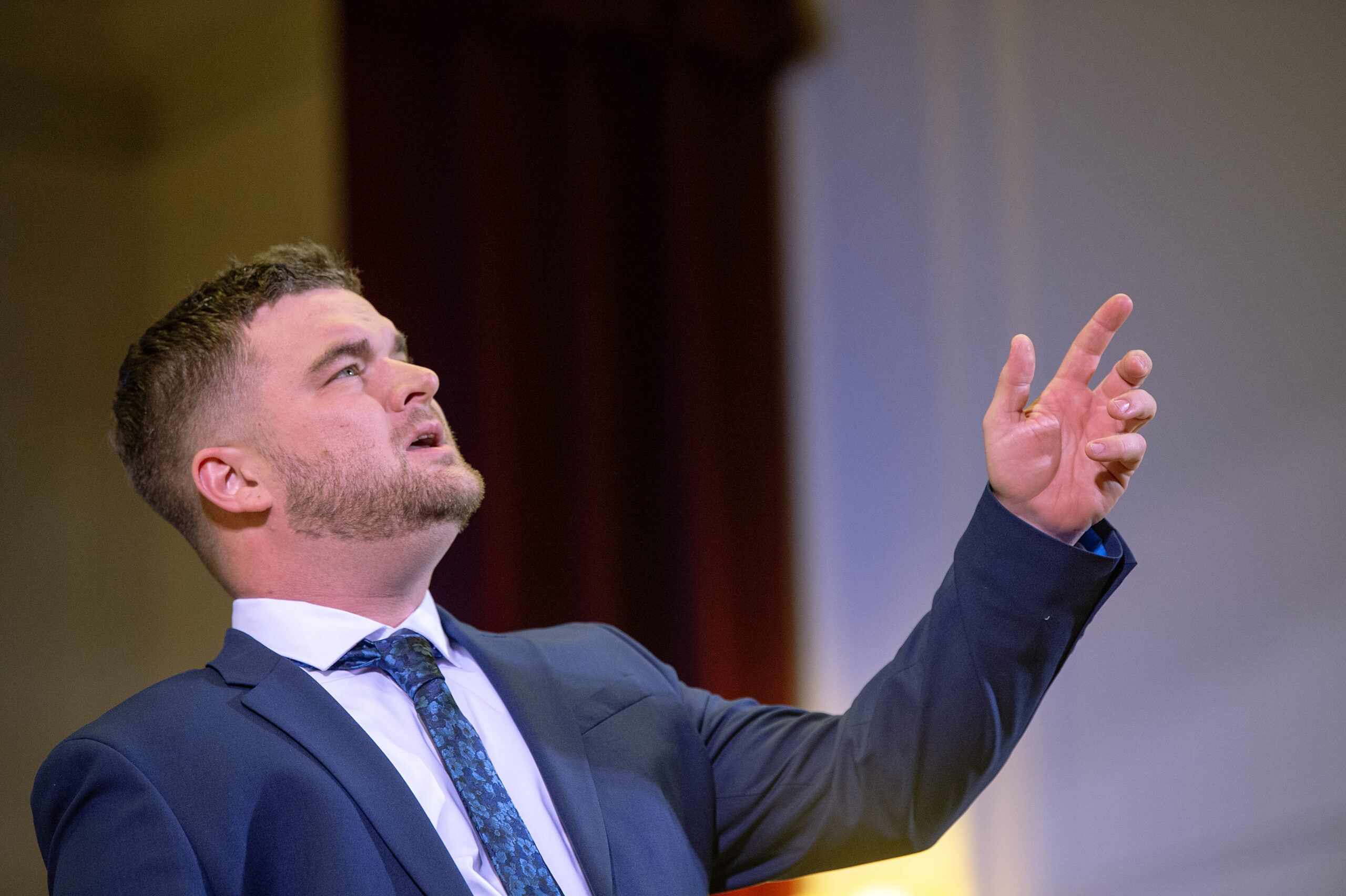
From right to left, the above photos feature: Musical theater workshop participant and producer of the upcoming community musical theater production performs “Beautiful City” from the musical Godspell; Musical theater workshop participant and current Alvernia University student performs “Diva’s Lament (Whatever Happened to My Part?)” from the musical Spamalot; Musical theater workshop participant performs “On the Steps of the Palace” from the musical Into the Woods. Photos by Jeremy Drey