Richie Santiago spends five or six hours on most weekdays at the Circle of Friends Drop-In Center on North Fifth Street in Reading, playing pool, chatting with friends, enjoying home-cooked meals and helping staff members with cleanup chores.
“I’m from New Jersey and don’t have any family here,” said Richie, who lives near the center. “If I didn’t have this place to come to it would hurt. This place benefits me a lot.”
Richie is one of about 235 people served annually by the center, which is run by Community Prevention Partnership/CHOR, an agency that provides a variety of prevention services in Berks and Schuylkill counties.
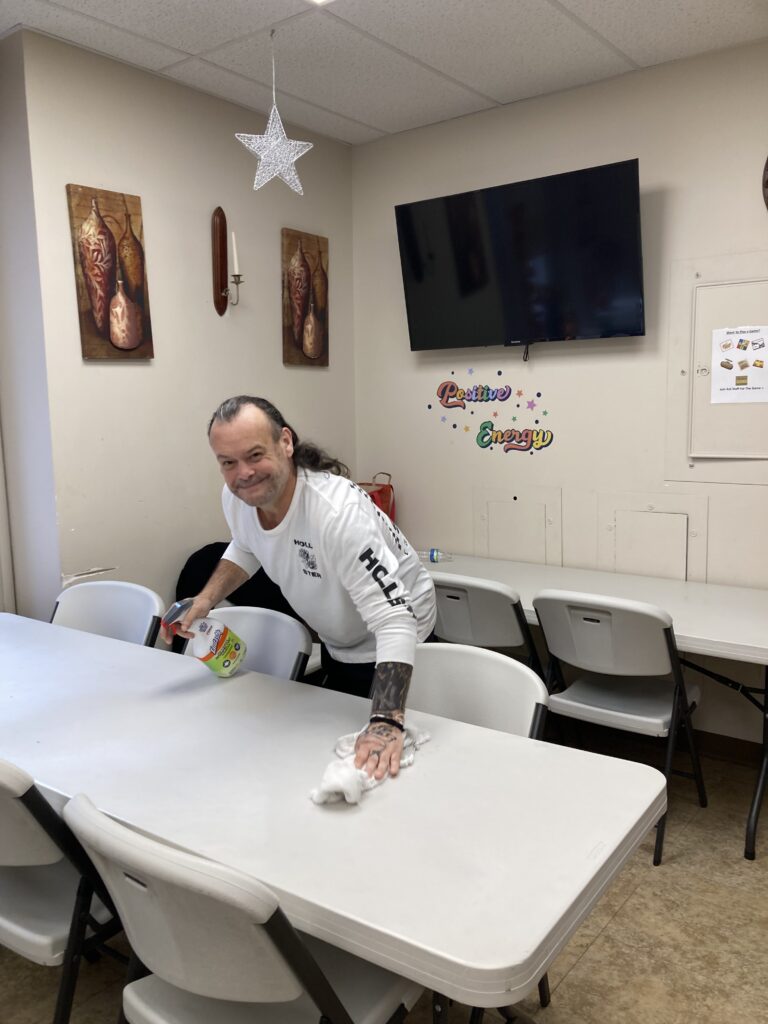
Richie Santiago helps clean up after a Halloween party at the Circle of Friends Drop-In Center on North Fifth Street.
According to Barbara Werner, executive director of Community Prevention Partnership, the Circle of Friends Drop-In Center, which serves people living with chronic mental health conditions, lives up to its name.
“It provides clients with a circle of support,” Werner explained. “Not everyone has a support system they can lean on when something goes wrong, but the center gives them that.”
Sadly, the future of Circle of Friends is not guaranteed.
CHOR-Youth and Family Services has been forced to pick up the tab because Block Grant money is stalled due to Pennsylvania’s budget impasse, a stalemate that has prevented many agencies from receiving expected funding since July.
“We are able to keep the center operating for now because we’re part of a larger organization,” Werner said. “But I’m not sure that CHOR’s funding can go on indefinitely.”
Having to shut down the center, she said, would be extremely detrimental to clients.
“The center helps meet people’s basic needs. We provide meals and social activities and a shower and laundry facilities,” she said. “That all helps keep our clients as mentally and physically stable as possible.”
“As of now, we haven’t heard of any of these agencies having to shut down, but we know that some are having to cut services and are worried about how long they can continue operating,” Seaman said. “Those Block Grant funds support a lot of services.”
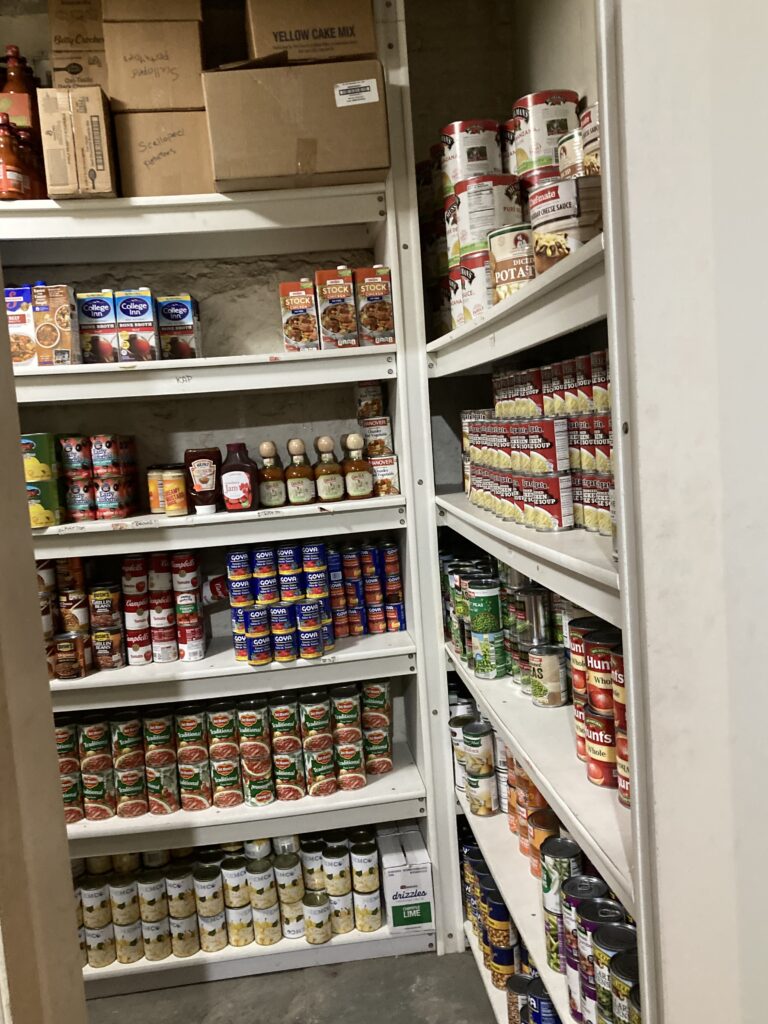
An inspirational bulletin board created by clients at the Circle of Friends Drop-In Center.
Both programs have been very successful over long periods of time, he explained, and discontinuing them is not an option.
“The people we serve would be homeless,” Michalik said. “We’re not going to let that happen.”
While the programs are continuing to operate, Michalik has put off making upgrades and improvements to some of the group homes and is looking at the possibility of having to seek a line of credit.
“If we need to do that, we’ll have to use money from some of our programming to pay the interest on the loan,” he said. “We’ve been told that we won’t get reimbursed for the cost of interest.”
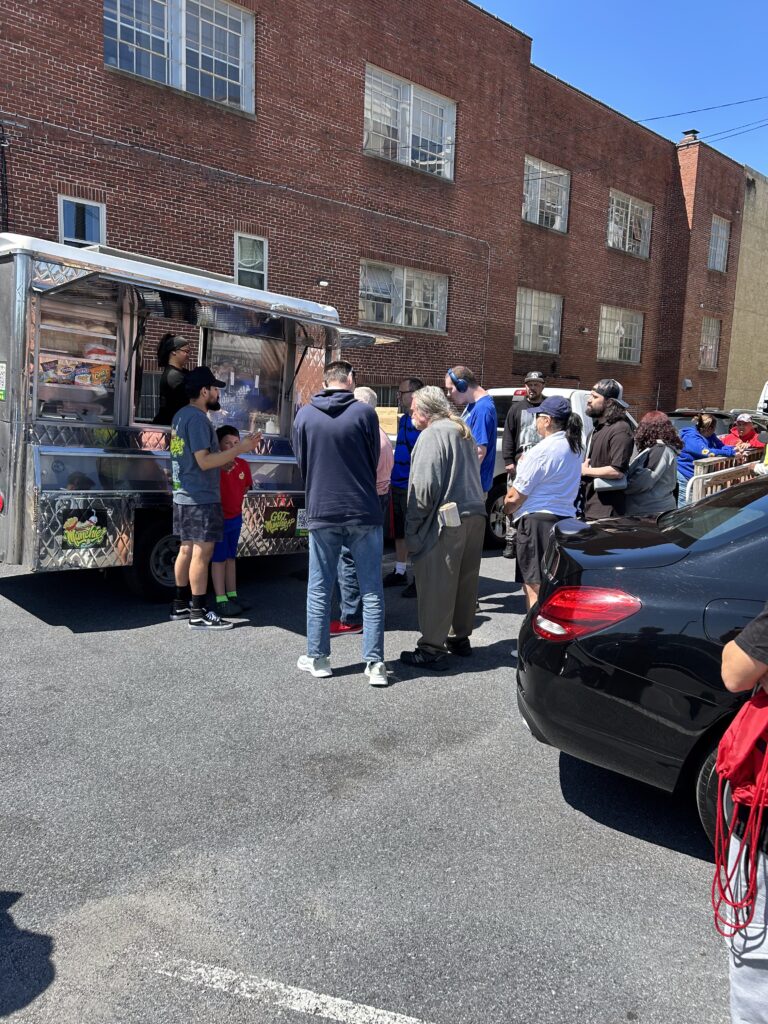
Clients line up at a food truck at the Circle of Friends Drop-In Center.
Four Months is ‘Long Enough’
Funding stoppages caused by the state budget impasse may be causing long-lasting damage, but the lack of a state budget also is causing short-term problems, according to Berks County Commissioner Michael S. Rivera.
“We have no idea how much money the county will be getting this year,” Rivera said. “We’re guessing and hoping we’ll get at least as much as last year, but we just don’t know.”
That makes it nearly impossible to enter contracts or plan for future spending.
Berks County has reserve funds that are enabling it to continue operations but is losing money it would have earned as interest on those reserves.
In addition, there is uncertainty over federal funding sources other than through the Block Grant program.
“That’s also a day-to-day process of trying to figure out what might happen,” Rivera said.
While Michalik said he takes no sides on the issue of the budget impasse, he is surprised that state legislators have been unable or unwilling to work together to pass a spending bill.
“I don’t know what they’re thinking, but this is like a perfect storm that agencies are struggling to weather,” he said. “I think that four months is long enough.”
by Susan Shelly McGovern
On any given day, there are hundreds of men, women, teens and children experiencing homelessness in Berks County.
Some have been without homes for months – even years – while others are homelessness for the first time.
They are teenagers who have aged out of foster care, and parents who have lost their jobs and ability to provide for their families.
They are veterans dealing with post-traumatic stress disorder, and mothers with children who have fled abusive relationships.
They are men and women battling substance abuse and its surrounding issues, and working families desperate to stay together, but unable to afford the high cost of housing.
Sixteen percent of those identified were under the age of 18, 25% were 55 or older and 38 individuals were U.S. veterans. They were sleeping in tents, cars, emergency shelters, transitional housing, under bridges and on city benches.
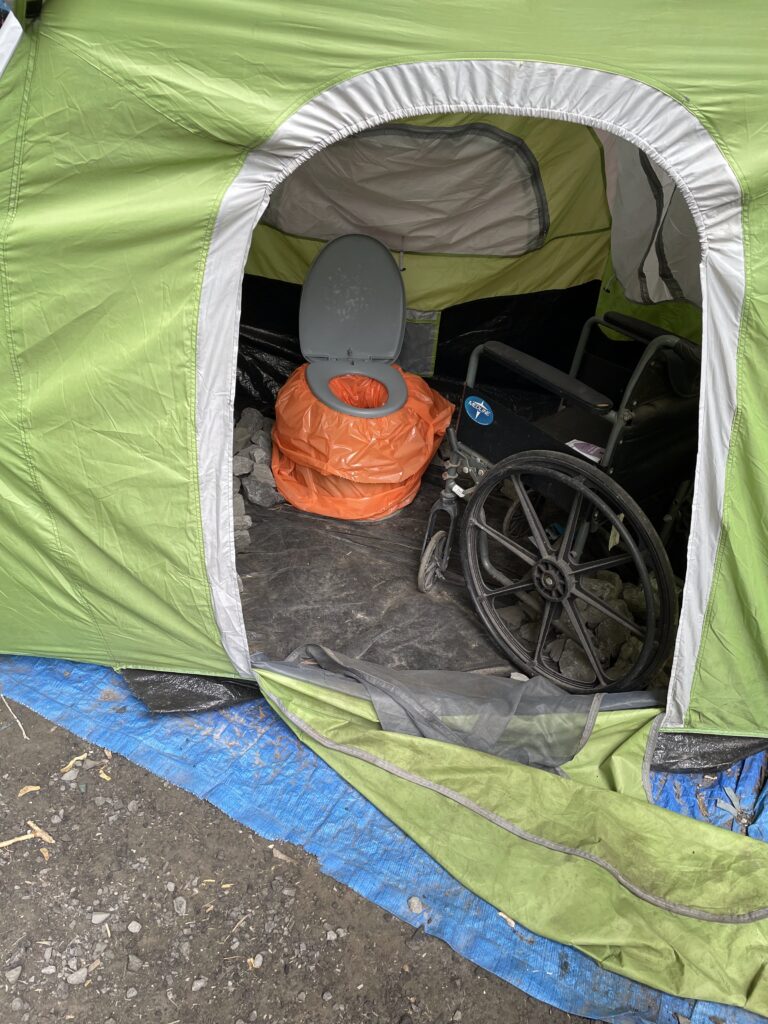
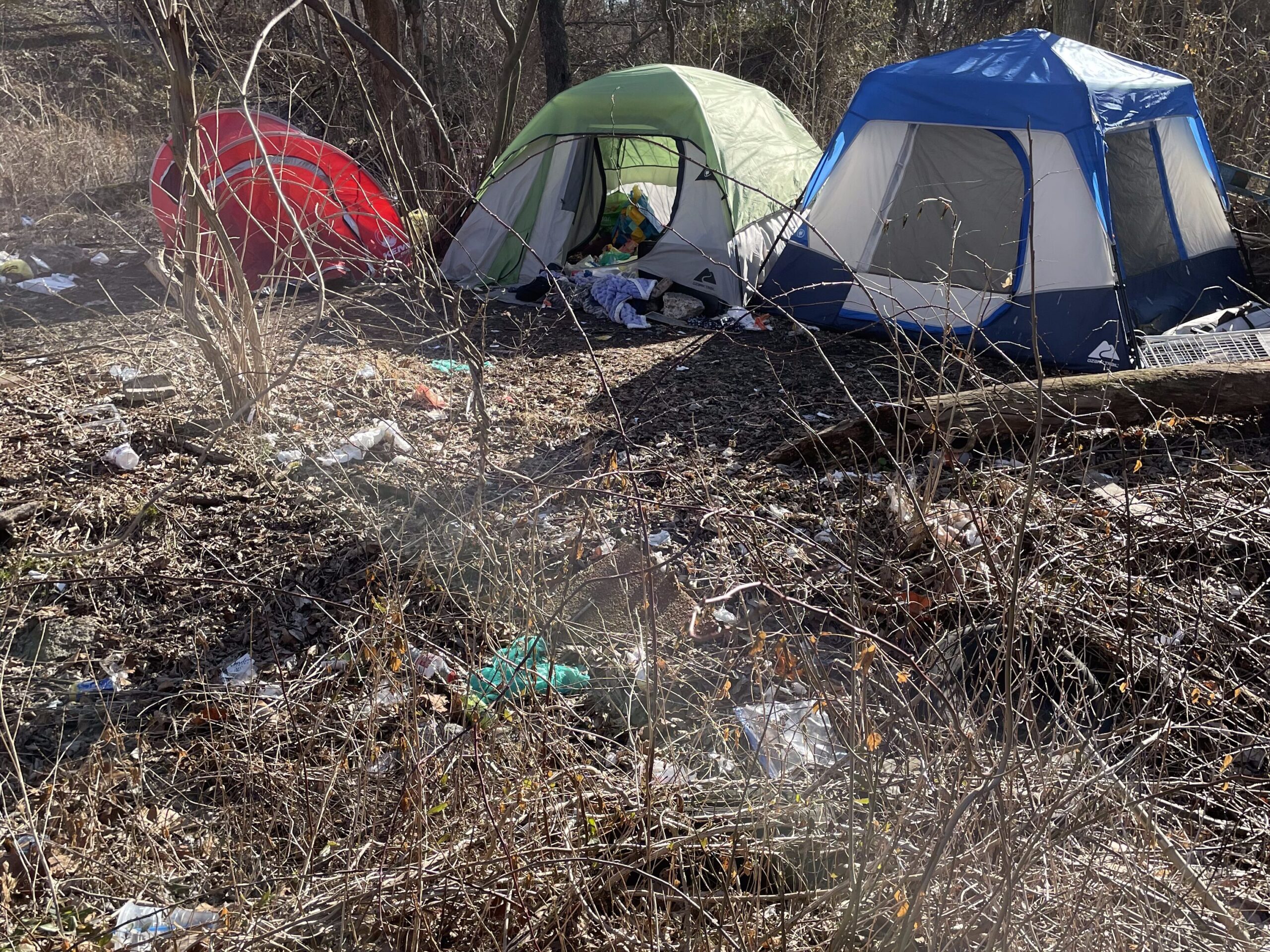
The tent of someone staying in a local homeless encampment.
Berks Coalition to End Homelessness (BCEH) “At a Stalemate”
Jack Williams, executive director of BCEH, said major uncertainty regarding how much federal funding may be available, and when, makes it impossible to plan for 2026 or beyond.
“We’ve basically come to a stalemate,” Williams said. “We can’t make decisions or enter into contracts, because we don’t know what’s happening with the funding we rely on.”
BCEH is an umbrella agency that oversees services to Berks County residents and works with a network of area nonprofits that receive federal funds for a variety of projects.
While federal funding has increased in recent years, officials worry that proposed cuts and conditions placed on funding may badly jeopardize the work they’re able to do in the future.
A problem this year, Williams explained, is that the U.S. Department of Housing and Urban Development (HUD) has not yet released guidelines for next year’s grant applications, which normally are due at the end of September.
Unable to even complete an application for funding leaves agencies completely in the dark, unable to know what to expect. Most agencies, however, are anticipating funding cuts.
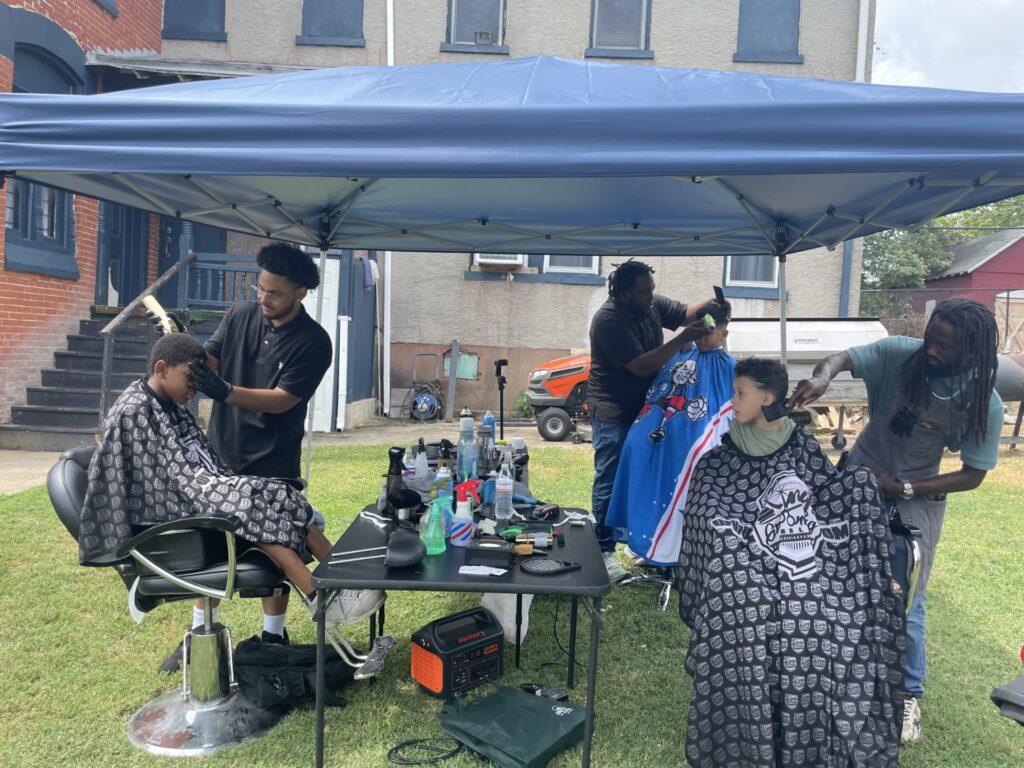
Volunteers cut children’s hair during a back-to-school community event sponsored by Family Promise of Berks County.
Reading Housing Authority “Preparing for Changes”
Lorena Keely, chairwoman of the board of commissioners for the Reading Housing Authority, which works to assist individuals and families find permanent housing, agreed that future funding and policies are uncertain, and cuts may be imminent.
“We’re trying to keep our finger on the pulse of what’s happening at the federal level, and we share the concerns of other agencies,” Keely said. “If what we’re hearing is being discussed comes to fruition, we need to figure out what that means for the people we serve.”
Specifically, representatives of the housing authority are concerned about a federal threat to end support for Housing First programs, which enable people to attain permanent housing without having to first meet certain conditions, such as employment or mental health treatment.
That would disproportionately affect people struggling with chronic, long-term homelessness, Keely explained, placing additional strain on agencies addressing housing issues.
There also is talk of instituting a two-year voucher program, which would put a time limit on assistance for eligible participants. While Reading Housing Authority has received no notification of such a limit, officials are working to stay on top of reports.
“We’re preparing ourselves as much as possible for any potential changes,” Keely said.
Tents provide shelter for unhoused people in Berks County.
Family Promise of Berks County Facing Severe Cuts to Operating Budget
Anticipating its 20th anniversary next year, Family Promise of Berks County’s future is uncertain as it faces the possibility of severe cuts in federal funding.
“Unfortunately, 70% of our budget comes from federal funding,” said Jill Glose, executive director. “It’s absolutely critical to what we do.”
Family Promise provides housing for families in crisis for 90 days while also providing crucial case management services and assistance in finding jobs and permanent housing. It also runs a program for homeless youth and supplies rent and utility assistance for eligible applicants.
Glose remains hopeful that federal funding will come through for next year. If it does not, she said, Family Promise’s ability to serve clients will certainly be impacted.
“The amount of need has absolutely increased, and it’s harder and harder to keep up with the support we can provide,” Glose said.
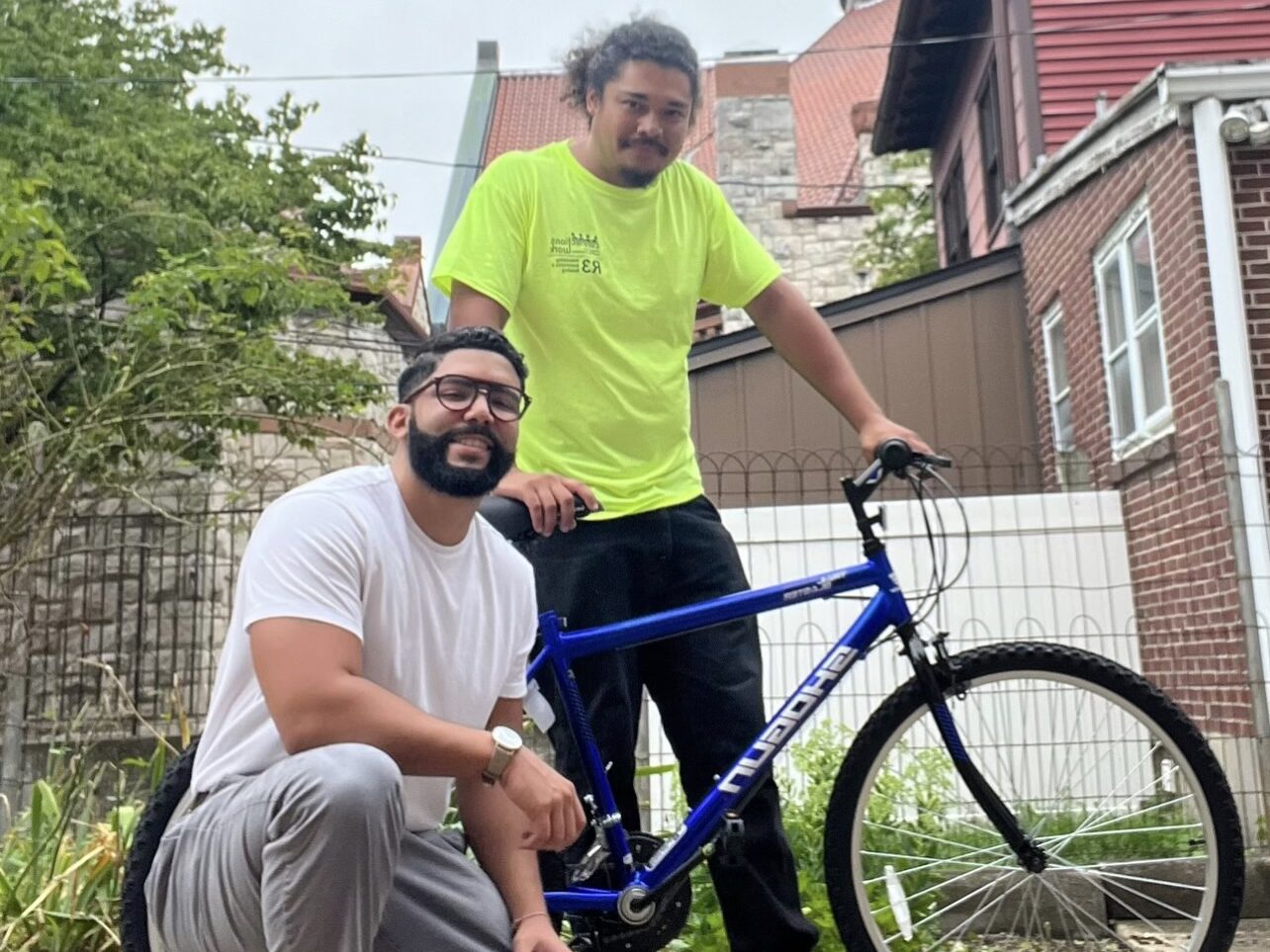
Luis Ruiz Lopez, a former caseworker for Family Promise of Berks County’s U Turn program, poses with a client who’s just been given a bicycle to use for transportation. The U Turn program serves teens who are experiencing homelessness.
Determined to Continue Serving Clients
While it’s difficult to remain optimistic in the face of looming budget cuts likely to adversely affect a large number of individuals and families, leaders of local agencies addressing housing and homelessness are determined to keep working for those they serve.
“We can’t give up,” Williams said. “We have to be prepared to pivot and do what we can to make sure the least number of people possible get hurt by all this.”
Keely said Berks County has a long history of agencies with common goals working together – something that will benefit everyone.
“We’ll put our heads together and seek solutions the best we can,” she said. “Our commitment to the people we serve is not going to change.”
Addendum
November 13, 2025: Pennsylvania Governor Josh Shapiro announced late Wednesday night that a $50.1B state budget has been signed into law. The deal ends a four-month budget impasse which stopped the flow of millions of dollars of funding to Berks County schools, nonprofits, businesses, programs and services.