

Our 2025 Annual Report: A Year of Connection is here
In Fiscal Year 2025, Berks County Community Foundation distributed over $6.8 million in grants and scholarships to support the community. While grantmaking is “what we do,” connecting to the community is at the heart of our work.
Berks County Community Foundation connects donors, grantees, and community partners to one another in the pursuit of the greater good. Our Program Team, comprised of experts in their fields of interest, made quarterly site visits to local institutions to learn about their operations, needs, and impact on Berks County. During the federal government shut down and Pennsylvania state budget impasse, the communication and program team engaged a local reporter to investigate how government cuts affect Berks nonprofits. Connecting with people, sharing expertise, and learning from one another, is how communities thrive.
“While distributing grants and scholarships is a core part of our mission,” says Kevin Murphy, President and CEO of Berks County Community Foundation, “none of our work would be possible without the relationships we build throughout Berks County.”
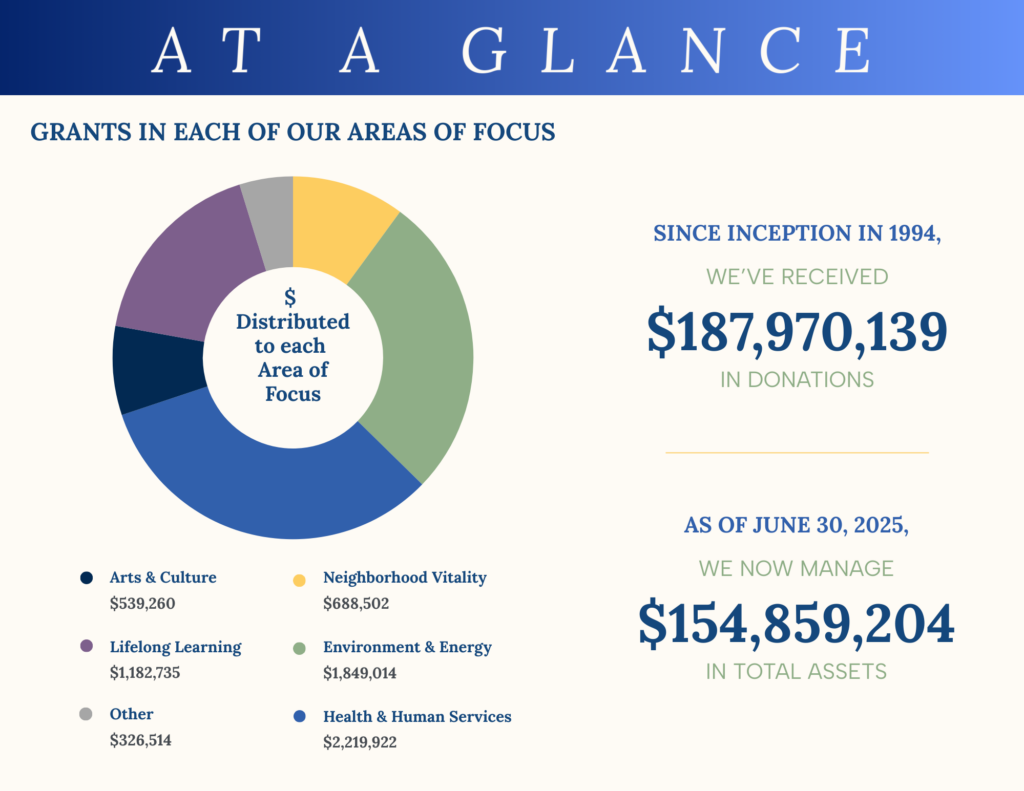
The Annual Report highlights our mission of promoting philanthropy and improving the quality of life for the residents of Berks County. The team works hard to bring organizations and individuals together for collaboration to spark change in the community. This year’s Annual Report provides detailed stories and data behind these achievements, underscoring the powerful impact of donor support in the community.
To read the full report, take a look below or click here.
The Met-Ed/Penelec Sustainable Energy Fund will make grants to fund a variety of energy efficiency projects to nonprofits, government entities, and small-businesses within the Met-Ed and Penelec utility areas. Funding is only available to existing buildings (not new construction) and to organizations that own their buildings (not lease). A preliminary energy assessment must be completed to be considered for funding. If you have not had an energy assessment completed, contact fund staff to be connected with technical assistance.
There is $500,000 available per utility area ($1,000,000 total). Grants will typically range from $25,000 to $100,000.
Eligible projects include:
Replacement of existing lighting with more energy-efficient lighting (more information here)
Installation of high-efficiency HVAC projects (more information here)
Installation of commercial kitchen and refrigeration improvements (more information here)
Process timeline:
- LOIs open April 15; Due May 15
- Announcement of invitation to submit an application by May 30
- Application opens on June 1; Due July 15
- Funding decisions announced by September 30
Letter of Intent
An advisory board will review the applications and decide which projects will receive grant funding.
The LOI and application is available in Berks County Community Foundation’s and Community Foundation for the Alleghenies’ grant portals. Projects in Penelec territory should fill out the form in the Community Foundation for the Alleghenies’ portal; Projects in Met-Ed territory should fill out the form in Berks County Community Foundation’s portal.
Contact information
In the Met-Ed rate district, please contact Emily Smedley:
Environment and Energy Program Officer, Berks County Community Foundation
Fund Manager, Met-Ed Sustainable Energy Fund
Emilys@bccf.org
In the Penelec rate district, please contact Mark Keim:
Program Officer, Community Foundation for the Alleghenies
Fund Manager, Penelec Sustainable Energy Fund
mkeim@cfalleghenies.org
The Met-Ed/Penelec Sustainable Energy Fund (SEF) seeks two nominees for its volunteer Advisory Board.
The Met-Ed/Penelec SEF distributes funds to promote the development and use of renewable energy and clean energy technologies, energy conservation and efficiency, and projects that improve the environment in the Met-Ed and Penelec service territories. The Met-Ed/Penelec SEF is co-managed by Berks County Community Foundation and the Community Foundation for the Alleghenies, respectively.
The funds are seeking nominations for the following positions:
- At-Large
- Environment
- Commercial Customer
The Advisory Board will fill either the At-Large or Environmental position and Commercial Customer position.
The Met-Ed/Penelec Advisory Board consists of no fewer than seven and no more than nine positions. Board members can serve six two-year terms. The Advisory Board meets four times per year on a quarterly basis. Meetings are typically held via Zoom, with the possibility of in-person meetings within the Met-Ed and Penelec service territories.
For consideration, candidates should meet the following criteria:
- Be a resident of Pennsylvania that is affiliated with the Met-Ed or Penelec rate district
- Have interpersonal skills that foster a creative and positive work environment for Board meetings
- Have the ability to work with fellow board members and fund staff to evaluate incoming projects and programs for their mission-fit, participate in technical and financial due diligence discussions, and determine project impact.
- Have demonstrated experience in working with Pennsylvania’s sustainable energy sector
Interested candidates should submit a brief letter of interest and a resume to Emily Smedley (Berks County Community Foundation/Met-Ed) or Mark Keim (Community Foundation for the Alleghenies/Penelec.) Their contact information is below. The letter should provide details on how the candidate fulfills the nomination criteria and the skills they bring to the advisory board. The resume should provide contact information and the candidate’s educational and work experience.
Nominations should be submitted by April 17, 2026.
All candidates will be notified via email upon receipt of their letter of interest and resume. The advisory board will submit the successful nominee(s) to the Pennsylvania Public Utilities Commission for final approval.
Contact Information
In the Met-Ed rate district, please contact Emily Smedley:
Environment and Energy Program Officer, Berks County Community Foundation
Fund Manager, Met-Ed Sustainable Energy Fund
Emilys@bccf.org
In the Penelec rate district, please contact Mark Keim:
Program Officer, Community Foundation for the Alleghenies
Fund Manager, Penelec Sustainable Energy Fund
mkeim@cfalleghenies.org
This announcement is made in keeping with the best practices of the Pennsylvania Sustainable Energy Board (PASEB) and is being distributed on the websites of the Public Utility Commission and the Met-Ed/ Penelec Sustainable Energy Fund, as well as relevant newsletters and other sources. This notice may be forwarded to interested parties.
In late 2025, the program and communication teams of Berks County Community Foundation spent two days in the Kutztown area. There, they visited local institutions that contribute to the area’s vitality.
The foundation conducts these site visits to gain knowledge about the communities we serve. Some institutions have received gifts from various funds the foundation manages. Other institutions simply enrich the cultural, educational, or religious life of the county.
This blog post is part one of a two-part series on the Kutztown tour.
The tour started at the Pennsylvania German Cultural Heritage Center on Kutztown University’s campus. There, our tour guide, Patrick J. Donmoyer, talked about the Berks County art tradition of barn stars, an art form which can be traced back to the late 1700s. Milton J. Hill (1887-1972), the celebrated local artist, was a third-generation barn star painter and native speaker of Pennsylvania Dutch. Hill contributed to dozens of installations of barn stars that are still hanging today. In fact, the Pennsylvania German Cultural Heritage Center offers a free, self-guided tour of the barn stars of Berks County. Berks County is home to the highest concentration of barn stars in Pennsylvania, a testament to the cultural influence of Pennsylvania Germans in the area.
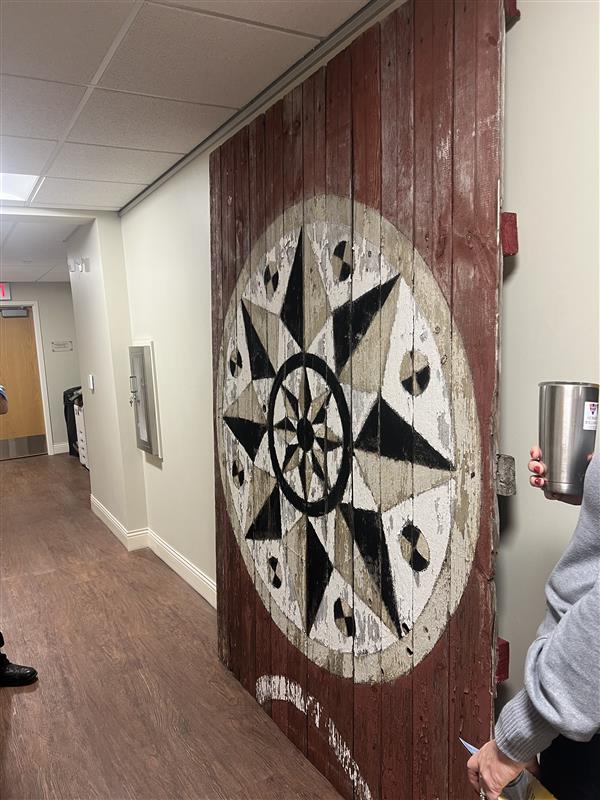
Donmoyer also shared famous Pennsylvania Dutch folklore and traditions with the team. These folk legends included such the sainted healer Mountain Mary and the grumpy Christmas visitor known as the Belsnickel. Donmoyer also shared the Pennsylvania Dutch tradition of herbal healing, quilting, and of course, local cuisine.
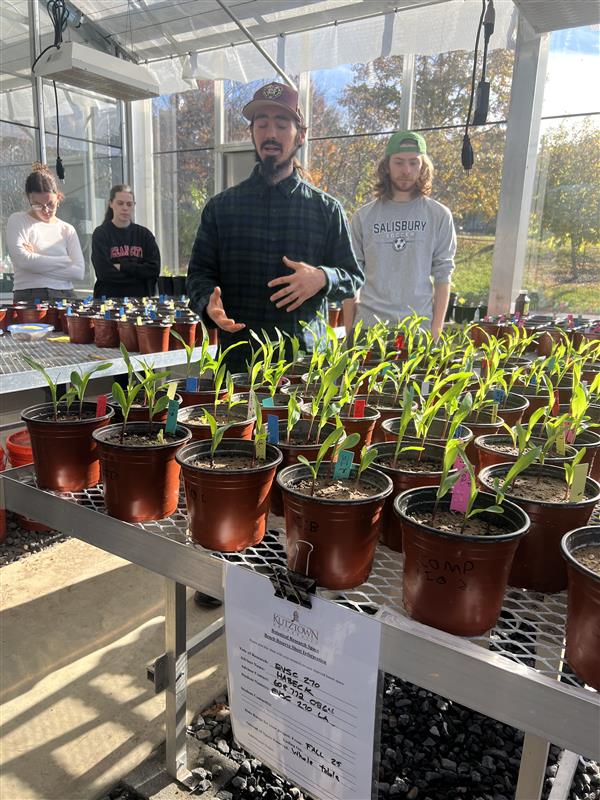
After visiting the Heritage Center, the foundation team briefly joined an undergraduate class at Kutztown University’s Botanical Research Center. Dr. Chris Habeck’s students on the regenerative organic agriculture track presented their projects, which included research on biochar’s effects on soil health and plant growth. In addition, the research done at the center will benefit local partners, namely farmers from the Rodale Institute and beyond.
A short walk on Kutztown University’s campus brought the team to the university’s planetarium/observatory. There, Dr. Phill Reed demonstrated the updated technology the planetarium requires to run. The Kutztown University Planetarium is open to the community for various educational and recreational shows. After viewing one of these shows, Reed and the foundation team ascended the stairwell which led to the C.R. Chambliss Astronomical Observatory. There, Reed informed the group of notable research that had been and continues to be conducted using the observatory. Students have identified 15 new exoplanets using the observatory, providing new insight into the architecture of our solar system.

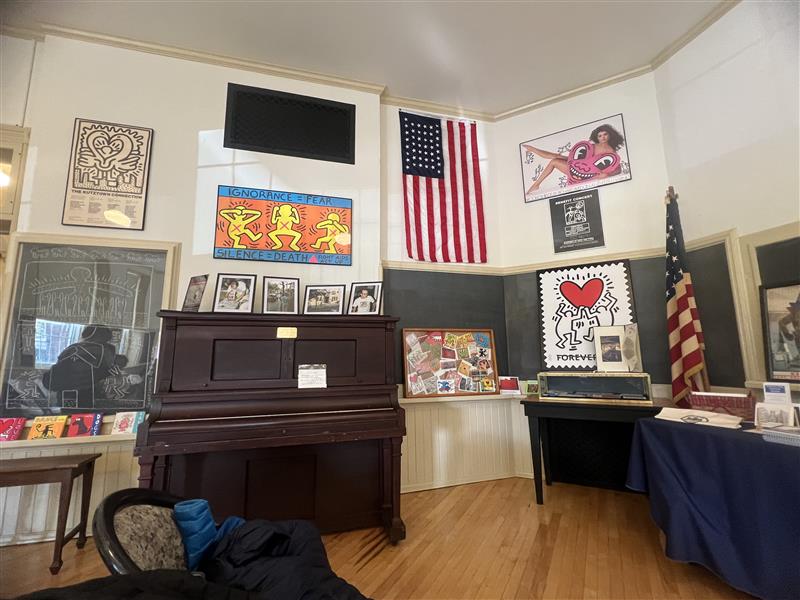
Leaving the university’s campus, the tour continued down Kutztown’s Main Street and into the residential landscape of the area. The Kutztown Area Historical Society is home to many installations, including a miniature train museum, renderings of Victorian-era living spaces, and a room dedicated to the late artist Keith Haring. The Historical Society is open to the public and has community projects in which residents can participate.
Part one of our Kutztown visit concluded where it began, on Kutztown University’s campus. The Wells-Rapp Center for Mallet Percussion Research boasts an archive of artifacts, instruments, manuscripts, and recordings of mallet percussive pioneers. The center also has a performance hall and rehearsal rooms for Kutztown students and community members. The Kutztown Pipe Band, a Kutztown University and nonprofit community group in the area, utilizes the space. With support from the Juniper Fund of Berks County Community Foundation, the band has grown its membership. Now, they offer free “Intro to Piping” classes for those with no prior experience who may be interested in joining.
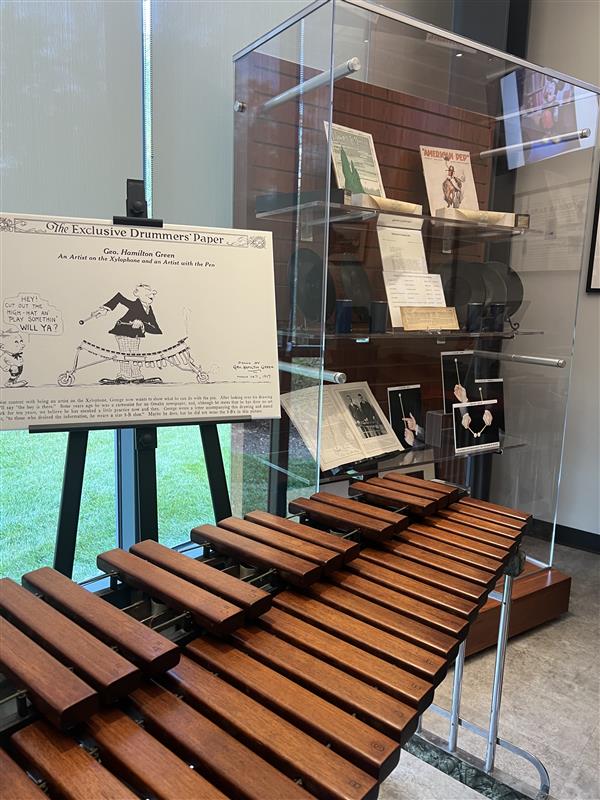
This concludes part one of the two-part series about the foundation’s site visit to the Kutztown area.
At the Community Foundation, we want to improve life in Berks County by connecting its residents with accurate information.
What do these cuts mean for Berks County residents, nonprofits, businesses and donors?
The impact of federal funding cuts, government shutdowns, and state budget impasse are being felt on a local level.
While philanthropy helps create vibrant and healthy communities, it cannot replace the stability of federal or state investments. Affordable housing, food security, access to education, workforce development, affordable healthcare and much more depend on federal dollars. When that funding is stripped or halted, we risk a reduction in essential local services.
Local philanthropy has never and will never be able to fill the void of government funding.
Why Stories of Impact?
We hear directly from Berks nonprofits, agencies, businesses and individuals how federal cuts impact their capacity to serve the community. To connect Berks County residents with accurate information, we’ve engaged a local freelance reporter to elevate the voices of those impacted. These articles shed light on the real-world effects of these budget changes on local organizations and individuals.
This research has been captured in the form of articles that you can read below.
###
Note from Monica Reyes, VP for Programs and Initiatives:
Opinions expressed in the Government Cuts, Local Impact Series do not necessarily represent those of Berks County Community Foundation.
Click here to read the bio of our reporter, Susan Shelly McGovern
Susan is a freelance writer, editor, and researcher. Over the course of a long and varied career, Susan has crafted thousands of articles, written or contributed to more than 50 books, generated copy for advertising and marketing firms, edited a variety of manuscripts, researched corporate histories and generally applied her skills to whatever projects presented themselves.
But what Susan has enjoyed the most is telling stories.
As a feature writer for the Reading Eagle, area colleges and universities, health care systems, treatment centers and others, Susan has had the opportunity to tell the stories of first-generation college students, people struggling with addiction, veterans, business executives, health care workers, educators, patients dealing with serious illnesses and people who have triumphed over adverse circumstances.
As a long-time, invested resident of Berks County, Susan has witnessed some of the challenges local people experience with food insecurity, homelessness, incarceration, alienation and other extremely challenging situations. She has worked with agencies including New Journey Community Outreach, Opportunity House, Berks Coalition to End Homelessness, Family Promise of Berks County and Connections Work.
Addendum
November 13, 2025: Pennsylvania Governor Josh Shapiro announced late Wednesday night that a $50.1B state budget has been signed into law. The deal ends a four-month budget impasse which stopped the flow of millions of dollars of funding to Berks County schools, nonprofits, businesses, programs and services.
Read the Impact Stories Now


The Met-Ed/Penelec Sustainable Energy Fund (SEF) seeks three nominees for its volunteer Advisory Board.
The Met-Ed/Penelec SEF distributes funds to promote the development and use of renewable energy and clean energy technologies, energy conservation and efficiency, and projects that improve the environment in the Met-Ed and Penelec service territories. The Met-Ed/Penelec SEF is co-managed by the Berks County Community Foundation and the Community Foundation for the Alleghenies, respectively.
The funds are seeking nominations for the following positions:
- Weatherization
- Commercial Customer
- At-Large
The Advisory Board consists of no fewer than seven and no more than nine positions. Board members can serve six two-year terms. The Advisory Board meets four times per year on a quarterly basis. Meetings are typically held via Zoom, with the possibility of in-person meetings within the Met-Ed and Penelec rate districts.
For consideration, candidates should meet the following criteria:
- Be a resident of Pennsylvania that is affiliated with the Met-Ed or Penelec rate district.
- Have interpersonal skills that foster a creative and positive work environment for Board meetings.
- Have the ability to work with fellow board members and fund staff to evaluate incoming projects and programs for their mission-fit, participate in technical and financial due diligence discussions, and determine project impact.
- Have demonstrated experience in working with Pennsylvania’s sustainable energy sector.
Interested candidates should submit a brief letter of interest and a resume to Emily Smedley (Berks County Community Foundation/Met-Ed) or Mark Keim (Community Foundation for the Alleghenies/Penelec.) Their contact information is below. The letter should provide details on how the candidate fulfills the nomination criteria and the skills they bring to the advisory board. The resume should provide contact information and the candidate’s educational and work experience.
Nominations should be submitted by Friday, November 7, 2025.
All candidates will be notified via email upon receipt of their letter of interest and resume. The advisory board will submit the successful nominee(s) to the Pennsylvania Public Utilities Commission for final approval.
Contact Information
In the Met-Ed rate district, please contact Emily Smedley:
Environment and Energy Program Officer, Berks County Community Foundation
Fund Manager, Met-Ed Sustainable Energy Fund
Emilys@bccf.org
In the Penelec rate district, please contact Mark Keim:
Program Officer, Community Foundation for the Alleghenies
Fund Manager, Penelec Sustainable Energy Fund
mkeim@cfalleghenies.org
This announcement is made in keeping with the best practices of the Pennsylvania Sustainable Energy Board (PASEB) and is being distributed on the websites of the Public Utility Commission and the Met-Ed / Penelec Sustainable Energy Fund, as well as relevant newsletters and other sources. This notice may be forwarded to interested parties.
Reading, PA (June 23, 2025) – Berks County Community Foundation granted $102,500 to support 10 local projects that will address critical environmental challenges, promote sustainable practices, and build collaborative partnerships. Grants were made from the Innovation Fund of Berks County Community Foundation, which supports projects that improve environmental health and climate resiliency in Berks County.
The 2025 grants include:
- $1,000 to Albany Township for community park improvements
- $6,000 to the Berks Recycling Coalition to support the Berks County Earth Day event
- $15,000 to Berks Nature to support municipal outreach and collaboration
- $12,500 to Berks Nature for planning and restoration work with watershed associations
- $5,000 to the Borough of Lyons for stream restoration planning at Lyons Borough Park
- $15,000 Delaware Riverkeeper Network to support environmental leadership development
- $12,000 to PennEnvironment Research and Policy Center to support clean energy work in Berks County
- $12,000 to Student Conservation Association for the Reading Conservation Corps
- $12,000 to What’SUP Berks Initiative to reduce single use plastics throughout Berks County
- $12,000 to Widoktadwen Center for Native Knowledge to build an indigenous ecological education garden
“These grants will deliver vital support for local initiatives tackling urgent environmental issues, advancing sustainable solutions, and strengthening our community’s ability to adapt to the growing impacts of climate change,” said Emily Smedley, Environment and Energy Program Officer at Berks County Community Foundation.
To learn more about The Innovation Fund, please visit https://bccf.org/funds/the-innovation-fund/.
Before Grantmaking, Let’s Understand Community Foundations
Community foundations pool resources from individuals, families, and businesses to support nonprofits within their communities. It all starts with a donor or donors working with us to establish a fund to support their charitable goals. We currently manage nearly 400 different funds totaling approximately $140 million. Most of those funds are restricted to support specific organizations or areas of interest.
Our Grantmaking Process
- Identifying Community Needs: Our team of program officers, each of whom is an expert in her area of focus, starts by identifying the most pressing needs within the community and managing their related portfolio of funds. This involves engaging with local stakeholders and analyzing data to understand where support is most needed.
- Establishing Grant Programs: Based on identified needs, our team established five areas of focus: Arts & Culture, Education, Environment & Energy, Health & Human Services, and Neighborhood Vitality.
- Endowments: To support our grantmaking activities, the Community Foundation relies on donations from the public. Most of the funds that we manage are endowed funds, which are invested to generate income for long-term grantmaking. This ensures a sustainable source of funding for future grants.
- Grant Application and Review: Nonprofit organizations seeking funding submit grant applications detailing their projects and how they align with the foundation’s priorities. Applications are reviewed by a committee and/or foundation staff to assess their potential impact and feasibility. Committee members are selected because they have a connection to the fund or expertise in the area it supports.
- Awarding Grants: Once the review process is complete, the foundation awards grants to selected nonprofits. These grants can be unrestricted, allowing organizations to use the funds as needed, or restricted to specific projects or programs.
- Monitoring and Evaluation: After grants are awarded, our program officers monitor the progress of funded projects. This involves regular reporting from grantees and site visits to ensure that the funds are being used effectively and that the projects are achieving their intended outcomes.
- Community Engagement and Feedback: Continuous engagement with the community is crucial. Foundation staff often holds meetings, site visits, and forums to gather feedback and ensure that our grantmaking strategies remain aligned with community needs and our mission.
Our grantmaking is made possible by the funds that have been established over our 31-year history. Each fund was established based on the interests and passions of the donor(s), and it is our honor and obligation to abide by the parameters set forth by our fund holders.
There are different types of funds that donors can establish with the Community Foundation:
- Undesignated: Want to meet the most pressing needs in Berks County? Grants from undesignated funds are determined by our board of directors to address ever-changing community needs. This type of fund supports initiative work such as our support of Spotlight PA, student retention work, rural initiatives, and new arts funding. We strategize to use unrestricted funding to create systemic change and address big issues.
- Designated: Support a specific organization year after year, even after you are gone. Organizations benefit from consistent support, and you can be confident the money in your fund is professionally managed.
- Field of Interest: Whatever your cause, our team of program experts will do the legwork to ensure grants from your fund make a difference for your cause now and for years to come.
- Donor Advised: Make decisions about where grants from your fund go each year while you are alive, with the option to name a successor advisor after you are gone.
- Scholarships: Help students pay for their education through a scholarship fund. Or use a designated fund or more flexible field-of-interest fund to support a specific school or area of education.
- Giving Circle: The Power of the Purse (POP) committee is a women’s giving circle. The dedicated group of women meets several times a year to learn about barriers women and girls face in Berks County. They visit local organizations, listen to expert speakers, and make thoughtful decisions about how best to help, using their pooled resources.
The vision for the Program Team is to:
- Move the needle in priority areas where donors and/or the community have asked us to shine a light.
- Develop deep expertise in these priority areas and make strategic investments of time, effort, and money to improve the quality of life in Berks County in those areas.
- Be impeccable in the stewarding of grants to ensure donor intent is met and data and feedback are collected and put to good use.
I lead the team of expert program officers, ensuring their grantmaking work and management align with donor intent. Together, we seek local and national partnerships and opportunities to amplify the impact of our programs.
The mission of Berks County Community Foundation is to promote philanthropy and improve the quality of life for the residents of Berks County. We play a pivotal role by providing financial support to various nonprofit organizations and individuals in need through our grantmaking. If you have questions, please email me at monicar@bccf.org. To learn more about myself and the team at Berks County Community Foundation, visit the Our Team page.
READING, PA (April 9, 2025) – Berks County Community Foundation is pleased to announce the conclusion of its 1st quarter grant cycle for calendar year 2025, which has successfully distributed vital funding to local nonprofits and initiatives dedicated to improving our community.
In this quarter, the Foundation awarded grants to a diverse range of projects focusing in areas of environment and energy, education, health and human services, arts and culture, and neighborhoods and economic development; supporting the impactful work of local organizations that improve the lives of Berks County residents.
These numbers are a testament to the Foundation’s commitment to its mission to promote philanthropy and improve the quality of life for the residents of Berks County.
- Q1 total grants awarded: 190
- Q1 total dollar amount awarded: $1,152,270
- Q1 number of organizations impacted: 142
“Grants awarded are made possible by generous donors who give back to the community they love,” stated Molly McCullough Robbins, Vice President for Philanthropic Services.
Moving forward, community members are invited to join the Community Foundation in sparking change. Here are two ways to get involved:
- Give to an Existing Fund: Your contributions can help sustain the important work of established funds addressing specific needs within Berks County.
- Create Your Own Fund: Whether you want to honor a loved one or support a particular cause or organization, the Foundation can help you to create a fund that reflects your passions and philanthropic goals.
For more information on how to give or create a fund, please visit www.bccf.org, email Molly McCullough Robbins at mollyr@bccf.org, or call (610) 685-2223.
###
Berks County Community Foundation is a nonprofit corporation serving as a civic leader for our region by developing, managing, and distributing charitable funds to improve the quality of life in Berks County, PA. More information is available at www.bccf.org.
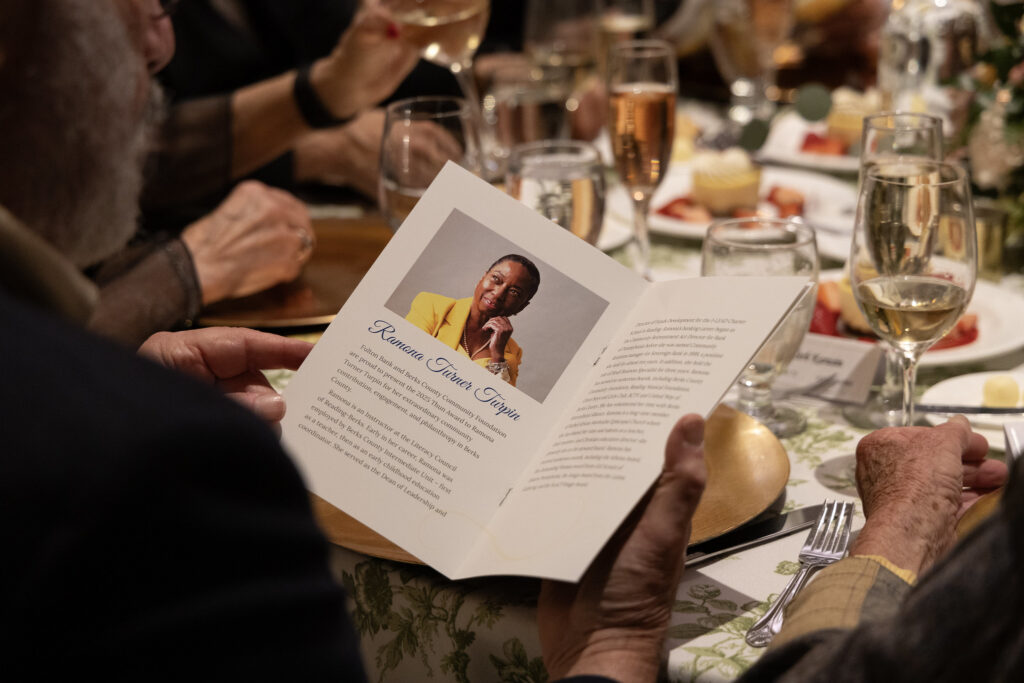
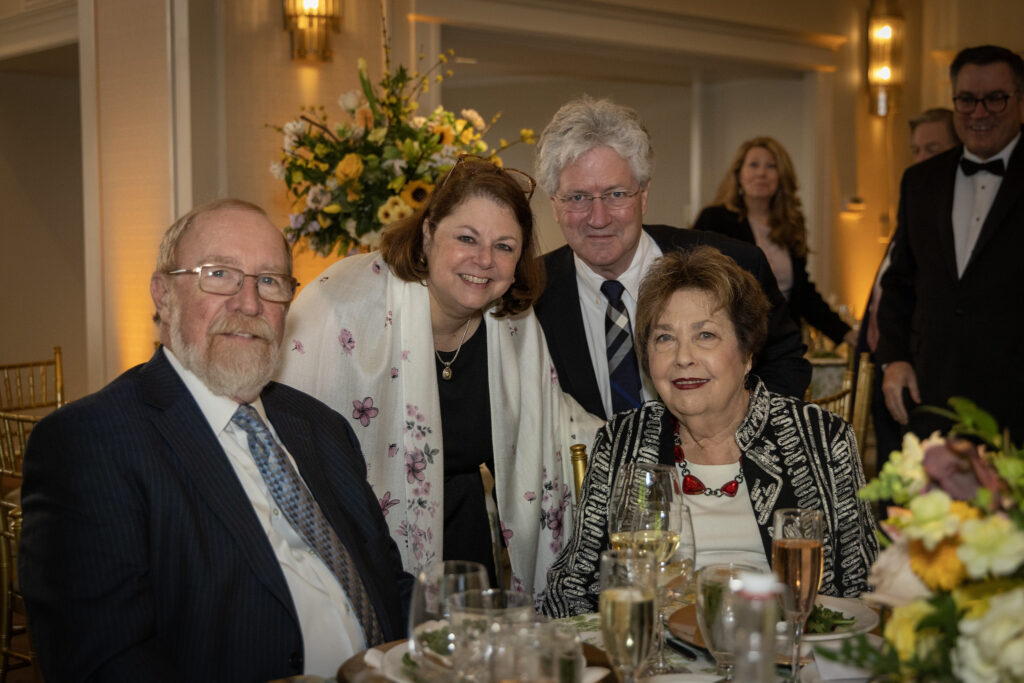
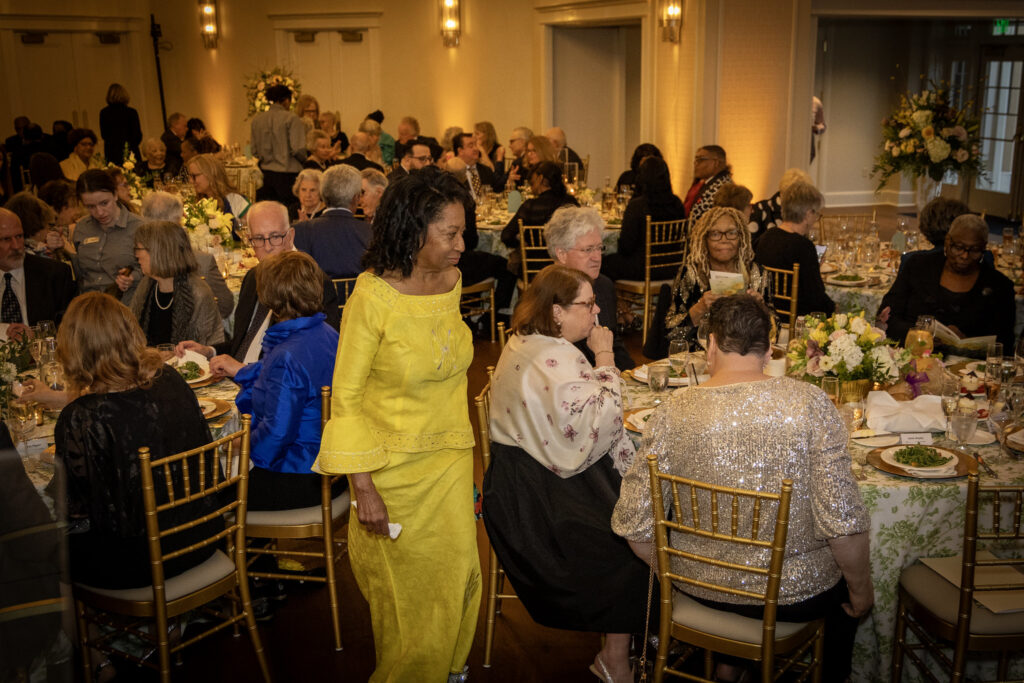
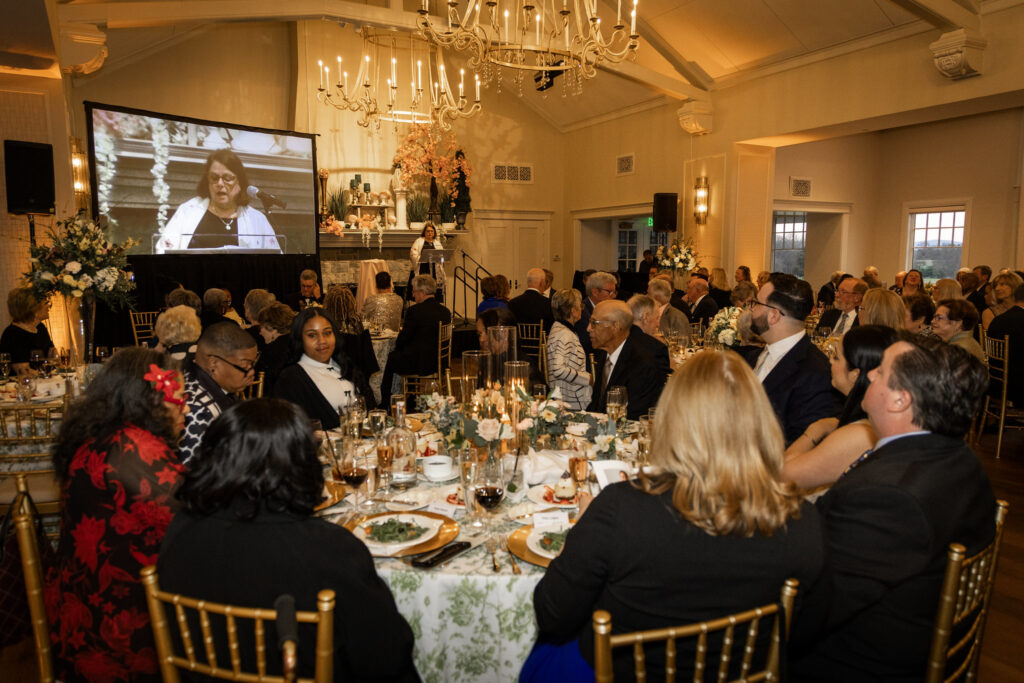
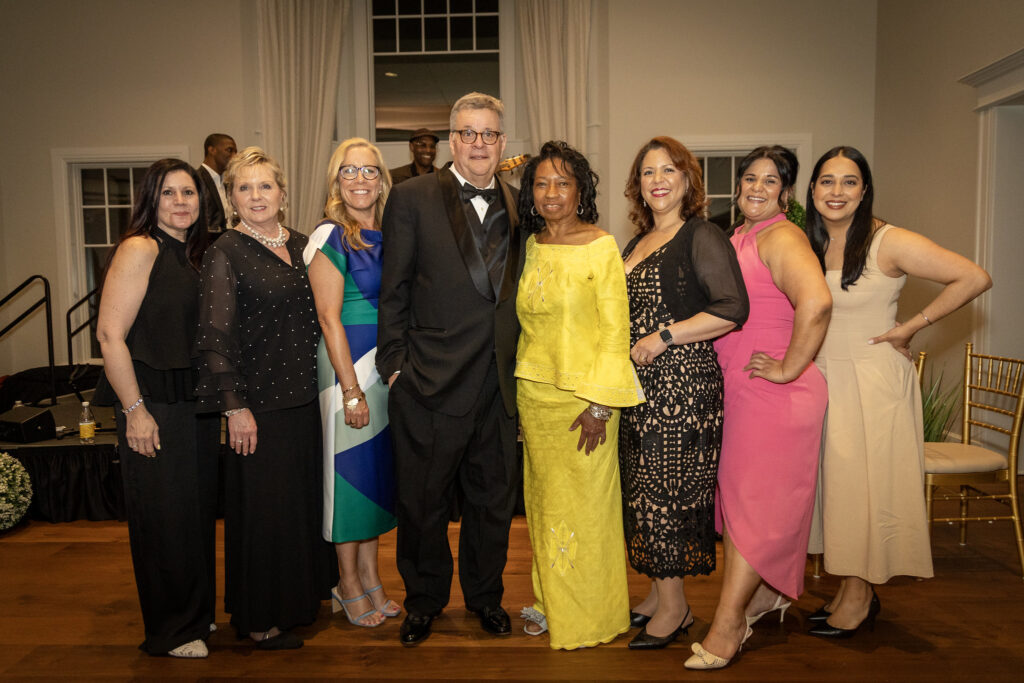
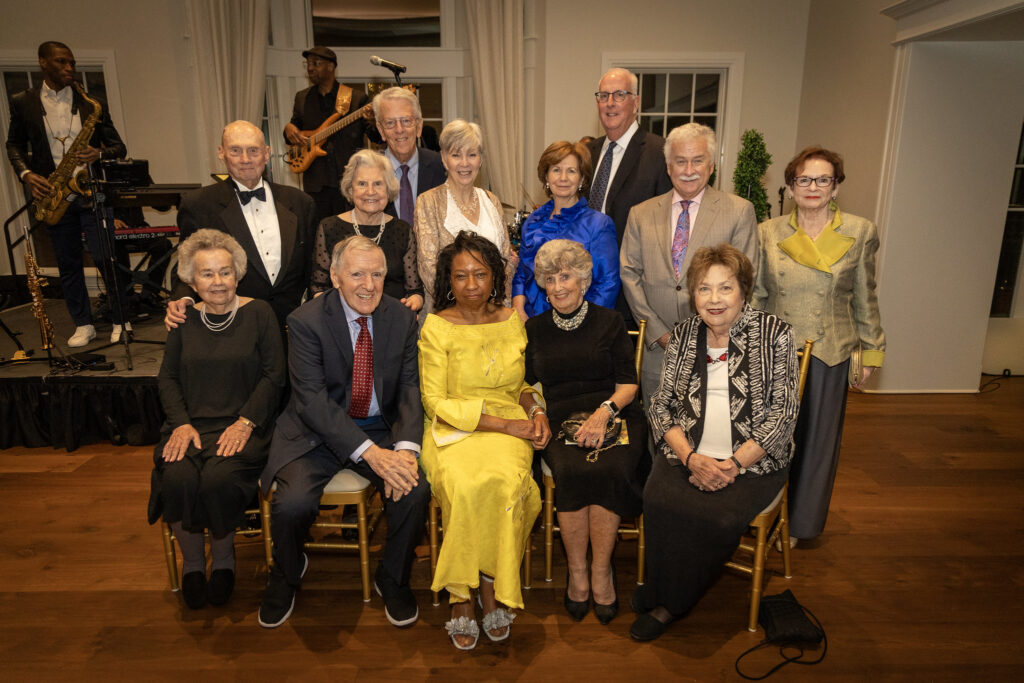
On March 29, 2025, approximately 145 guests gathered at the Berkshire Country Club to honor Ramona Turner Turpin with the 2025 Thun Award. The Thun Award was created in 1988 to honor Louis R. Thun and Ferdinand K. Thun, local industrialists and philanthropists, in recognition of their long-standing record of civic and community service. The award is presented to Berks County residents whose commitment of time, leadership, and philanthropy exhibits the enduring sense of community reflected by the high ideals of the Thun family.
Fulton Bank and Berks County Community Foundation proudly presented the 2025 Thun Award to Ramona Turner Turpin for her extraordinary community contributions, engagement, and philanthropy in Berks County. Ramona is an Instructor at the Literacy Council of Reading-Berks. Early in her career, Ramona was employed by Berks County Intermediate Unit – first as a teacher, then as an early childhood education coordinator. She served as the Dean of Leadership and Director of Funds Development for the I-LEAD Charter School in Reading. Ramona’s banking career began as the Community Reinvestment Act Director for Bank of Pennsylvania before she was named Community Relations manager for Sovereign Bank in 1999, a position she held for almost ten years. In addition, she held the role of Small Business Specialist for three years.
Ramona has served on numerous boards, including Berks County Community Foundation, Reading Musical Foundation, Olivet Boys and Girls Club, BCTV and United Way of Berks County. She has volunteered her time with Berks Intercultural Alliance. Ramona is a long-time member of Bethel African Methodist Episcopal Church where she has shared her time and talents as a teacher, choir member, and Christian education director; she presently sits on the steward board. Ramona has received numerous awards, including the Athena Award, the Outstanding Woman award from Girl Scouts of Eastern Pennsylvania, the Amiga Award from the Latina Gathering, and the NAACP Image Award.
Previous Recipients of the Thun Award:
- 1988: Ferdinand K. Thun and Louis R. Thun
- 1989: Gertrude Sternbergh
- 1990: H.O. “Mike” Beaver
- 1991: Eugene L. Shirk
- 1992: Severin Fayerman
- 1993: Albert Boscov
- 1994: Paul and June Roedel
- 1995: Sidney and Barbara Kline
- 1996: Samuel A. McCullough
- 1997: Dr. Charles A. Carabello
- 1998: John F. Horrigan Jr.
- 1999: T. Jerome and Carolyn Holleran
- 2000: P. Michael Ehlerman
- 2001: Robert W. Cardy
- 2003: Thomas P. Handwerk
- 2004: Karen A. Rightmire
- 2005: David L. Thun
- 2007: DeLight E. Breidegam
- 2008: Gordon G. Hoodak
- 2013: C. Thomas Work
- 2014: Irvin and Lois E. Cohen
- 2015: The Honorable Arthur E. Grim and Louise C. Grim
- 2016: Christ “Chris” G. Kraras
- 2017: Carole and Ray Neag
- 2018: Carl D. and Kathleen D. Herbein
- 2022: Julia Klein and Eric Jenkins
Thun Award recipients are community advocates who are leaders in commerce and industry. This year’s award recipient embodies the passion for and investment in this community, qualities that are found in all the recipients of the Thun Award.
Berks County Community Foundation established the Thun Award Fund from which honorees recommend grants to organizations of their choice. Ramona selected The Sisterhood of Reading to receive this year’s grant. The Sisterhood of Reading strives to foster a kindred and caring spirit among African American women. Their goal is to mentor young women for the betterment of our community.
Click here to view event photos from the Celebration of Giving and Thun Award presentation. To view the video which highlights Ramona’s contributions to the community, visit our YouTube page here. For more information about the Thun Award, please email me at mollyr@bccf.org.
