

Many people are not fully aware of the extent to which charitable organizations shape everyday life in our communities.
From social services to education, healthcare, and the arts, nonprofits touch nearly every aspect of quality of life. Americans give hundreds of billions of dollars to charity each year, supporting roughly 1.9 million organizations nationwide. These organizations often become even more essential during periods of economic uncertainty, when demand for services tends to rise just as resources can feel more constrained.
That dynamic is especially relevant as many are watching the markets closely this spring. Even the possibility of a downturn can influence financial decisions, including charitable giving. It is natural to feel more cautious. At the same time, history shows that community needs often increase during challenging economic periods—making it all the more important to stay engaged in philanthropy.
As you think about your charitable giving this year, this may be a good moment to step back and consider not only where you give, but also how you structure your giving for long-term impact. In particular, it is important for donors and fund holders to consider expanding their portfolio of giving to include giving to the Community Foundation itself. This can take several forms, each of which plays a meaningful role.
Unrestricted giving
Some donors choose to support the Community Foundation’s grantmaking and initiatives across generations. This type of support helps ensure that the foundation can continue serving as a trusted resource—connecting donors to causes, responding to emerging needs, and stewarding charitable funds with care and expertise well into the future. It is an investment not only in today’s giving, but also in the long-term strength of the philanthropic infrastructure in our community.
Support for existing funds
Other donors focus on increasing the Community Foundation’s grantmaking resources so that more money can flow from the Community Foundation to nonprofits that are helping those in need, especially when times are tough. Contributions to unrestricted or broadly focused funds allow the foundation’s program team to respond quickly and thoughtfully to the most pressing challenges facing our region. During periods of economic strain, this flexibility can be especially powerful, enabling support to reach the people and organizations that need it most, at the moment it matters most.
A hybrid approach
In many cases, donors adopt a dual strategy—continuing to support favorite organizations directly or through the Community Foundation’s grant programs while also allocating a portion of their giving to the Community Foundation itself or by establishing a new fund of your own. This approach can help balance personal philanthropic interests with broader community impact, creating a more resilient and adaptable giving strategy.
The Community Foundation’s unique role is what makes any or all of these approaches so effective. As a perpetual institution governed by a local board of directors, Berks County Community Foundation is designed to serve the community not just today, but across generations. Our team maintains deep knowledge of local needs, works closely with nonprofit partners, and is positioned to deploy resources where they can do the greatest good over time.
Especially in moments when the future feels uncertain, expanding your portfolio of giving in this way can provide an added layer of confidence. You can continue supporting the causes you care about while also strengthening the Community Foundation’s ability to lead, respond, and make a difference—now and in the years ahead.
We are honored to work alongside you as you consider how your philanthropy can support both immediate needs and lasting impact for our entire community.
Where the foundation’s team of experts convene with local leaders, volunteers, and change-makers to share the good work being done across Berks County.
Available to stream anywhere you listen to podcasts, including YouTube, Spotify, Apple Podcast, Amazon Music, and more! Can’t find Sparking Change on your preferred podcast streaming platform? Reach out.
Listen the Podcast Now
Stay connected
When you sign up for our podcast mailing list, you will receive a notification whenever new episodes are released.
Listen to the latest episode of Sparking Change: The Official Podcast of Berks County Community Foundation, titled “What’s Up with Plastic, Berks?”
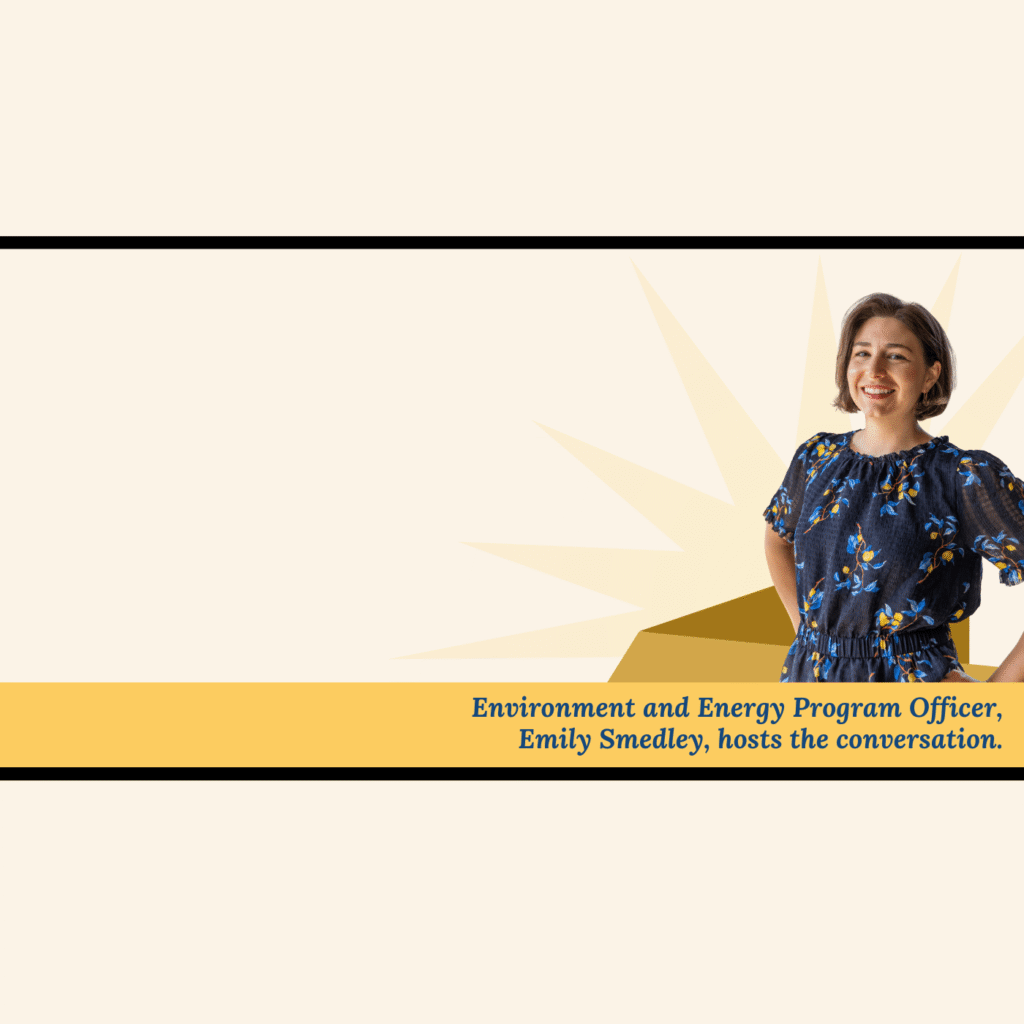
Emily Smedley, Environment and Energy Program Officer, hosts a conversation with representatives from What’SUP Berks, a local initiative whose mission is to reduce and eventually eliminate the use of Single-Use Plastic (SUP) bags in all stores, restaurants, and businesses in Berks County by 2027. By providing educational opportunities, engaging with community leaders, and encourage the use of reusable bags, What’SUP Berks hopes to ultimately help pass legislation banning SUP in the Commonwealth. Listen to the episode now to learn about the environmental, health, and financial repercussions SUP has on the Berks community–and how you can join the fight against SUP. Tom Crotty, Executive Team Member, and Linda Dapcic-Angst, Treasurer of What’SUP Berks, join the conversation.
Other ways to listen
Spotify
Apple Podcasts
Amazon Music
Don’t see your preferred podcast streaming platform? Reach out.
Want to take a deeper dive into the effects of single-use plastic?
Here are helpful sources to supplement the conversation on single-use plastic:
- What are microplastics?
- Recycling Codes and what they mean for plastic users
- Microplastics found on Mount Everest, the world’s tallest peak
- Plastic bag found in Mariana Trench, the world’s deepest ocean trench
- The effect of microplastics on human health
- The cost of litter removal in Pennsylvania towns
This podcast episode was recorded at BCTV’s studio in Reading, PA, on March 24, 2026.
Berks County Community Foundation, in partnership with Northern Berks Connects (formerly the Hamburg Area School District Initiative), invites proposals from schools, and nonprofit entities to support a one-year pilot program.
The selected organization will provide and oversee staff responsible for developing and maintaining a localized resource guide for the Hamburg area and its surrounding municipalities, coordinating community networking events, and supporting collaboration among community leaders. This initiative seeks to improve access to essential resources for basic human needs – including food & water, shelter & housing, health & medical resources, transportation services and safety & security issues.
Applicants are expected to demonstrate the capacity to carry out the following activities:
- Coordinate, plan, and host two to three (2–3) Northern Berks Connects networking events annually.
- Collaborate with the Northern Berks Connects Steering Committee to respond to identified community needs.
- Create and maintain a Northern Berks Connects website and localized digital and printed resource guide.
- Regularly update and maintain the web-based and printable resource guide.
- Distribute resource information to participants in Northern Berks Connects.
- Explore strategies to support the sustainability of the initiative over the next two to three years.
Proposals are due by May 18th. Visit the foundation’s Grant Application Portal or click below to submit your organization’s proposal now.
Before submitting an application, review the Community Foundation’s grantee standards on the website.
Questions? Reach out!
Email your questions to Cindy Milian, Health and Human Services Program Officer of Berks County Community Foundation at cindym@bccf.org.
“Social Services in Rural Libraries” is the first episode of Sparking Change: The Official Podcast of Berks County Community Foundation.
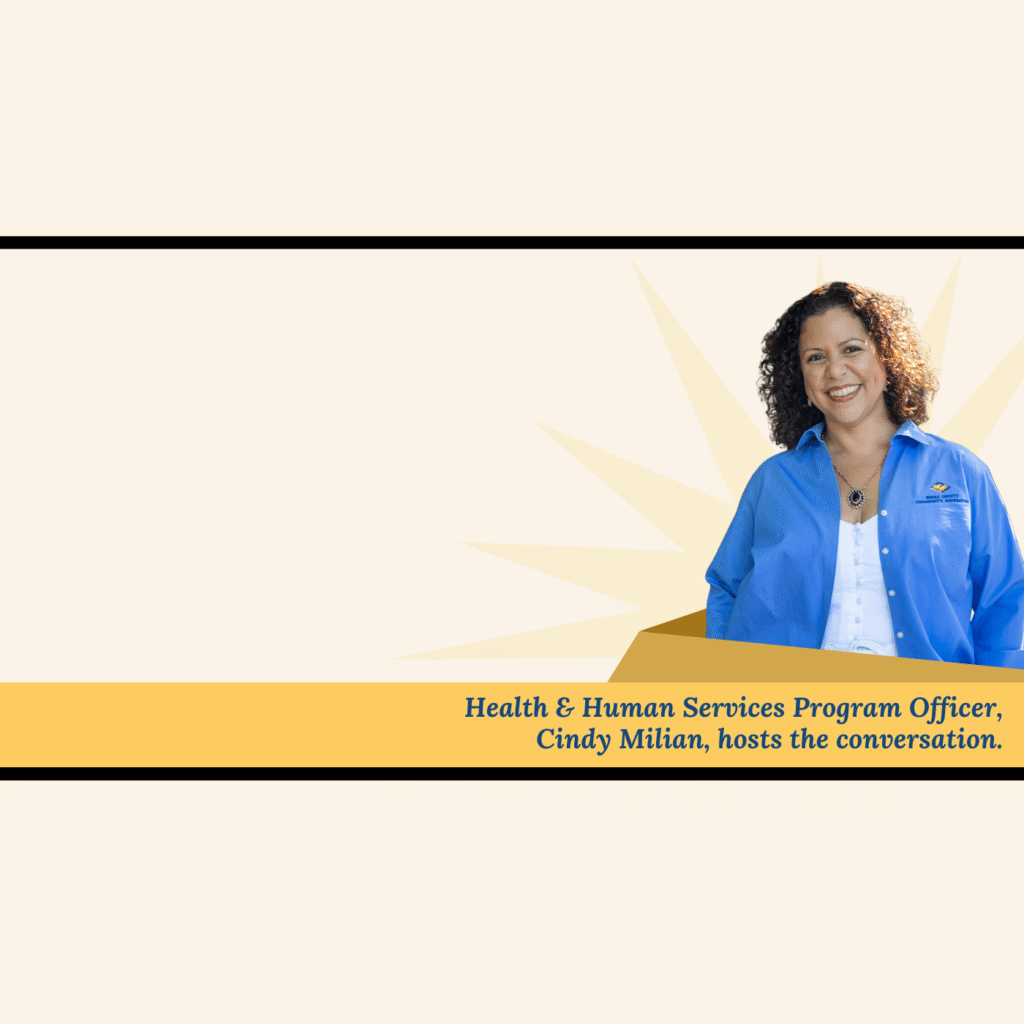
Cindy Milian, Health & Human Services Program Officer, hosts a conversation with representatives from United Way of Berks County, Friend, Inc., Bethel-Tulpehocken Public Library and Hamburg Public Library. Together, the group discusses the need for social services in our rural libraries, what it means to meet people where they are, and the foundation’s newest initiative.
This podcast episode was recorded at BCTV’s studio in Reading, PA, on February 25, 2026.
Other ways to listen
Spotify
Apple Podcasts
Amazon Music
Don’t see your preferred podcast streaming platform? Reach out.
Vice President for Programs and Initiatives, Monica Reyes, named 2026 Take the Lead Berks County honoree by Girl Scouts of Eastern PA

Each year, Girl Scouts of Eastern Pennsylvania (GSEP) honors four female leaders who exemplify the Girl Scouts’ mission of building girls of courage, confidence, and character, who make the world a better place. Monica Reyes, Vice President for Programs and Initiatives of Berks County Community Foundation, is one of four leaders selected for GSEP’s 2026 Take the Lead Berks County.
All honorees are leaders in their professional industries and communities, serving as positive role models for Girl Scouts in Berks County.
Monica oversees the foundation’s grantmaking and spearheads major initiatives that improve the quality of life for Berks County residents in the following areas of focus: Arts & Culture, Lifelong Learning, Health & Human Services, Environment & Energy and Neighborhood Vitality.
“Monica’s career reflects her commitment to improving Berks County for all its residents,” says Kevin Murphy, President of Berks County Community Foundation. “We are proud of her accomplishments and know she is deserving of this honor.”
Monica Reyes will be recognized at a special Girl Scout-led event at Redner’s Event Center on Tuesday, April 14, 2026, along with the other three 2026 Take the Lead Berks County honorees. These women include:
- Meggan Hannigan, Associate Vice President of Development Advancement, Alvernia University
- Radha Pyati, PhD, Chancellor & Dean, Penn State University
- Karen Wang, MD, FAAP, Chief Medical Officer, Berks Community Health Center
For more information about Take the Lead Berks County event sponsorship and tickets, visit www.gsep.org/takethelead or call 267-332-5483.
###
About Berks County Community Foundation
Berks County Community Foundation is a nonprofit corporation serving as a civic leader for our region by developing, managing, and distributing charitable funds to improve the quality of life in Berks County, PA. More information is available at www.bccf.org.
Most of us can think of something we fully intend to do—someday. Organize the photos. Update the estate plan. Schedule the family meeting. Reboot the exercise routine. Charitable planning often falls into that same category.
We hear from many generous people who care deeply about their community and fully intend to “do more” with their philanthropy. But life is busy. The calendar fills up. Markets fluctuate. Family and business priorities shift. It can feel easier to wait for the perfect moment—when things feel calmer, clearer, or more certain.
If that sounds familiar, you are not alone. And it is not a sign of indifference. More often, it reflects uncertainty.
You may wonder:
- –Am I giving to the right organizations?
- –Am I committing too much too soon?
- –What if my priorities change?
- –What if I want to involve my children later?
When every decision feels permanent, it is natural to pause. The Community Foundation can help you shift gears from intention to action. Here are three principles that guide our work with donors in this situation:
Take it one step at a time.
One of the most helpful mental shifts is to think of charitable planning as a multi-step process rather than a single, all-or-nothing decision. In many cases, a tax planning need takes precedence because of concrete deadlines and tax year considerations. Our team understands!
Keep it simple.
Sometimes the hardest part of giving is not generosity—it is decision fatigue. You might be asking yourself, “Where should I give?” Often, that’s not the best question to ask right out of the gate, especially if you are new to philanthropy. The team at the Community Foundation can help you work through key threshold questions including:
- –As I look back on my charitable giving, what areas of focus seem to jump out?
- –What specific charities have I supported over the years?
- –Why have I supported those charities?
- –Is there anything about my areas of focus that I’d like to change going forward?
As we explore these questions together, our team can provide research on local nonprofits, share insights about community needs, and facilitate family conversations about values and priorities.
Adopt long-term thinking.
Community change does not happen overnight. You may find that your charitable intentions include not only providing annual support to favorite charities but also making a meaningful difference over many years or even many decades that extend well beyond your lifetime.
The team at the Community Foundation can help you structure not only a donor-advised fund to help organize your annual giving, but also other types of funds and a legacy plan. Some families, for example, establish a field-of-interest fund to support a particular cause with built-in flexibility as community needs change. Similarly, a designated fund can provide long-term support to specific organizations, and an unrestricted fund allows you to leverage the Community Foundation’s deep expertise and perpetual structure to address emerging community priorities for generations to come. You can name one or more of these funds as a beneficiary in your estate plan, whether through a gift in your will or trust or through a beneficiary designation on an IRA.
The bottom line is that the Community Foundation is here for you along your entire charitable giving journey. We’ll work together to build and implement your philanthropy plan brick by brick over the years to come, involving your tax advisors and family members at key junctures and always ensuring that your charitable intentions—even as they evolve over time—are fulfilled.
Our 2025 Annual Report: A Year of Connection is here
In Fiscal Year 2025, Berks County Community Foundation distributed over $6.8 million in grants and scholarships to support the community. While grantmaking is “what we do,” connecting to the community is at the heart of our work.
Berks County Community Foundation connects donors, grantees, and community partners to one another in the pursuit of the greater good. Our Program Team, comprised of experts in their fields of interest, made quarterly site visits to local institutions to learn about their operations, needs, and impact on Berks County. During the federal government shut down and Pennsylvania state budget impasse, the communication and program team engaged a local reporter to investigate how government cuts affect Berks nonprofits. Connecting with people, sharing expertise, and learning from one another, is how communities thrive.
“While distributing grants and scholarships is a core part of our mission,” says Kevin Murphy, President and CEO of Berks County Community Foundation, “none of our work would be possible without the relationships we build throughout Berks County.”
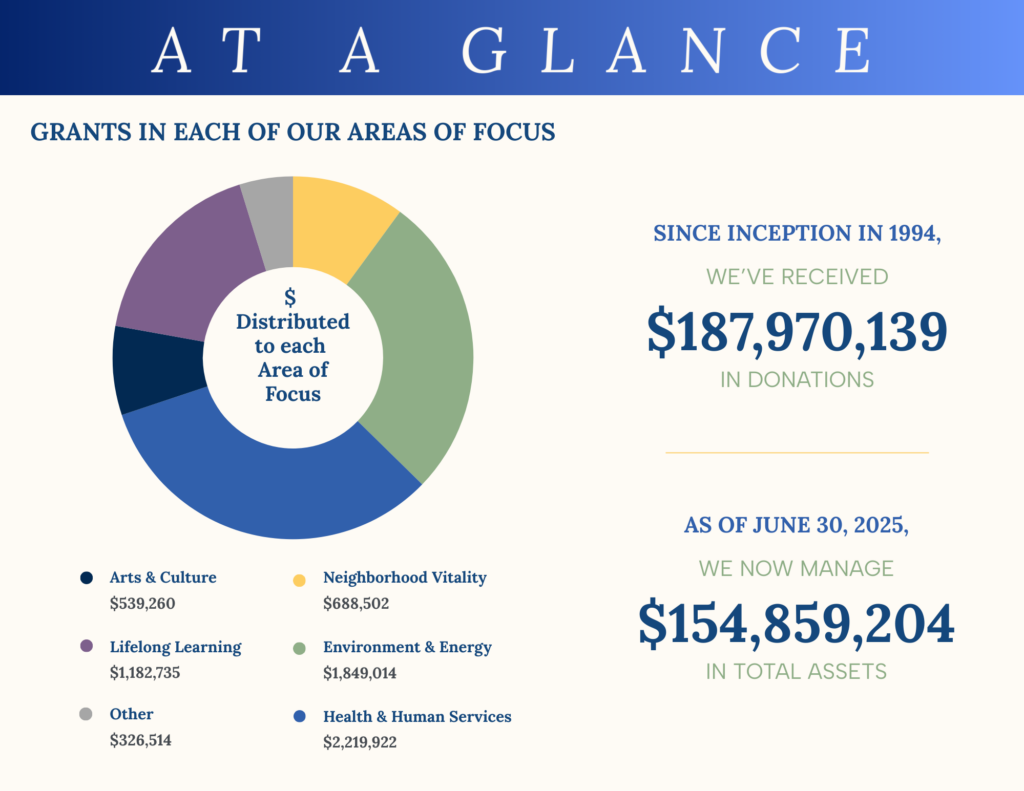
The Annual Report highlights our mission of promoting philanthropy and improving the quality of life for the residents of Berks County. The team works hard to bring organizations and individuals together for collaboration to spark change in the community. This year’s Annual Report provides detailed stories and data behind these achievements, underscoring the powerful impact of donor support in the community.
To read the full report, take a look below or click here.
The Met-Ed/Penelec Sustainable Energy Fund will make grants to fund a variety of energy efficiency projects to nonprofits, government entities, and small-businesses within the Met-Ed and Penelec utility areas. Funding is only available to existing buildings (not new construction) and to organizations that own their buildings (not lease). A preliminary energy assessment must be completed to be considered for funding. If you have not had an energy assessment completed, contact fund staff to be connected with technical assistance.
There is $500,000 available per utility area ($1,000,000 total). Grants will typically range from $25,000 to $100,000.
Eligible projects include:
- Replacement of existing lighting with more energy-efficient lighting (more information here)
- Installation of high-efficiency HVAC projects (more information here)
- Installation of commercial kitchen and refrigeration improvements (more information here)
Process timeline:
- LOIs open April 15; Due May 15. See note below for details.
- Announcement of invitation to submit an application by May 30
- Application opens on June 1; Due July 15
- Funding decisions announced by September 30
Note: The LOI form is available online. Projects in the Met-Ed territory should fill out the form in Berks County Community Foundation’s grant portal. Projects in the Penelec territory should fill out the form in the Community Foundation for the Alleghenies’ grant portal. If invited to submit an application, applications will also be available in each grant portal.
An advisory board will review the applications and decide which projects will receive grant funding.
Contact information
In the Met-Ed rate district, please contact Emily Smedley:
Environment and Energy Program Officer, Berks County Community Foundation
Fund Manager, Met-Ed Sustainable Energy Fund
Emilys@bccf.org
In the Penelec rate district, please contact Mark Keim:
Program Officer, Community Foundation for the Alleghenies
Fund Manager, Penelec Sustainable Energy Fund
mkeim@cfalleghenies.org
The Met-Ed/Penelec Sustainable Energy Fund (SEF) seeks two nominees for its volunteer Advisory Board.
The Met-Ed/Penelec SEF distributes funds to promote the development and use of renewable energy and clean energy technologies, energy conservation and efficiency, and projects that improve the environment in the Met-Ed and Penelec service territories. The Met-Ed/Penelec SEF is co-managed by Berks County Community Foundation and the Community Foundation for the Alleghenies, respectively.
The funds are seeking nominations for the following positions:
- At-Large
- Environment
- Commercial Customer
The Advisory Board will fill either the At-Large or Environmental position and Commercial Customer position.
The Met-Ed/Penelec Advisory Board consists of no fewer than seven and no more than nine positions. Board members can serve six two-year terms. The Advisory Board meets four times per year on a quarterly basis. Meetings are typically held via Zoom, with the possibility of in-person meetings within the Met-Ed and Penelec service territories.
For consideration, candidates should meet the following criteria:
- Be a resident of Pennsylvania that is affiliated with the Met-Ed or Penelec rate district
- Have interpersonal skills that foster a creative and positive work environment for Board meetings
- Have the ability to work with fellow board members and fund staff to evaluate incoming projects and programs for their mission-fit, participate in technical and financial due diligence discussions, and determine project impact.
- Have demonstrated experience in working with Pennsylvania’s sustainable energy sector
Interested candidates should submit a brief letter of interest and a resume to Emily Smedley (Berks County Community Foundation/Met-Ed) or Mark Keim (Community Foundation for the Alleghenies/Penelec.) Their contact information is below. The letter should provide details on how the candidate fulfills the nomination criteria and the skills they bring to the advisory board. The resume should provide contact information and the candidate’s educational and work experience.
Nominations should be submitted by April 17, 2026.
All candidates will be notified via email upon receipt of their letter of interest and resume. The advisory board will submit the successful nominee(s) to the Pennsylvania Public Utilities Commission for final approval.
Contact Information
In the Met-Ed rate district, please contact Emily Smedley:
Environment and Energy Program Officer, Berks County Community Foundation
Fund Manager, Met-Ed Sustainable Energy Fund
Emilys@bccf.org
In the Penelec rate district, please contact Mark Keim:
Program Officer, Community Foundation for the Alleghenies
Fund Manager, Penelec Sustainable Energy Fund
mkeim@cfalleghenies.org
This announcement is made in keeping with the best practices of the Pennsylvania Sustainable Energy Board (PASEB) and is being distributed on the websites of the Public Utility Commission and the Met-Ed/ Penelec Sustainable Energy Fund, as well as relevant newsletters and other sources. This notice may be forwarded to interested parties.
