An article recently published by Reading Eagle highlighted the nearly 60% decline in teen births in Berks County since the launch of Co-County Wellness Services (CCWS) Berks Teens Initiative in 2012. The news comes directly from Carolyn Bazik, executive director of CCWS during a recent Reading School District Board meeting.
By the Data
According to the data presented to the board by Bazik and Elido Francisco Jr., Berks Teens Project Director, the teen birth rate in Berks County had fallen from 455 teen births in 2012 to just 185 teen births in 2023; this is a reduction rate of 59.3%. The decline was even greater in Reading ZIP codes, with a 61.4% decrease.
Co-County Wellness Services is a local nonprofit organization serving the Berks and Schuylkill Counties and is the only comprehensive HIV/STD service organization in those areas. CCWS’s prevention, screening/testing, and care services are free and confidential.
Berks Teens is an initiative of CCWS with the goal of reducing teen pregnancy and sexually transmitted infections through improved education and access. Berks Teens’ success is due, in part, to the Health Resource Center located within Reading High School, as well as its Youth Ambassador Program. While CCWS provides students with reproductive health education, counseling, professional referrals and access to protective health supplies, the Ambassador Program gives students opportunities to help shape programming and outreach efforts.
Who Helps Fund This Program?
Berks County Community Foundation’s mission is to promote philanthropy and improve the quality of life for Berks County residents. The data shared by CCWS is proof that a healthier Berks County is possible. The foundation is pleased to share that nearly $486,000 in grants have been awarded to CCWS since 2012. These grants range in support of CCWS’s Berks Teens, general operations, and teen reproductive health programming. See below the list of funds that have contributed to CCWS’s mission:
Programs like Berks Teens, Youth Ambassador Program, and the Health Resource Center are made possible by state funding as well as charitable donations. The future of government funding remains uncertain, and with it, the future of CCWS programming.
To support an existing fund that benefits Berks Teens, visit Bill Woolworth Memorial Fund for Berks Teens donation portal by clicking here.
Want to establish your own fund to benefit the good work Co-County Wellness Services and other nonprofit organizations do in Berks County? Email Molly McCullough Robbins at mollyr@bccf.org or call the foundation at 610-685-2223.
Reading, PA (May 22, 2026) – On May 20, 2026, Berks County Community Foundation hosted its annual scholarship luncheon at the DoubleTree by Hilton in downtown Reading. The luncheon gathers scholarship recipients, scholarship fundholders and donors, award judges and reviewers, as well as local high school, college, and university leadership. Thanks to the generosity of local donors, Berks County Community Foundation manages more than 130 scholarship funds. This year, $800,950 was distributed from those funds to deserving scholarship recipients.
Individuals who received scholarships range in age and degree of academic rigor. Students pursuing degrees and certificates from trade schools, undergraduate programs, and postgraduate programs were in attendance. The 2026 Berks’ Best winners, which are graduating high school seniors who achieve excellence in academia, civic life, and their chosen fields of study, were also acknowledged. Kutztown University President, Dr. Philip Cavalier, delivered the keynote speech. Cavalier urged students to remain open-minded and present throughout their academic journeys.
“This year’s distribution of scholarships is one of the foundation’s largest yet,” says Kim Sheffer, Lifelong Learning Program Officer. “We are committed to nurturing the minds of Berks County residents and engaging the community throughout the scholarship process. None of this would be possible without the generosity of our donors and the individuals who volunteer their time to read applications.”
Since inception, Berks County Community Foundation has distributed more than $15,500,950 in scholarships.
Berks County Community Foundation is a nonprofit corporation serving as a civic leader for our region developing, managing, and distributing charitable funds to improve the quality of life in Berks County, Pennsylvania.
Vice President for Programs and Initiatives, Monica Reyes, named 2026 Take the Lead Berks County honoree by Girl Scouts of Eastern PA
Each year, Girl Scouts of Eastern Pennsylvania (GSEP) honors four female leaders who exemplify the Girl Scouts’ mission of building girls of courage, confidence, and character, who make the world a better place. Monica Reyes, Vice President for Programs and Initiatives of Berks County Community Foundation, is one of four leaders selected for GSEP’s 2026 Take the Lead Berks County.
All honorees are leaders in their professional industries and communities, serving as positive role models for Girl Scouts in Berks County.
Monica oversees the foundation’s grantmaking and spearheads major initiatives that improve the quality of life for Berks County residents in the following areas of focus: Arts & Culture, Lifelong Learning, Health & Human Services, Environment & Energy and Neighborhood Vitality.
“Monica’s career reflects her commitment to improving Berks County for all its residents,” says Kevin Murphy, President of Berks County Community Foundation. “We are proud of her accomplishments and know she is deserving of this honor.”
Monica Reyes will be recognized at a special Girl Scout-led event at Redner’s Event Center on Tuesday, April 14, 2026, along with the other three 2026 Take the Lead Berks County honorees. These women include:
Meggan Hannigan, Associate Vice President of Development Advancement, Alvernia University
Radha Pyati, PhD, Chancellor & Dean, Penn State University
Karen Wang, MD, FAAP, Chief Medical Officer, Berks Community Health Center
For more information about Take the Lead Berks County event sponsorship and tickets, visit www.gsep.org/takethelead or call 267-332-5483.
###
About Berks County Community Foundation
Berks County Community Foundation is a nonprofit corporation serving as a civic leader for our region by developing, managing, and distributing charitable funds to improve the quality of life in Berks County, PA. More information is available at www.bccf.org.
The DentaQuest Fund of Berks County Community Foundation, along with the PA Chapter of American Academy of Pediatrics (PA AAP), recently helped bring the Oral Health Story Kit program and dental screenings to the Bethel-Tulpehocken Public Library.
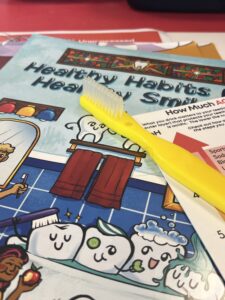
Take-home supplies from the Oral Health Story Kit included a tooth cleaning tools and educational materials.
A lack of access to care can impede oral health, especially in children. With many Americans living in a ‘dental desert’, the demand for local dentists is high. Compounded with expensive treatment costs, many individuals lack necessary, preventative care, resulting in emergency dental service and/or untreated oral diseases.
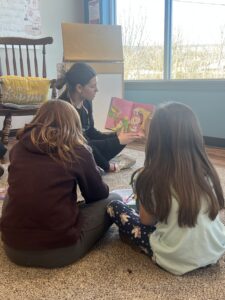
A volunteer dental student interested in pediatric dental care reads a book about oral health to an audience of children.
The PA Chapter of American Academy of Pediatrics (PA AAP) is a nonprofit organization whose mission is to promote the equitable health and well-being of all Pennsylvania children; they accomplish this by implementing community programs of education, support, and advocacy. As experts in pediatric healthcare, they are committed to fostering collaboration among pediatricians, families, and community partners.
The Oral Health Story Kit is just one PA AAP program that promotes oral health literacy to Berks County residents. In early February, pediatric oral healthcare professionals and their students came to the Bethel-Tulpehocken Public Library to facilitate free oral health story times and screenings for children, and to disperse educational materials to community members.
“Programs like the Oral Health Story Kits help build oral‑health literacy at the earliest ages, which is one of the strongest predictors of long‑term dental health,” says Jacqueline Pugliese, Oral Health Program Manager of PA AAP. “In rural areas of Berks County, where access to providers is limited, giving families clear, engaging tools to understand how to care for their teeth can make a real difference. Libraries are the perfect place to spark that learning—accessible, trusted, and rooted in the community.”
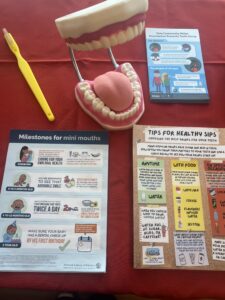
A variety of interactive educational materials were available during the program, including puppets to practice tooth brushing, dioramas on the effects of sugary drinks on teeth, and children’s oral health flyers for families to take with them.
“Many residents in our rural area have large families and limited transportation. There are no local health care or offices for social services,” says Kaitlin Lehman, Director of the Bethel-Tulpehocken Public Library. “Bringing representatives of these organizations closer to people who need them is a big step in improving accessibility. Getting connected to services through a familiar, trusted resource like the library also helps reduce the barrier of fear or uncertainty.”
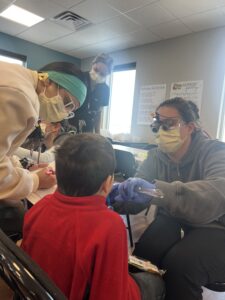
Volunteer dental students conducted basic oral health screenings on young patients.
While access to medical specialists may be lacking, every community in Berks County has a local library. For our rural communities, libraries may be the only communal space to gather—and why it makes sense for PA AAP to meet the community where they already are.
“In our community, there are no other public spaces – no senior center, playground, or rec center. So, people rely on the library not only as a source of information and education, but also for community and connection,” says Lehman. “The library is the only place that people can come and just be, without judgment, and without the expectation of spending money.”
PA AAP and Berks County Community Foundation understand the importance of these programs, and that charitable dollars can never replace government funding. While government funding continues to roll back for health and human services, the nonprofit sector recognizes the need to consolidate resources and provide creative solutions to arising community needs.
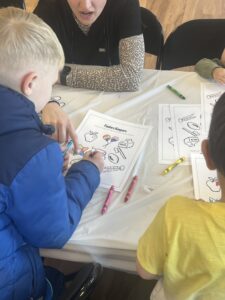
Volunteer dental students used dental-themed coloring book pages to teach children about the impact of oral health.
“Berks County Community Foundation is happy to support programs like the Oral Health Story Kit,” says Cindy Milian, Health and Human Services Program Officer. “There are many ways to build a healthier Berks County, and engaging the youth in conversations about their health can help lay a strong foundation.”
The next Oral History Health Kit program and dental screening will take place at Morgantown Library on February 18th from 10am to 12pm. Walkins are available for this free service. This program was made possible, in part, by the Community General Hospital Health Care Fund of Berks County Community Foundation.
If you are passionate about improving the health and quality of life for Berks County residents, consider donating to the Dental Treatment Fund of Berks County Community Foundation. This fund helps cover the cost of dental treatment for individuals with financial need.
by Susan Shelly McGovern
Young children work in a classroom. Schools across Berks County and Pennsylvania were affected by federal budget cuts and the state impasse.
With a state budget finally signed into law and the federal government reopening on the same day last week, some Berks County public school administrators remain concerned about potentially lasting impacts caused by a lack of funding for more than four months.
Significant funding for school districts has been held up since July 1 due to a failure by Pennsylvania state legislators to agree on terms for the state’s FY2025-26 budget. Legislators finally reached an agreement on a $50.1 billion spending plan and Gov. Josh Shapiro signed it into law on Nov. 12.
On the same day, President Donald J. Trump signed a funding bill to reopen the federal government following a 43-day standoff in Congress.
While education leaders welcomed those events, there is uncertainty about when the delayed funding will reach them and concern about potential consequences of the interruptions to funding that forced some districts to take out loans and delay or cancel programming and school activities.
Federal Funding Concerns Remain
Wayne Gehris, chief financial officer of the Reading School District, is concerned about potential cuts to Medicaid that could affect ACCESS reimbursements to the district, totaling between $1.5 and $2 million a year.
That could impact health care coverage for some low-income students or those with disabilities.
He also worries that demand for free meals provided by Reading schools will increase due to uncertainties concerning SNAP benefits, which many students and their families rely on.
“Not all students rely on the free breakfast program, but a reduction or delay in SNAP funding may cause more students to participate,” Gehris wrote in response to a county-wide survey of school districts facilitated by the Berks County Intermediate Unit (BCIU).
Christian Lelllig, chief financial officer of the Daniel Boone Area School District, reported his district also has been affected by federal cuts and the shutdown of the government.
“Federal programs such as Title I, special education (IDEA) and school meal funding have experience delays in payments, which has created uncertainty for our budgeting and staffing,” Lellig said.
And Lucille Gallis, chief financial officer for the Berks County Intermediate Unit (BCIU), reported that Preschool Development Grant funding, which provides mental health supports for preschool and childcare centers across Pennsylvania, has been eliminated for fiscal year 2026.
The Berks County Intermediate Unit in Berks County was forced to take out a loan due to delayed funding.
State Impasse Affected Most Berks County Districts
While 53% of school districts that participated in the BCIU survey reported experiencing impacts from federal cuts and the government shutdown, 80% said they were negatively affected by the state budget impasse.
Many districts reported putting a hold on or limiting non-curricular and extracurricular expenditures, deferring non-critical maintenance, delaying purchasing and reducing programming.
Tim Matlack, superintendent of Antietam School District, said that field trips were cancelled and after school activities like the MATHCOUNTS competition are in jeopardy.
“It’s frustrating for the teachers and the kids and the parents,” Matlack said. “It’s been a frustrating time for everyone in education.”
Officials in districts that were forced to take out loans are concerned about interest they will need to pay, an unanticipated expense they do not expect to be reimbursed for.
Reading School District entered into a $90 million tax and anticipation note, advancing $10 million on Nov. 7 to pay salaries and other necessities. The BCIU has secured $17 million in loans and was in the process of obtaining another $10 million when the state budget passed.
Some districts that didn’t need to take out loans, including Muhlenberg School District, reported having to tap into reserved funding.
“We’re relying on what we have budgeted and our reserves, which means we’ll lose the interest we would have earned on those dollars,” said Dr. Joseph Macharola, Muhlenberg Superintendent.
And while a budget has finally been passed, it’s likely it will take some time for funding to trickle down to school districts and allow for normal operations.
Children participate in activity in an early childhood classroom operated by the Berks County Intermediate Unit.
Funding Cuts, Budget Delays and Government Shutdowns are Bad for Education
Even with the passing of the state budget and reopening of the federal government, educators and administrators remain on edge.
That causes frustration among district officials, who work hard to get their budgets submitted to the state by June 30, as required.
The uncertainty associated with cuts and funding delays causes a high level of anxiety, which eventually can affect daily operations.
Lellig summed up the situation like this.
“Repeated budget cuts and delayed funding weaken the quality of public education by increasing class size, reducing programming and straining teachers and resources. Over time, these issues widen inequities between districts and harm student learning and overall outcomes,” Lellig wrote.
Dr. Khalid Mumin, superintendent of the Reading School District and former Pennsylvania Secretary of Education, noted that public education is experiencing a time of significant change, but will continue moving forward to serve students, families and communities.
“It’s like a cruise liner that has to keep moving forward, even though the seas are a little rocky,” Mumin said. “Education will keep moving forward and we’ll continue to serve the young people, who are our future.”
Volunteers participate in a fundraising event at Gov. Mifflin’s Athletic Community Center. School districts increasingly rely on outside sources of funding for activities and programs.
by Susan Shelly McGovern
Safe Berks is preparing to celebrate 50 years of service in Berks County.
To say that Beth Garrigan, chief executive officer of Safe Berks, is frustrated is an understatement.
“We simply don’t know what to expect,” Garrigan said. “It’s a very uncertain and worrisome time.”
Safe Berks is one of many organizations in Berks County feeling the pinch from the budget impasse, which makes it impossible for the state to make billions of dollars in payments to nonprofits, schools, local governments and other organizations that provide services to residents.
Garrigan explained that about 75% of funding for Safe Berks is dependent on local, state and federal funding, some of which is federal money that passes through the state before getting to the agency.
Due to the budget impasse, which has resulted in a stoppage in funds of between $75,000 and $100,000 a month, Safe Berks has been forced to deplete its cash reserves and rely on a line of credit.
If funding is not soon restored, Garrigan is fearful the agency may have to tap into some investments, risking further harm to its financial future.
“The line of credit is great to have as a backup, but the interest on it is horrible,” Garrigan explained. “What happens if this keeps going and we run out of our reserves?”
Shutting down the agency, she emphasized, is not an option.
“We absolutely cannot close down,” Garrigan said. “There’s just too much need in our community.”
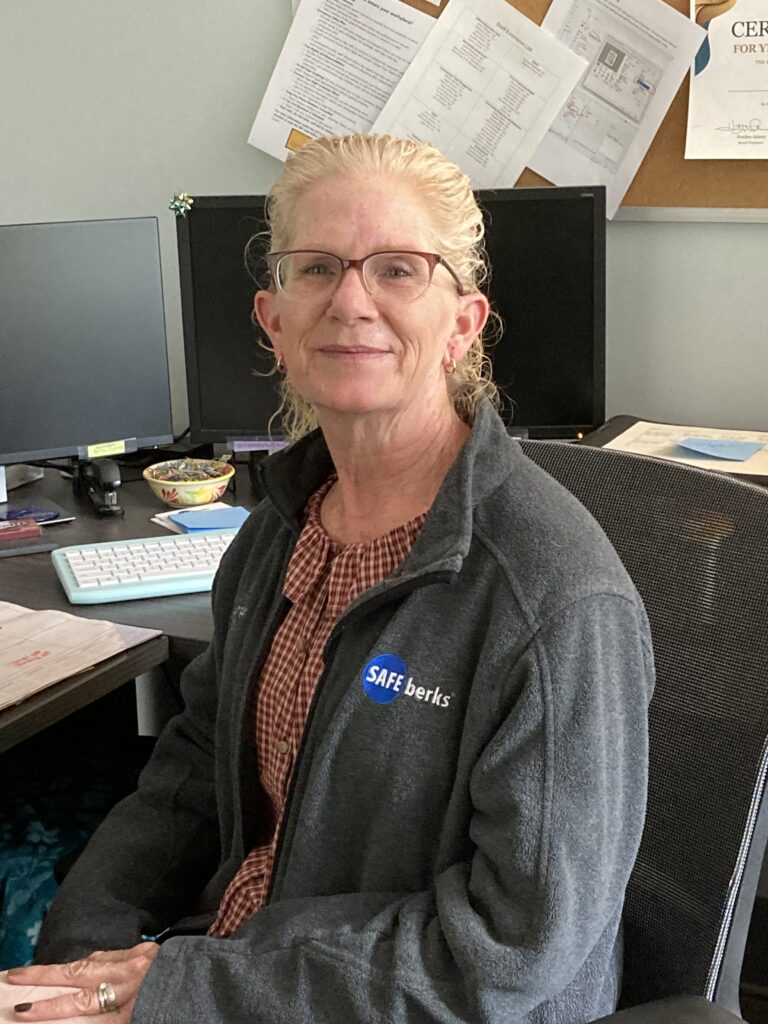
Beth Garrigan, Safe Berks CEO, in her office at the agency’s headquarters.
Work of Safe Berks is ‘Multi-Layered and Complex’
Gearing up to celebrate its 50th anniversary in 2026, Safe Berks has served tens of thousands of women, men and children seeking escape from sexual and domestic violence.
The services that Safe Berks offers are tested and proven, Garrigan said, although many people are unaware of the depth of the organization.
“A lot of people think we’re just a shelter, but the work we do is multi-layered and complex,” she said.
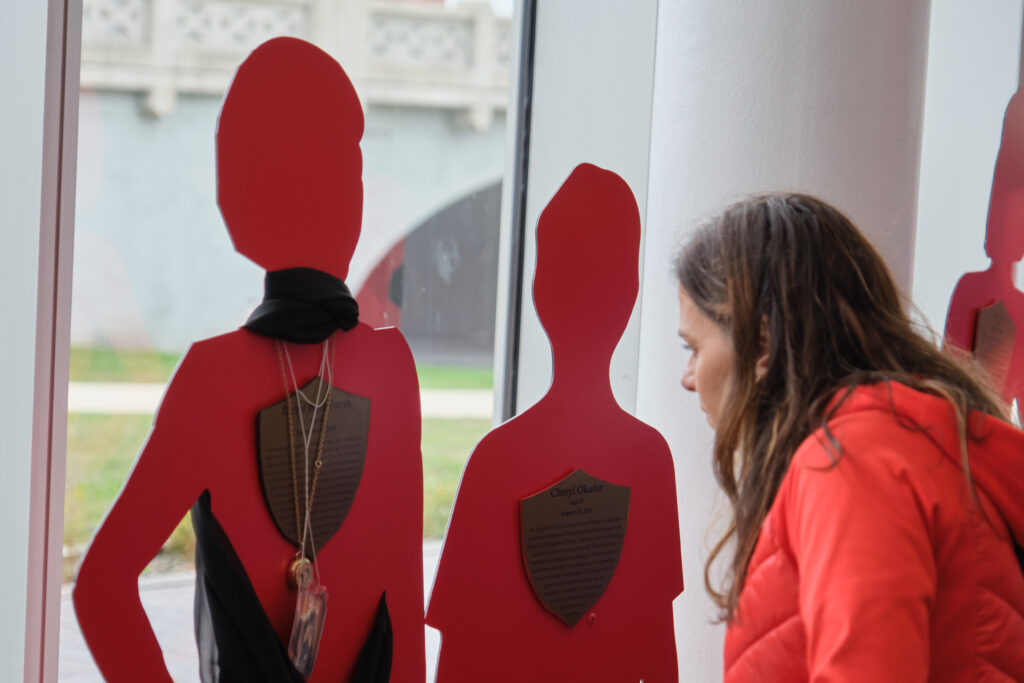
A women studies a red silhouette representing a victim of domestic violence.
Looking Ahead with Apprehension
Although it’s nearly impossible to plan programming or anticipate the agency’s capacity to provide services, Garrigan and others are tentatively looking toward the coming year.
“We’ll try to maintain the bare minimum in staffing and we’re looking into how to generate additional streams of revenue,” Garrigan shared.
Nine of the agency’s approximately 60 employees have already been laid off, and others are seeking other employment as they anticipate that further cuts may be necessary.
“To have to let go of people who are doing this work from their hearts is incredibly difficult,” Garrigan said. “Those layoffs were the hardest thing I ever had to do.” Garrigan said shelter residents and other clients are sensing the uncertainty surrounding the agency, resulting in a general sense of unease. “I thought the time during Covid was bad,” she said. “This is worse than Covid.”
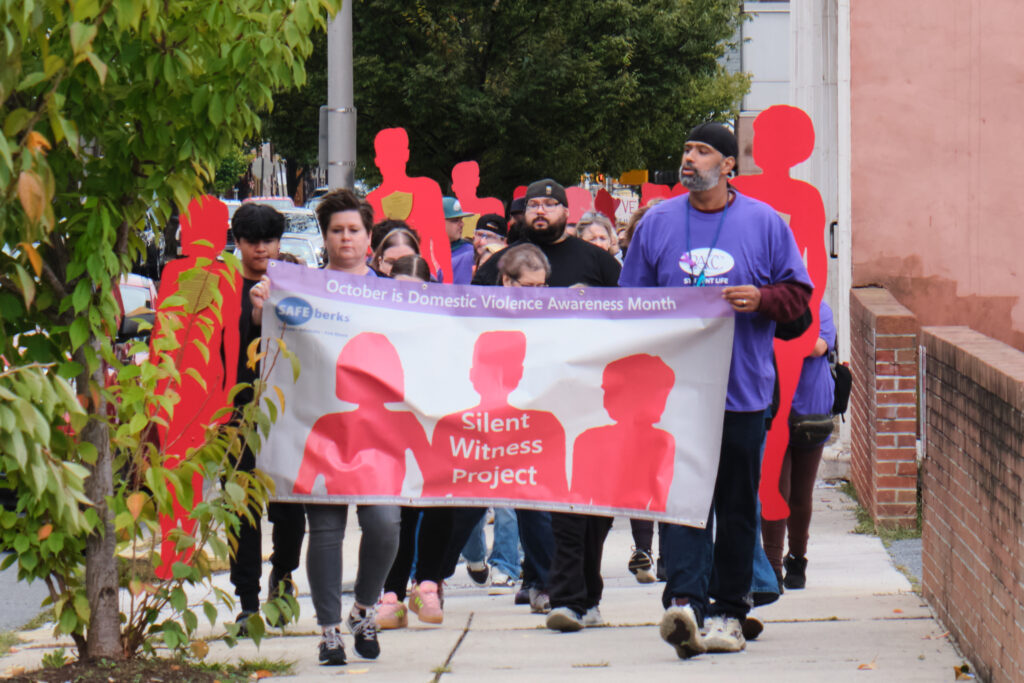
Walkers participate in a Silent Witness event sponsored by Safe Berks.
‘This is Just Devasting’
Echoing leaders of other area nonprofits, Garrigan praised the Berks County community for stepping up in times of need to support organizations that serve them and their neighbors.
“Community support is big in Berks County, and we have a strong donor base,” she said.
She remains concerned, however, that many people are unaware of the precarious situation service organizations are facing due to the four-month funding delay.
“We’re fighting so hard, and this is just devastating,” Garrigan said. “A lot of people can ignore the situation because it doesn’t affect them, but this is impacting everything we do.”
Even if the legislature passes a budget tomorrow and the delayed money is released, there will be a lag time until funding reaches community organizations.
“We’re going to keep doing what we do as well as we can,” Garrigan said. “We’ve been working in this community for a long time, and we know that our services are needed. I just hope we don’t get so deep into debt that we can’t get out of it.”
Addendum
November 13, 2025: Pennsylvania Governor Josh Shapiro announced late Wednesday night that a $50.1B state budget has been signed into law. The deal ends a four-month budget impasse which stopped the flow of millions of dollars of funding to Berks County schools, nonprofits, businesses, programs and services.
by Susan Shelly McGovern
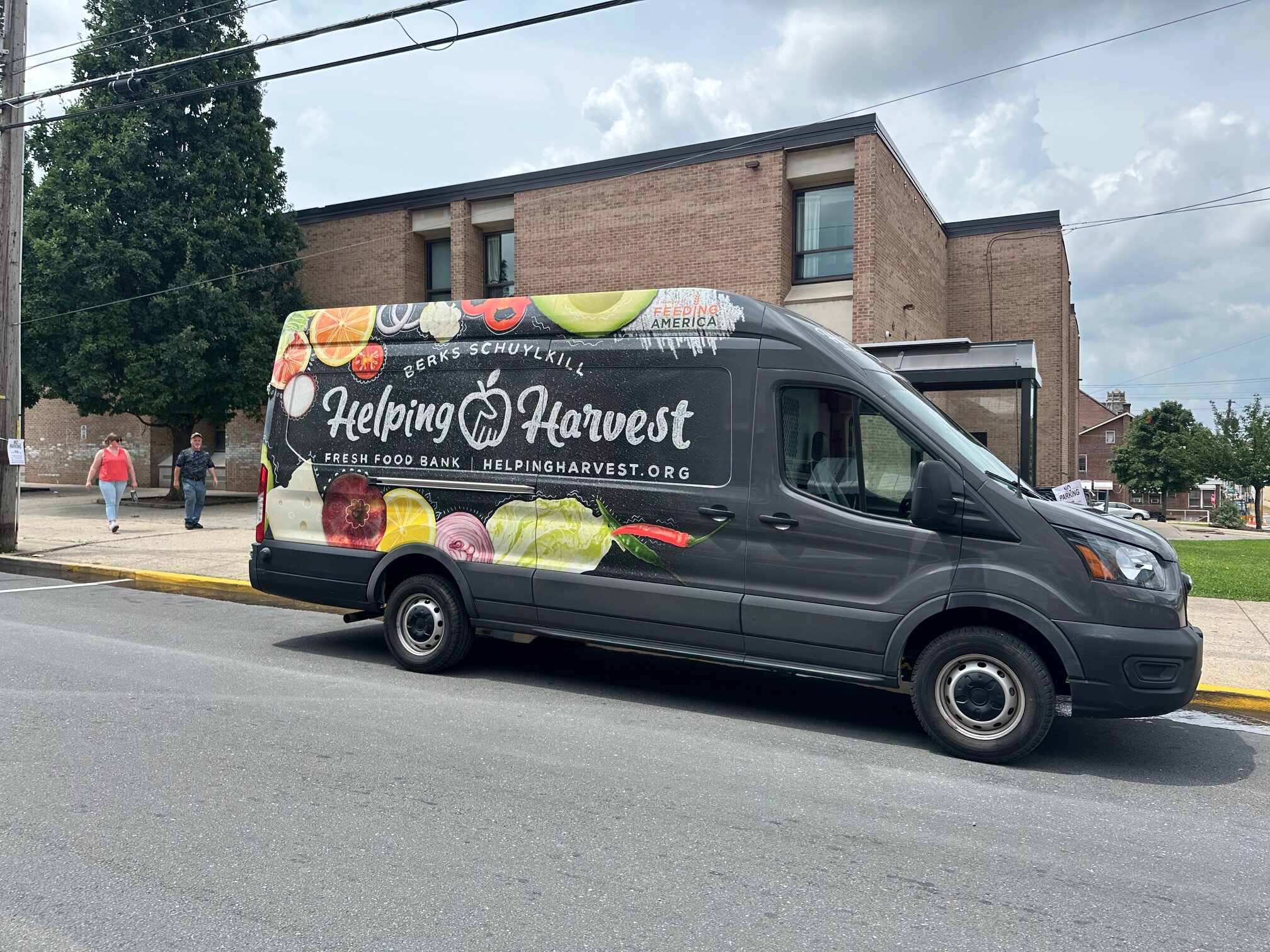
Helping Harvest vans are frequently seen at community events in Berks and Schuylkill counties.
Maria has always worked hard to make sure her children have enough food and other necessities. There seldom was extra, but they always had enough.
When Maria, of Reading, was diagnosed earlier this year with Stage 5 kidney disease, however, the single mother didn’t know what to do. Unable to work, faced with medical bills and receiving only 60% of her wages through short-term disability insurance, having enough food for her family was suddenly a very frightening uncertainty.
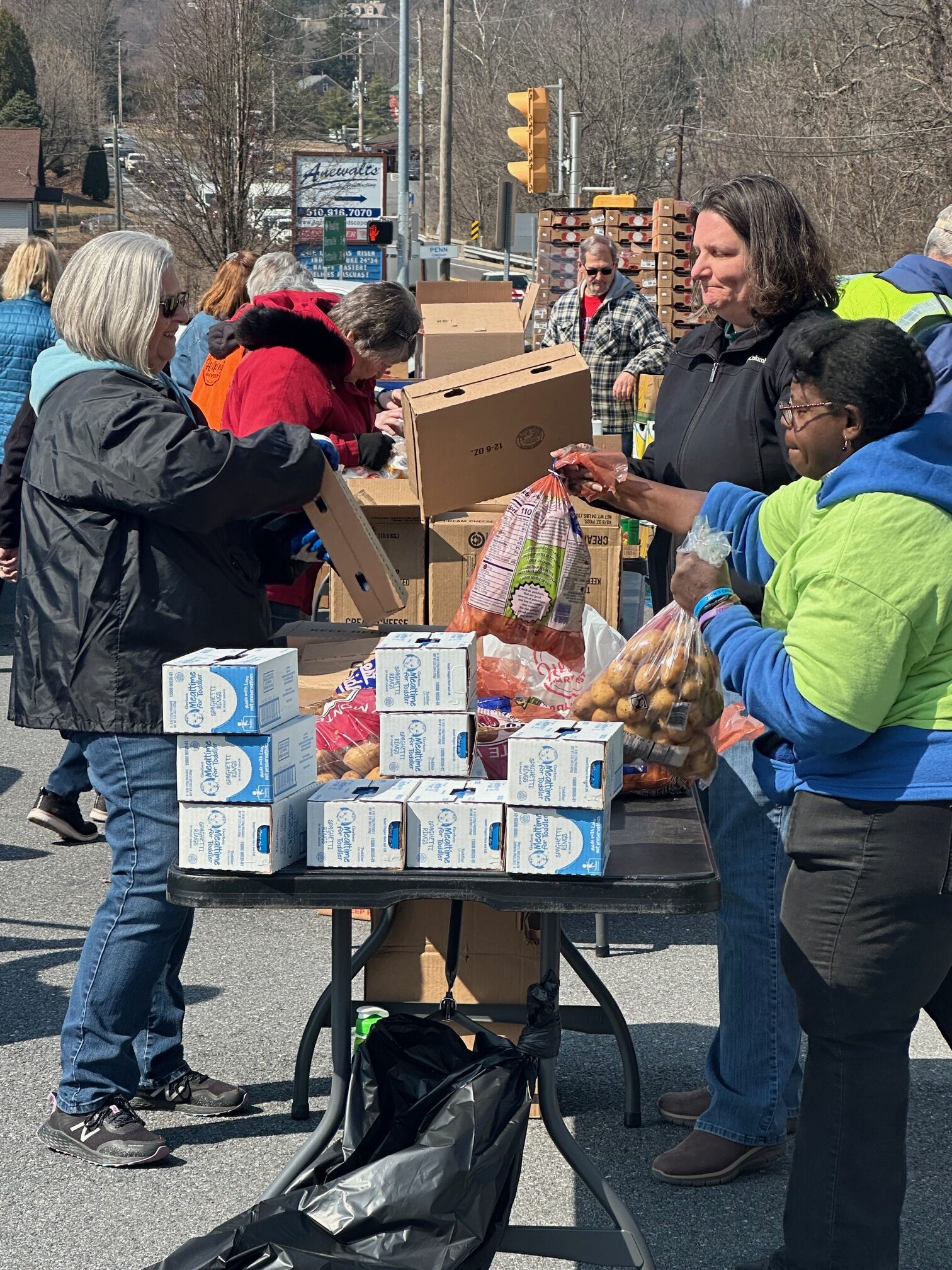
Volunteers distribute food to neighbors at a Helping Harvest Mobile Market.
Fortunately, Maria reached out and was able to secure immediate assistance from Helping Harvest Fresh Food Bank, a community resource serving Berks and Schuylkill counties. That help has given her family access to adequate food supplies as they wait for their application for Supplemental Nutrition Assistance Program (SNAP) benefits to be processed and, hopefully, approved.
But that ability to provide immediate and adequate aid for those in need is becoming increasingly difficult, according to Jay Worrall, president of Helping Harvest and board chair of Feeding Pennsylvania, an organization that promotes food banks within the state and assists them in obtaining necessary resources and support.
Cuts in federal funding for food distribution programs made earlier this year are straining the ability of food banks across the state and nation to continue supplying resources to those most in need.
Worrall said federal cuts resulted in a loss of $3 million to Helping Harvest, equivalent to about 15% of the food it distributes annually.
Those cuts, coupled with stalled state funding caused by Pennsylvania’s ongoing budget impasse and impending cuts to SNAP, are resulting in trying times for Helping Harvest, Worrall said.
SNAP benefits could be reduced by as much as $11 million in Schuylkill County and up to $26.8 million in Berks, according to Worrall, affecting thousands of families. In addition, it is unclear whether the recent shutdown of the federal government, which was still underway at the time this article was written, might have long-reaching implications for the future of Helping Harvest.
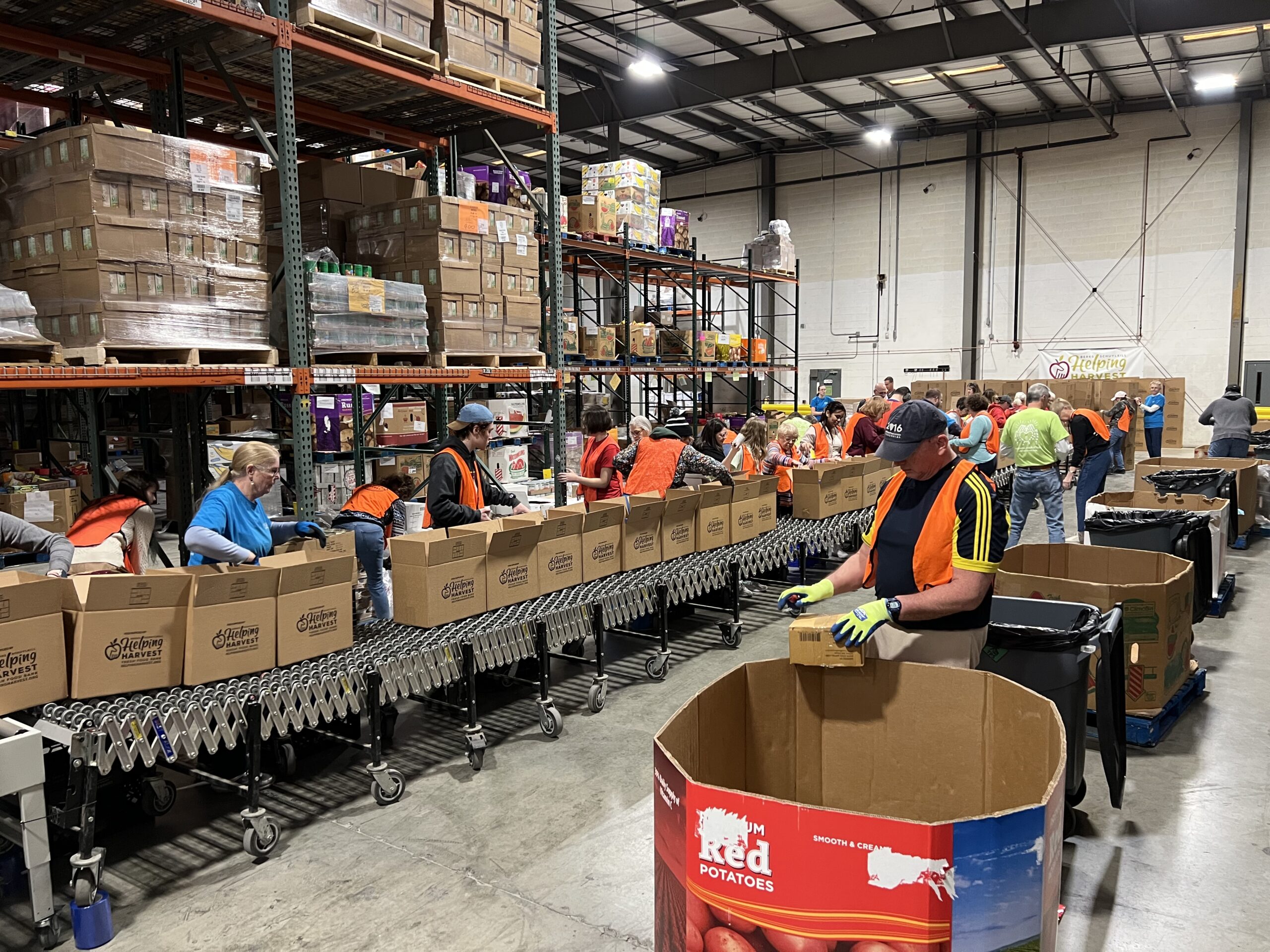
Volunteers pack food boxes in Helping Harvest’s warehouse in Spring Township.
“Demand for our services continues to increase, but we’re left with fewer resources to meet those needs. The worst of the SNAP cuts haven’t even taken place yet, but people are anticipating them and already looking to us for extra help. It’s the perfect storm and it’s making our work very difficult,” Worrall explained.
Helping Harvest recently announced cuts to some of its programs in Schuylkill County, starting in November. The food bank will stop providing food to about a dozen pantry and mobile market sites, a move Worrall attributed to federal funding cuts and the state’s budget impasse.
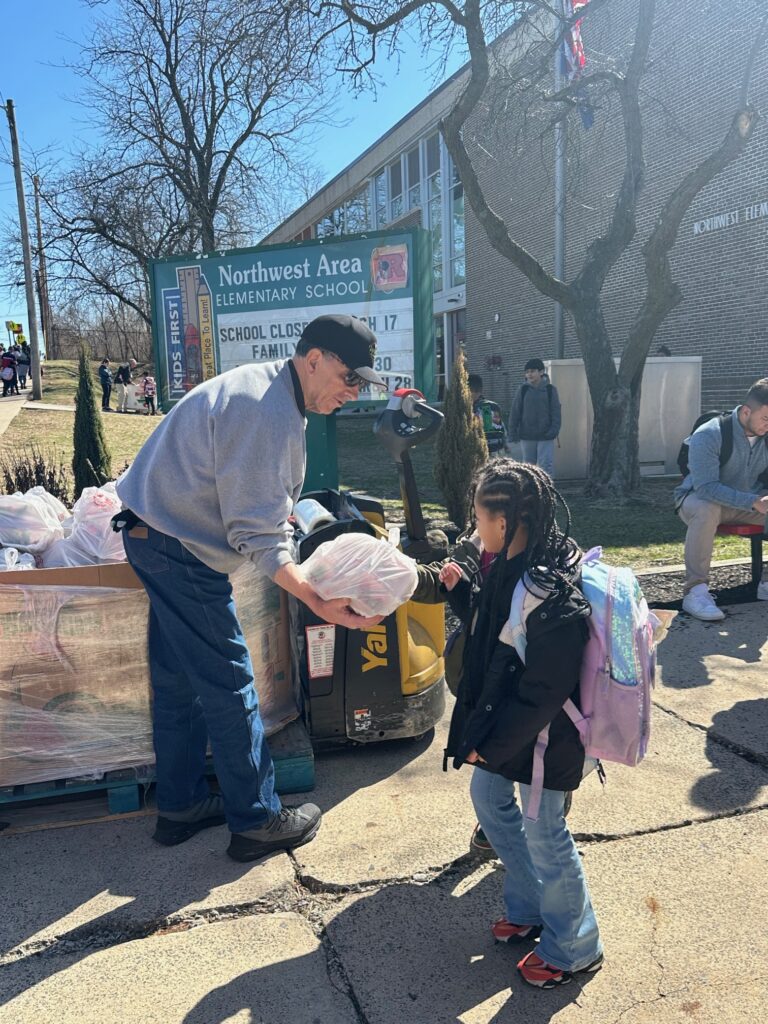
A Helping Harvest volunteer gives local students fresh fruit to take home.
Although the food bank has made some organizational changes and altered the way it processes and distributes food to try to make up the shortfalls it’s experiencing, it is unable to keep up with decreased funding and increasing demand.
“We’re working to close that gap, but we’re not going to make up $3 million in one year,” Worrall said. “We’re going to have very serious challenges to overcome.”
While the future of funding for Helping Harvest and other food banks is uncertain, Worrall is looking forward and trying to remain optimistic.
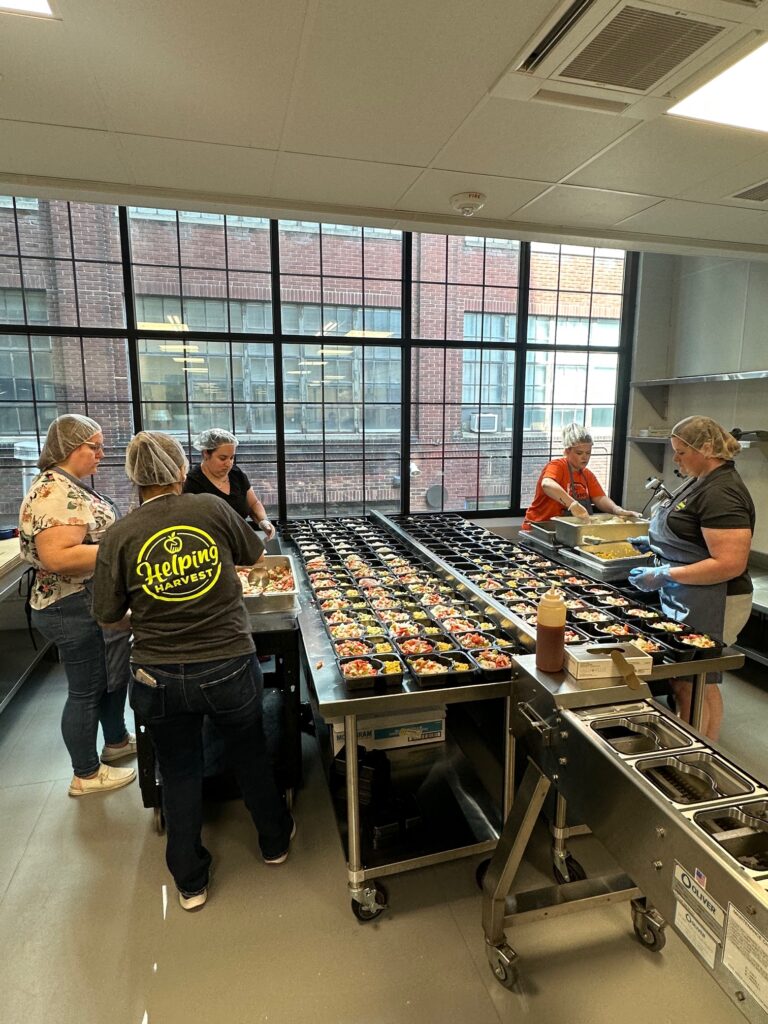
He pointed to the potential of Helping Harvest’s Community Kitchen that opened in August in downtown Reading, explaining that the kitchen makes it possible for large-scale food donations to be repurposed into thousands of individual meals for people in Berks and Schuylkill counties.
“That’s a real help in getting meals out to people who need them,” Worrall said. “It’s wonderful how the community came together to support the Community Kitchen and make that possible.”
Volunteers and staff assemble ready-to-eat meals at Helping Harvest’s new Community Kitchen.
In these very uncertain times, Worrall will continue to look to the Berks and Schuylkill communities for support. It is urgent, he said, that the needs of everyone at risk for hunger – especially children – are addressed and met.
“Think what it would be like to not have enough food for your kids,” Worrall said. “I can’t imagine that, and I don’t want anyone else to have to, either. We’re going to need all the help we can get, but Helping Harvest will continue to serve the people who need us the most.”
Addendum
November 13, 2025: Pennsylvania Governor Josh Shapiro announced late Wednesday night that a $50.1B state budget has been signed into law. The deal ends a four-month budget impasse which stopped the flow of millions of dollars of funding to Berks County schools, nonprofits, businesses, programs and services.
Talking is hard – and for girls, having a safe space to discuss feminine issues can make those conversations easier. John Paul II Center created Girl Talk 101 so girls with special needs could meet monthly. There, girls can discuss topics they may not feel comfortable discussing in front of male classmates or at home.
Girl Talk 101 received a grant from the Power of the Purse (POP) in Berks County Fund of Berks County Community Foundation. The grant was awarded so that the club can continue to meet and provide resources for participants. POP awarded the club $3,500 for 2025-2026 to financially support the club’s endeavors. The “girls only” club is available for JPII female students ages 10 to 21 and meets monthly. There, the girls discuss topics like feminine health, personal hygiene, bodily changes, relationships and more. Girl Talk 101 participants also cultivate social skills and self-assurance, so those who can enter the workforce do so with confidence.
John Paul II Center’s mission is to serve “children and adults with intellectual and developmental disabilities by providing diversified programs.” The center believes in the Catholic Church’s teachings on the sanctity of human life, which guides programming. John Paul II Center acknowledges the dignity of all learners while they realize their full potential.
POP is a women’s giving circle established in 2012 to support causes that improve the quality of life for women and children in Berks County. Chiara Sockel Renninger, a financial advisor who had taken part in something similar in Lehigh Valley, brought the idea to the Community Foundation.
“I wanted to start a group that would give local women a place to pool their charitable resources to improve the lives of women and girls in our community,” Renninger said. Since its inception, POP has provided more than $581,000 to local organizations, including JPII for Girl Talk 101.
To learn more about the Power of the Purse Fund of Berks County Community Foundation, please click here.
Every summer, Immanuel Preschool at Immanuel United Church of Christ (UCC) in Shillington welcomes eager youngsters for three weeks of fun and robust educational activities. This past summer, thanks to a grant from the First United Church of Christ Mission Fund of Berks County Community Foundation, kids could attend the summer camp for free.
As many families struggle to meet basic needs, let alone afford enrichment activities for their children, the free preschool at Immanuel UCC lessens the financial burden while minimizing “summer slide.”
“The benefits of summer programming are invaluable to preschool aged and other young children. It not only helps to prevent the “summer slide” but provides a structured environment that may not otherwise be accessible for some families,” says Madison Kaley, preschool director at Immanuel Preschool.
Immanuel Preschool is filling a big need in the community by providing a summer camp that keeps kids learning over the summer, so they do not lose skills they developed during the school year. At summer camp, children will grow in confidence in social situations, early education, coordination, and skills.
Immanuel Preschool’s summer camp has been running for several years, and the program continues to grow. With this year’s grant, the camp was able to buy more classroom materials, crafts, and safety supplies, including free books for every student. The grant will also help cover the cost of hiring additional teachers and assistants to make sure all children get the support they need.
Learn more about the First United Church of Christ Mission Fund of Berks County Community Foundation, here.
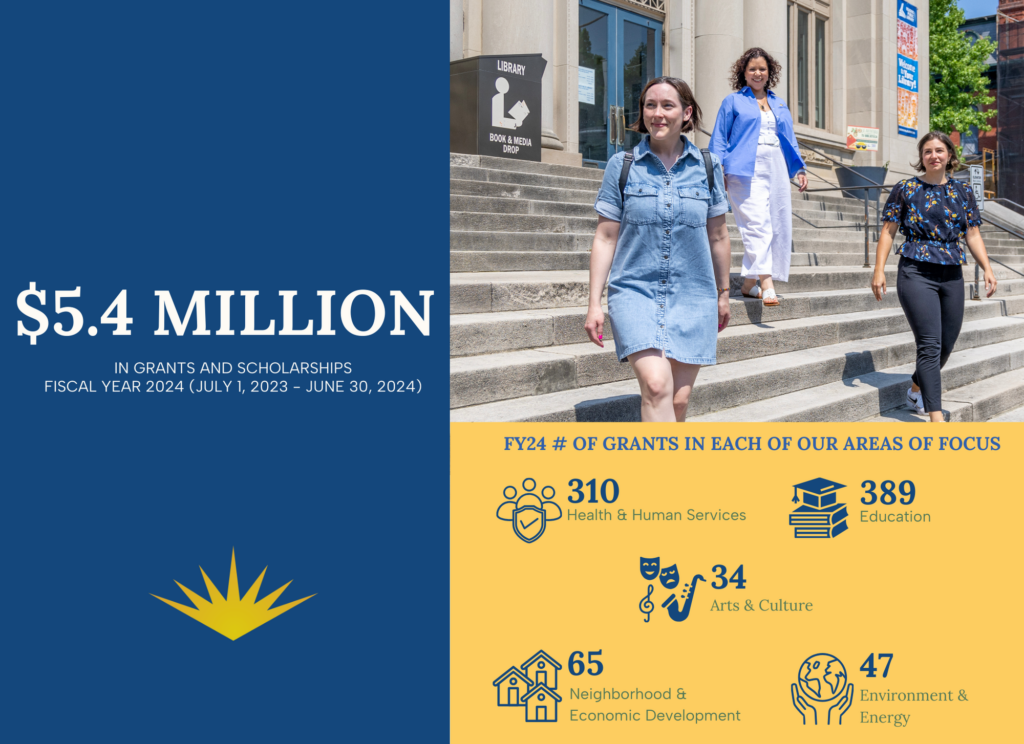
In Fiscal Year 2024, Berks County Community Foundation distributed $5.4 million in grants and scholarships to support the community. The year was filled with innovative projects, impactful programs and a strong commitment to our mission.
Berks County Community Foundation helps donors fulfill their charitable desires. The Foundation was established in 1994 as a non-profit, public charity to provide a locally managed resource for establishing endowments. We have program officers on staff who are experts in their focus areas – energy & environment, lifelong learning, health & human services, the arts, and neighborhood & economic development. They steward these charitable funds to ensure that the grants and scholarships awarded from them are making an impact and fulfilling our donors’ wishes.
“The work we do isn’t only about working with donors to establish funds. Nor is it just about awarding grants and scholarships. The team at the Community Foundation convenes local leaders, research national and local trends, and chooses initiatives on which to focus so community conversations get moving and big ideas are discussed”, Kevin Murphy, president says.
The Annual Report highlights our mission of promoting philanthropy and improving the quality of life for the residents of Berks County. The team works hard to bring organizations and individuals together for collaboration to spark change in the community. This year’s Annual Report provides detailed stories and data behind these achievements, underscoring the powerful impact of donor support in the community.
To read the full report, take a look below or click here.