This podcast episode was recorded at BCTV’s studio in Reading, PA, on February 25, 2026.
Our 2025 Annual Report: A Year of Connection is here
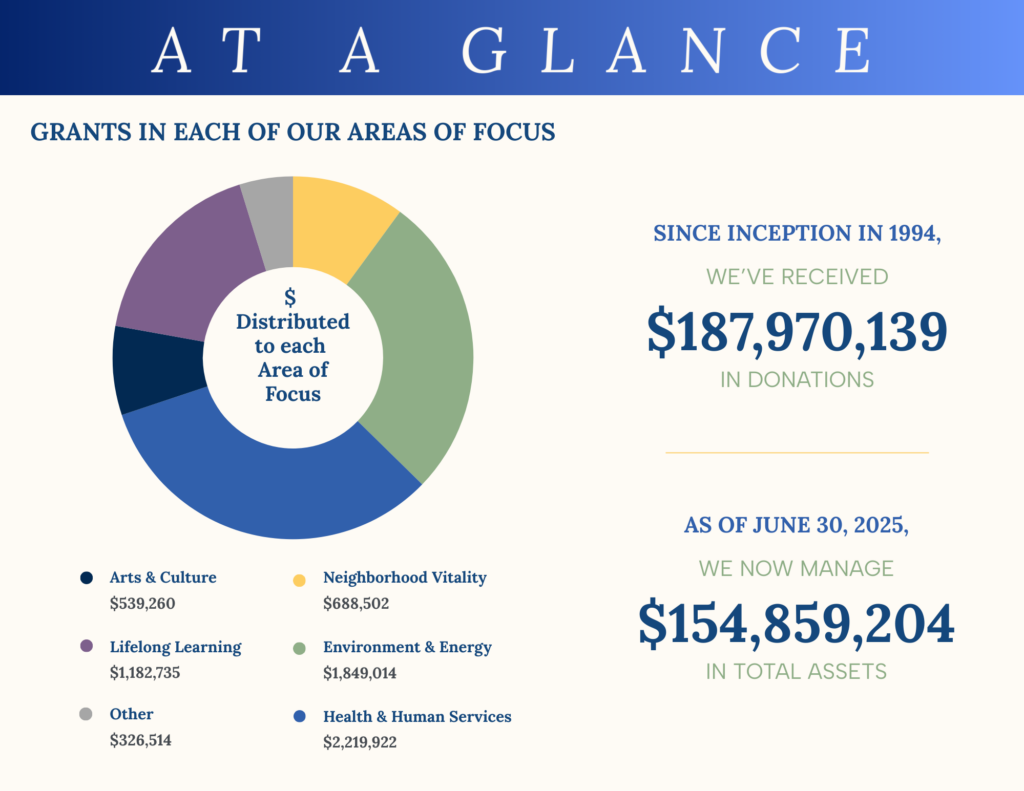
In Fiscal Year 2025, Berks County Community Foundation distributed over $6.8 million in grants and scholarships to support the community. While grantmaking is “what we do,” connecting to the community is at the heart of our work.
Berks County Community Foundation connects donors, grantees, and community partners to one another in the pursuit of the greater good. Our Program Team, comprised of experts in their fields of interest, made quarterly site visits to local institutions to learn about their operations, needs, and impact on Berks County. During the federal government shut down and Pennsylvania state budget impasse, the communication and program team engaged a local reporter to investigate how government cuts affect Berks nonprofits. Connecting with people, sharing expertise, and learning from one another, is how communities thrive.
“While distributing grants and scholarships is a core part of our mission,” says Kevin Murphy, President and CEO of Berks County Community Foundation, “none of our work would be possible without the relationships we build throughout Berks County.”
The Annual Report highlights our mission of promoting philanthropy and improving the quality of life for the residents of Berks County. The team works hard to bring organizations and individuals together for collaboration to spark change in the community. This year’s Annual Report provides detailed stories and data behind these achievements, underscoring the powerful impact of donor support in the community.
To read the full report, take a look below or click here.
In late 2025, the program and communication teams of Berks County Community Foundation spent two days in the Kutztown area. There, they visited local institutions that contribute to the area’s vitality.
The foundation conducts these site visits to gain knowledge about the communities we serve. Some institutions have received gifts from various funds the foundation manages. Other institutions simply enrich the cultural, educational, or religious life of the county.
This blog post is part two of a two-part series on the Kutztown tour. Read part one, available here.
The second half of the Kutztown site visit started one cold November morning at Crystal Cave, one of the oldest tourist landmarks in Berks County. Discovered on November 12, 1871, our team toured the first “show cave” in Pennsylvania on the 154th anniversary of the cave’s discovery.
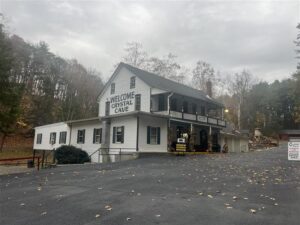
The welcome center and inn giftshop at Crystal Cave were once a hotel which accommodated guests traveling from far distances.
The cave was discovered by William Merkel and John Gehret while they were blasting for limestone. After the smoke cleared, the pair descended 125 feet into damp, underground darkness. Although the pair didn’t come to purchase the cave, their initials are etched into one of the cave’s rock formations. With some formations aging more than half a million years old, it is safe to say that Merkel and Gehret’s legacies will endure for generations to come.
William Merkel and John Gehret etched their names into a rock formation upon discovering Crystal Cave on November 12, 1871.
Human influence—and intrusion—are common traits in Crystal Cave’s history as a “show cave”. Immediately after Merkel and Gehret’s discovery, Berks County residents began to brave the impenetrable darkness of the cave, in search of souvenirs. Frustrated with the damage, Samuel D. F. Kohler bought the cave, built an official entrance, and started charging guests 25 cents for admission.
The ancient appeal of Crystal Cave brought tourists from all over the country, which ushered in a time of economic growth for Kohler. Improvements were made inside the cave for safety purposes, a hotel was built for guests, and a stagecoach was purchased to expand access across the region.
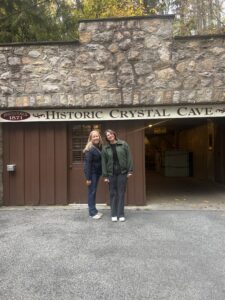
Foundation team members standing at the opening of Crystal Cave, which was created for guests to safely enter the cave.
As business expanded, the Kohler family tested the limits of the cave. Hoedowns, weddings, and baptisms took place in the “Crystal Cave Ballroom”, complete with a bar for liquor, live band, and dance floor. Amid renovations and celebrations, David Kohler (son of Samuel) sold Crytal Cave to J. Douglas Kaufman.
The stalagmite “altar”, which was used in Marion Kurtz’s wedding to Francis Finley on October 15th, 1919, was removed from its original site in Crystal Cave. Without a stalactite dripping mineral water on the stalagmite altar, the altar decays. The intervention of oils from a human hand also contribute to the decay of these rock foundations.
In more recent years, Crystal Cave, Inc. has adapted as an attraction that celebrates nature and educates visitors on the fragility of the cave’s rock formations. When touring the cave, guests are asked to not touch the rock formations, as human touch can interfere with their growth—a big change from the days of removing crystals from the cave as a souvenir.
Now, Crystal Cave attracts the public through their scenic hiking trails, educational group tours, historical museum and much more.
To learn more about Crystal Cave or plan your next excursion, visit Crystal Cave’s website.
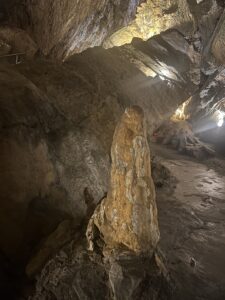
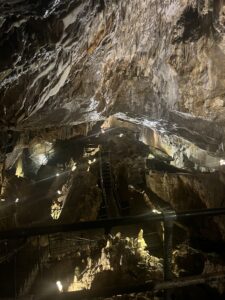
A large portion of Crystal Cave, with added walkways and lighting to make the tour safer for visitors.
The Council of Three Rivers American Indian Center is a nonprofit whose mission is to promote the socio-economic development of the Native American community and others who experience similar types of economic difficulties in the Greater Pittsburg metropolitan area.
The tribes most associated with Berks County include the Susquehannock, Lenape, and Iroquois peoples. Today, only 1.4% of Berks County’s population identifies as an American Native. The impact of native lives, however, can be found all over the county: what we now know as Maxatawny, Neversink, Saucony, and Tulpehocken were once Machksithanne, Navesink, Saconk, and Tulpewahaki, respectively.
The second day of our Kutztown tour concluded with a brief visit to shops along Main Street and the surrounding Kutztown area. Find the list of shops the foundation team visited below:
Casa de Empanada
Saucony Creek Brewing Company
Sorrelli Jewelry
Kutztown Tavern
Young Ones Records
Paisley & Company
Dietrich’s Meta’s and Country Store
Firefly Bookstore
Interested in having the foundation visit your nonprofit or organization? Reach out!
Thanks to the United Way of Lancaster County, 211 services are available in Berks County.
What is 211?
211 is a free, confidential, and comprehensive informational/referential service for individuals looking for a broad range of health and human services. Dial 211, text your zip code to 898211, or live chat or search at pa211east.org to find information on a broad range of services.
The services 211 can help you locate and navigate include:
Housing Support: access payment assistance, eviction and other landlord/tenant issues, emergency shelter and subsidized housing
Utility Assistance: includes mediation assistance and help with water, gas, fuel, phone and electric bills
Family Resources: find childcare, online learning resources, camps, child development and emergency family support
Food Security: locate local food pantries, home delivered meals, sit down meals, assistance programs and pet care
Elder care: includes in-home assistance, health and nutrition, caretaker support and transportation
Health Services: includes physical, mental and dental health, medical transportation, vaccines and insurance
After-school programs for at-risk children
Please note: 211 is not an emergency services provider. If your needs are emergent, call 911.
Who is 211 PA East?
211 PA East is a program of United Way of Lancaster County whose 211 services extend to all of Berks County. When Berks residents dial 211, they connect with professionally trained resource navigators, who will gain knowledge of the caller’s needs, identify solutions, and connect the caller with local services they require. Help is available in multiple languages and is completely confidential.
Dialing 211 also keeps our communities safer and healthier. When first responders react to non-emergent calls, they are unable to meet community needs as intended. By calling 211 for social service assistance, our 911 emergency dispatch system does not get overwhelmed with non-emergent calls.
211 PA East was made possible, in part, by the Home Health Care Foundation Permanent Fund of Berks County Community Foundation. If you’re passionate about improving the health and quality of life for Berks County residents, consider donating to the fund.
The DentaQuest Fund of Berks County Community Foundation, along with the PA Chapter of American Academy of Pediatrics (PA AAP), recently helped bring the Oral Health Story Kit program and dental screenings to the Bethel-Tulpehocken Public Library.
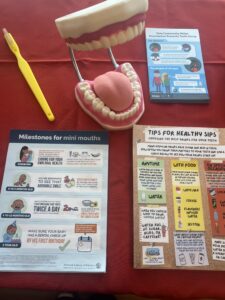
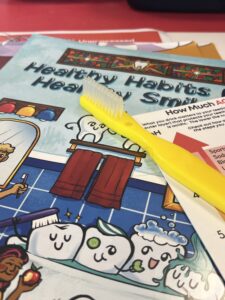
Take-home supplies from the Oral Health Story Kit included a tooth cleaning tools and educational materials.
A lack of access to care can impede oral health, especially in children. With many Americans living in a ‘dental desert’, the demand for local dentists is high. Compounded with expensive treatment costs, many individuals lack necessary, preventative care, resulting in emergency dental service and/or untreated oral diseases.
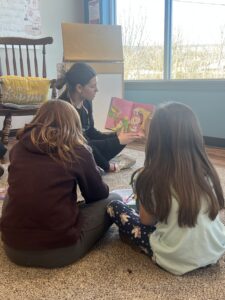
A volunteer dental student interested in pediatric dental care reads a book about oral health to an audience of children.
The PA Chapter of American Academy of Pediatrics (PA AAP) is a nonprofit organization whose mission is to promote the equitable health and well-being of all Pennsylvania children; they accomplish this by implementing community programs of education, support, and advocacy. As experts in pediatric healthcare, they are committed to fostering collaboration among pediatricians, families, and community partners.
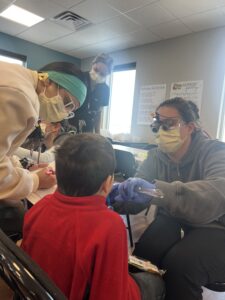
The Oral Health Story Kit is just one PA AAP program that promotes oral health literacy to Berks County residents. In early February, pediatric oral healthcare professionals and their students came to the Bethel-Tulpehocken Public Library to facilitate free oral health story times and screenings for children, and to disperse educational materials to community members.
“Programs like the Oral Health Story Kits help build oral‑health literacy at the earliest ages, which is one of the strongest predictors of long‑term dental health,” says Jacqueline Pugliese, Oral Health Program Manager of PA AAP. “In rural areas of Berks County, where access to providers is limited, giving families clear, engaging tools to understand how to care for their teeth can make a real difference. Libraries are the perfect place to spark that learning—accessible, trusted, and rooted in the community.”
A variety of interactive educational materials were available during the program, including puppets to practice tooth brushing, dioramas on the effects of sugary drinks on teeth, and children’s oral health flyers for families to take with them.
“Many residents in our rural area have large families and limited transportation. There are no local health care or offices for social services,” says Kaitlin Lehman, Director of the Bethel-Tulpehocken Public Library. “Bringing representatives of these organizations closer to people who need them is a big step in improving accessibility. Getting connected to services through a familiar, trusted resource like the library also helps reduce the barrier of fear or uncertainty.”
Volunteer dental students conducted basic oral health screenings on young patients.
While access to medical specialists may be lacking, every community in Berks County has a local library. For our rural communities, libraries may be the only communal space to gather—and why it makes sense for PA AAP to meet the community where they already are.
“In our community, there are no other public spaces – no senior center, playground, or rec center. So, people rely on the library not only as a source of information and education, but also for community and connection,” says Lehman. “The library is the only place that people can come and just be, without judgment, and without the expectation of spending money.”
PA AAP and Berks County Community Foundation understand the importance of these programs, and that charitable dollars can never replace government funding. While government funding continues to roll back for health and human services, the nonprofit sector recognizes the need to consolidate resources and provide creative solutions to arising community needs.
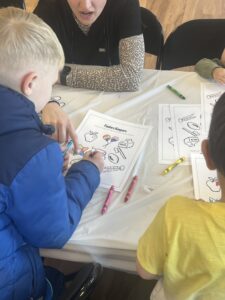
Volunteer dental students used dental-themed coloring book pages to teach children about the impact of oral health.
“Berks County Community Foundation is happy to support programs like the Oral Health Story Kit,” says Cindy Milian, Health and Human Services Program Officer. “There are many ways to build a healthier Berks County, and engaging the youth in conversations about their health can help lay a strong foundation.”
The next Oral History Health Kit program and dental screening will take place at Morgantown Library on February 18th from 10am to 12pm. Walkins are available for this free service. This program was made possible, in part, by the Community General Hospital Health Care Fund of Berks County Community Foundation.
If you are passionate about improving the health and quality of life for Berks County residents, consider donating to the Dental Treatment Fund of Berks County Community Foundation. This fund helps cover the cost of dental treatment for individuals with financial need.
In late 2025, the program and communication teams of Berks County Community Foundation spent two days in the Kutztown area. There, they visited local institutions that contribute to the area’s vitality.
The foundation conducts these site visits to gain knowledge about the communities we serve. Some institutions have received gifts from various funds the foundation manages. Other institutions simply enrich the cultural, educational, or religious life of the county.
This blog post is part one of a two-part series on the Kutztown tour.
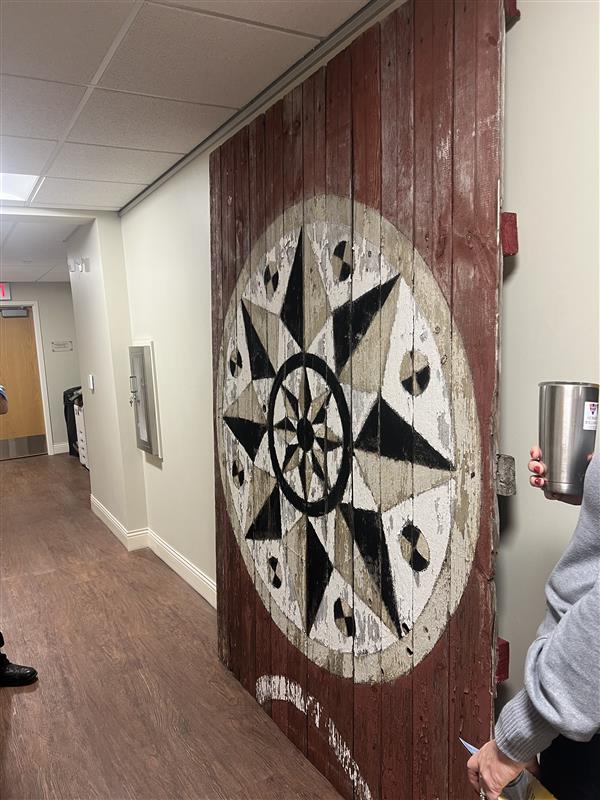
The tour started at the Pennsylvania German Cultural Heritage Center on Kutztown University’s campus. There, our tour guide, Patrick J. Donmoyer, talked about the Berks County art tradition of barn stars, an art form which can be traced back to the late 1700s. Milton J. Hill (1887-1972), the celebrated local artist, was a third-generation barn star painter and native speaker of Pennsylvania Dutch. Hill contributed to dozens of installations of barn stars that are still hanging today. In fact, the Pennsylvania German Cultural Heritage Center offers a free, self-guided tour of the barn stars of Berks County. Berks County is home to the highest concentration of barn stars in Pennsylvania, a testament to the cultural influence of Pennsylvania Germans in the area.
A barn star from a local barn that has been removed for preservation and restoration purposes.
Donmoyer also shared famous Pennsylvania Dutch folklore and traditions with the team. These folk legends included such the sainted healer Mountain Mary and the grumpy Christmas visitor known as the Belsnickel. Donmoyer also shared the Pennsylvania Dutch tradition of herbal healing, quilting, and of course, local cuisine.
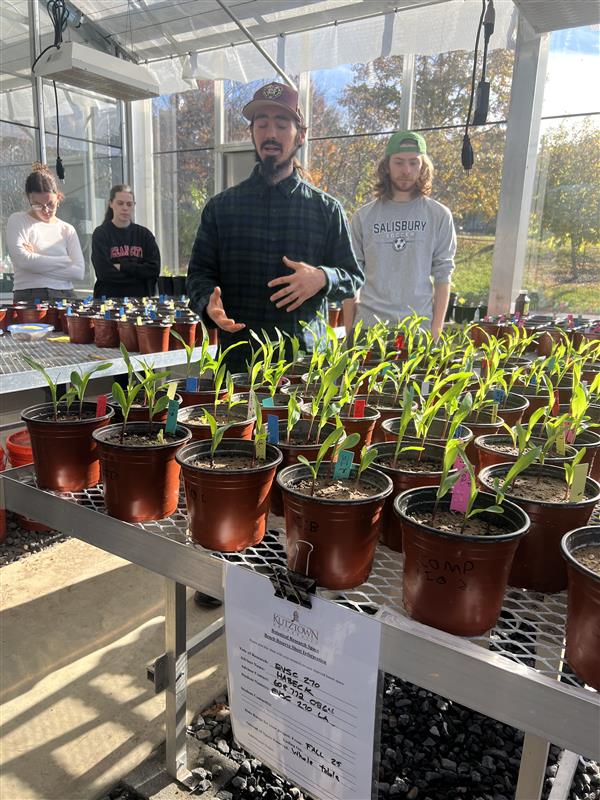
After visiting the Heritage Center, the foundation team briefly joined an undergraduate class at Kutztown University’s Botanical Research Center. Dr. Chris Habeck’s students on the regenerative organic agriculture track presented their projects, which included research on biochar’s effects on soil health and plant growth. In addition, the research done at the center will benefit local partners, namely farmers from the Rodale Institute and beyond.
A student of the Botanical Research Center presents research on biochar.
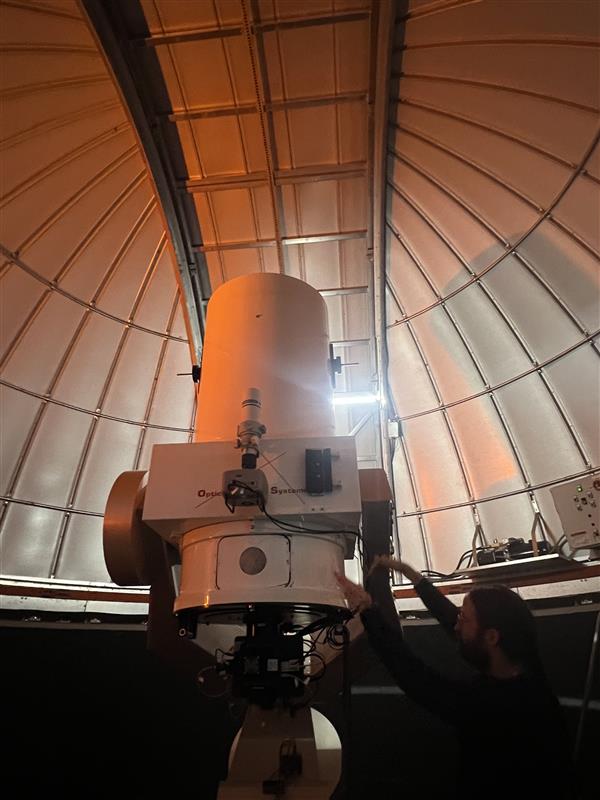
A short walk on Kutztown University’s campus brought the team to the university’s planetarium/observatory. There, Dr. Phill Reed demonstrated the updated technology the planetarium requires to run. The Kutztown University Planetarium is open to the community for various educational and recreational shows. After viewing one of these shows, Reed and the foundation team ascended the stairwell which led to the C.R. Chambliss Astronomical Observatory. There, Reed informed the group of notable research that had been and continues to be conducted using the observatory. Students have identified 15 new exoplanets using the observatory, providing new insight into the architecture of our solar system.
Dr. Phill Reed demonstrates how students use the observatory.
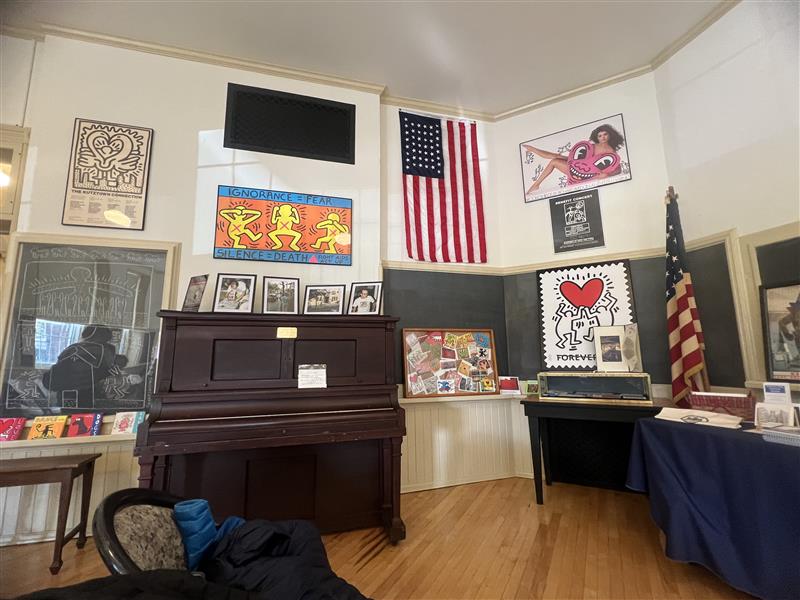
Leaving the university’s campus, the tour continued down Kutztown’s Main Street and into the residential landscape of the area. The Kutztown Area Historical Society is home to many installations, including a miniature train museum, renderings of Victorian-era living spaces, and a room dedicated to the late artist Keith Haring. The Historical Society is open to the public and has community projects in which residents can participate.
A portion of the Keith Haring display at the Kutztown Area Historical Society. The display includes Haring’s artwork using chalk, a temporary display protected by glass.
Part one of our Kutztown visit concluded where it began, on Kutztown University’s campus. The Wells-Rapp Center for Mallet Percussion Research boasts an archive of artifacts, instruments, manuscripts, and recordings of mallet percussive pioneers. The center also has a performance hall and rehearsal rooms for Kutztown students and community members. The Kutztown Pipe Band, a Kutztown University and nonprofit community group in the area, utilizes the space. With support from the Juniper Fund of Berks County Community Foundation, the band has grown its membership. Now, they offer free “Intro to Piping” classes for those with no prior experience who may be interested in joining.
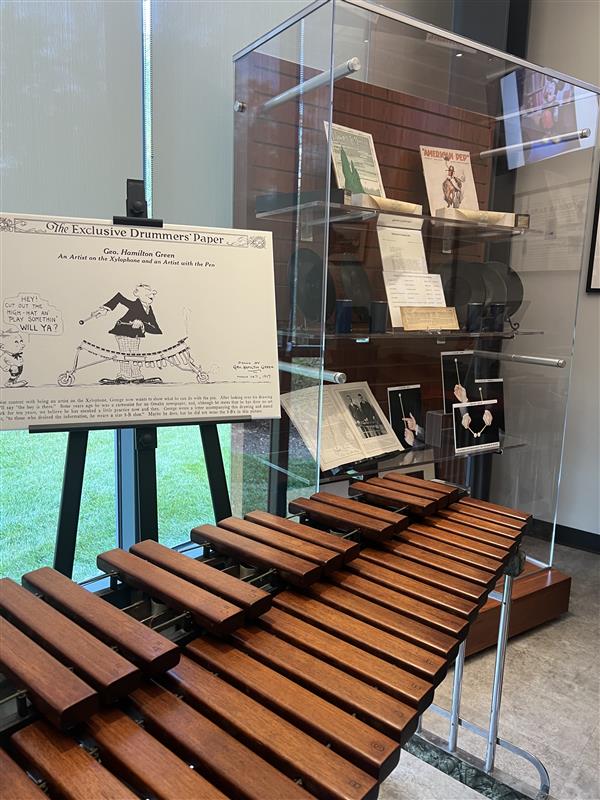
A mallet instrument and historical artifacts on display at the Wells-Rapp Center for Mallet Percussion Research.
This concludes part one of the two-part series about the foundation’s site visit to the Kutztown area.
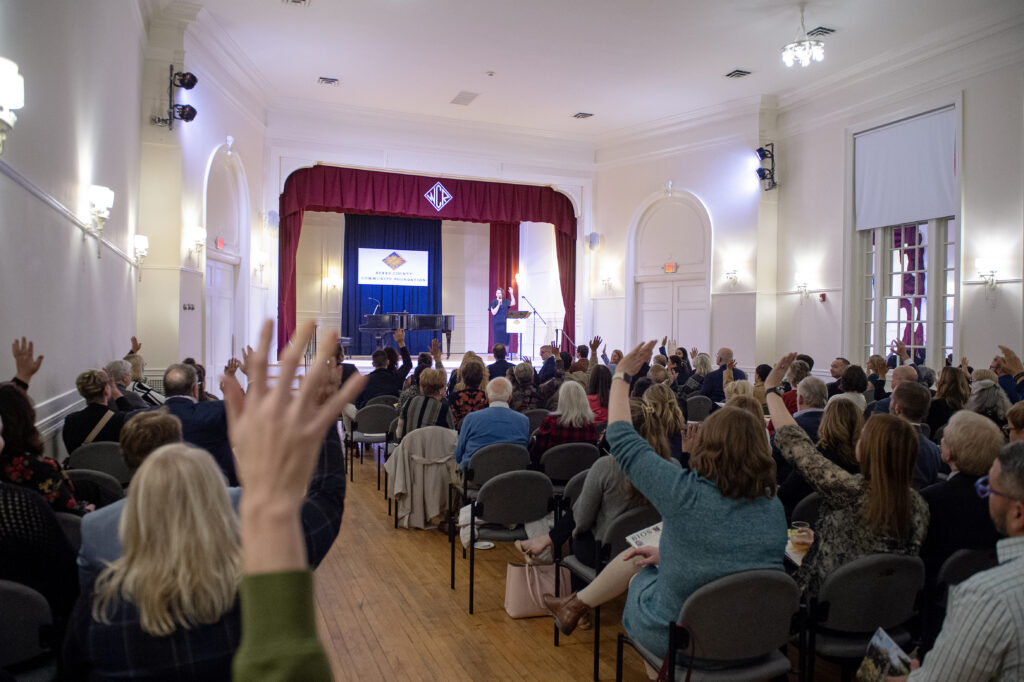
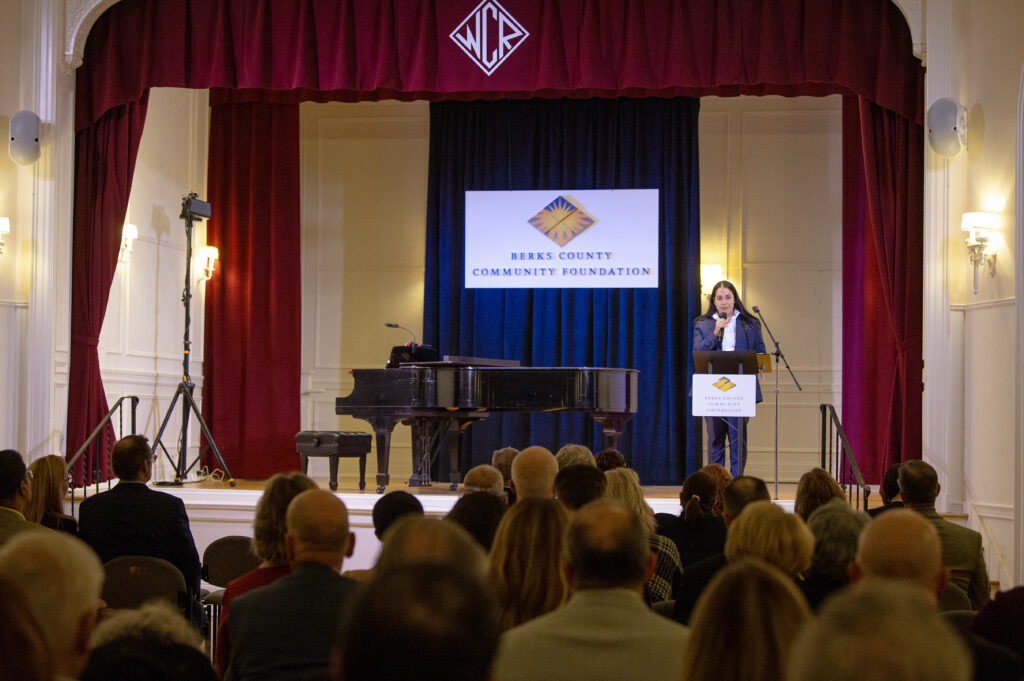
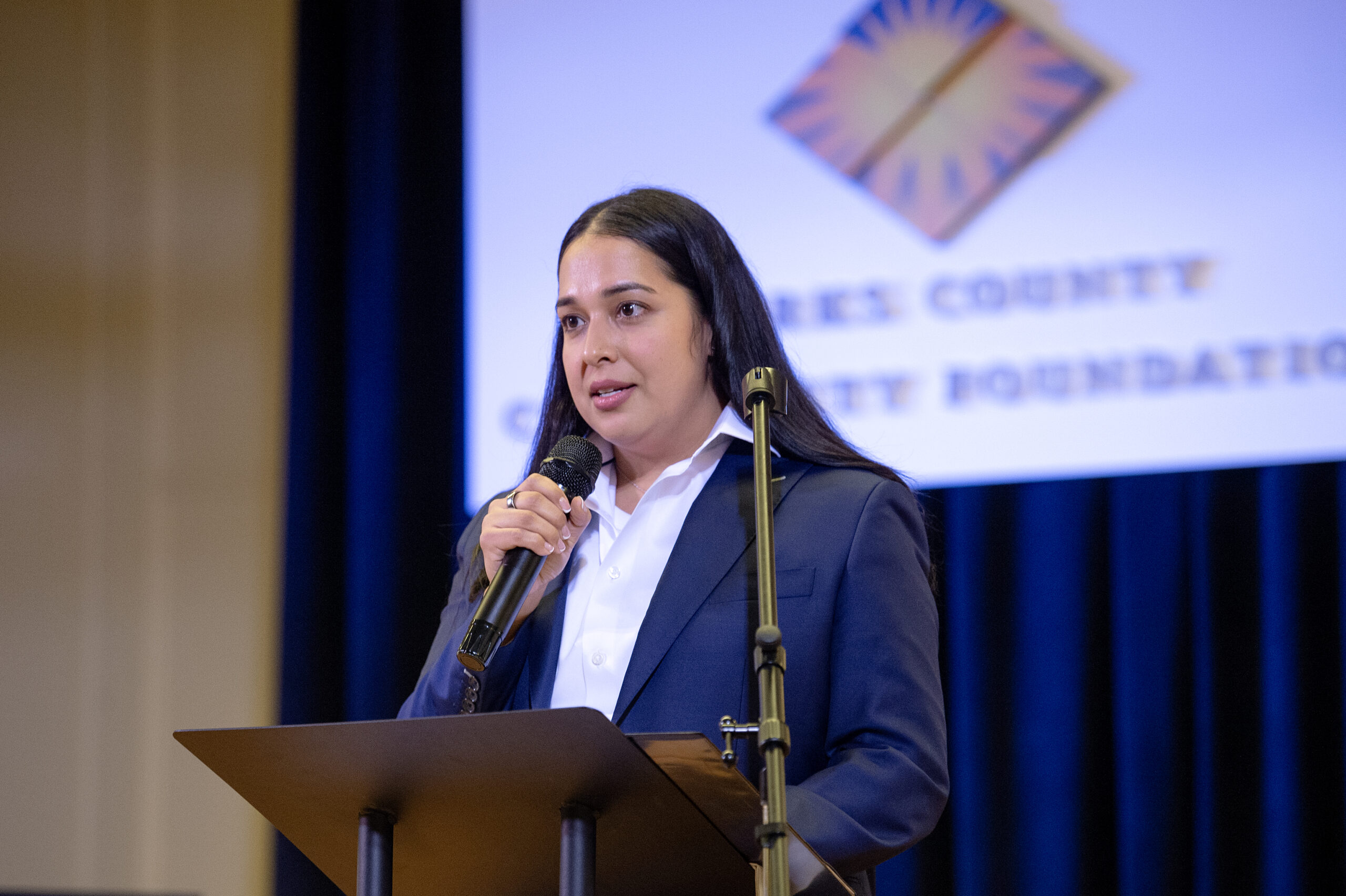
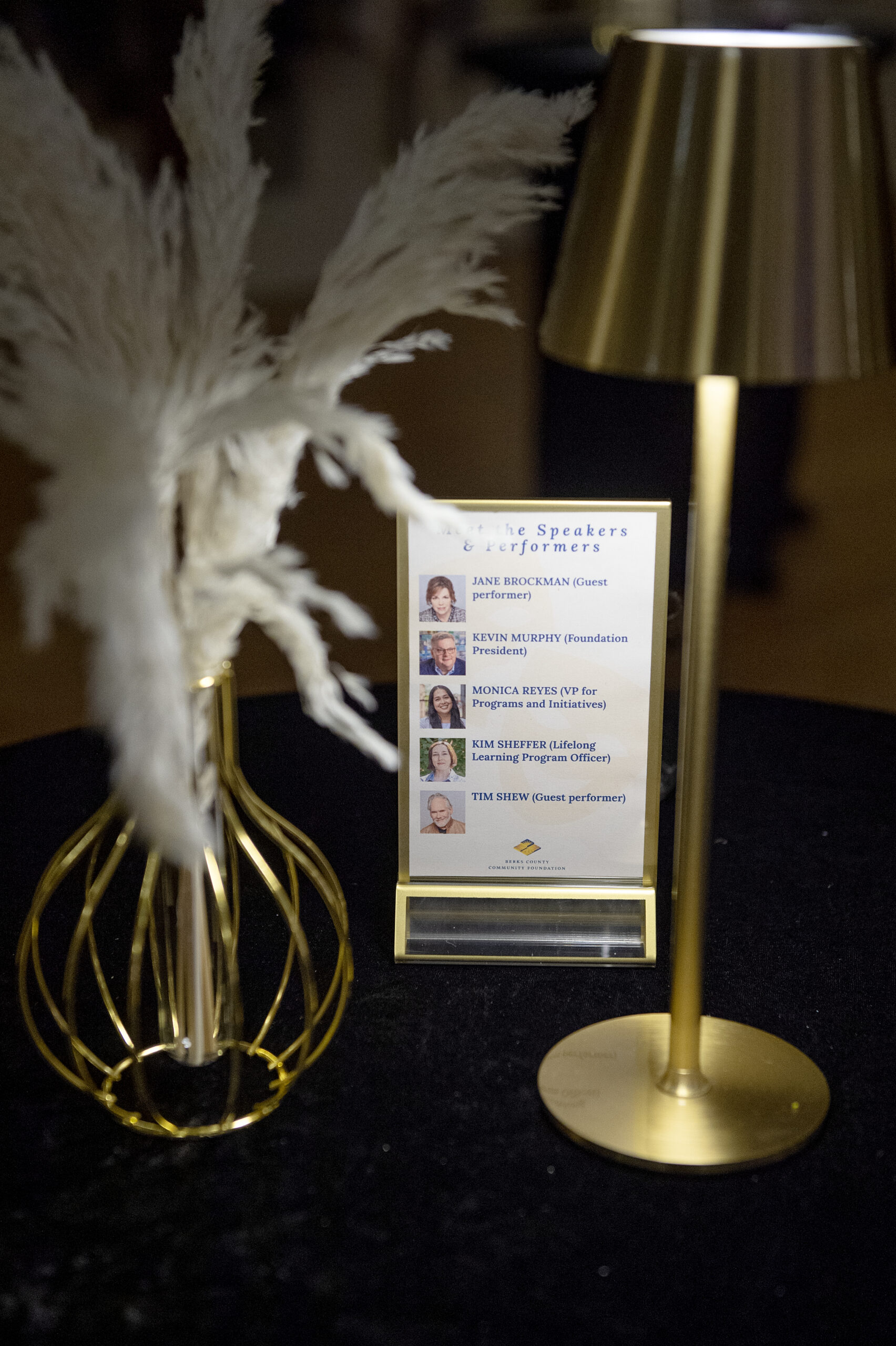
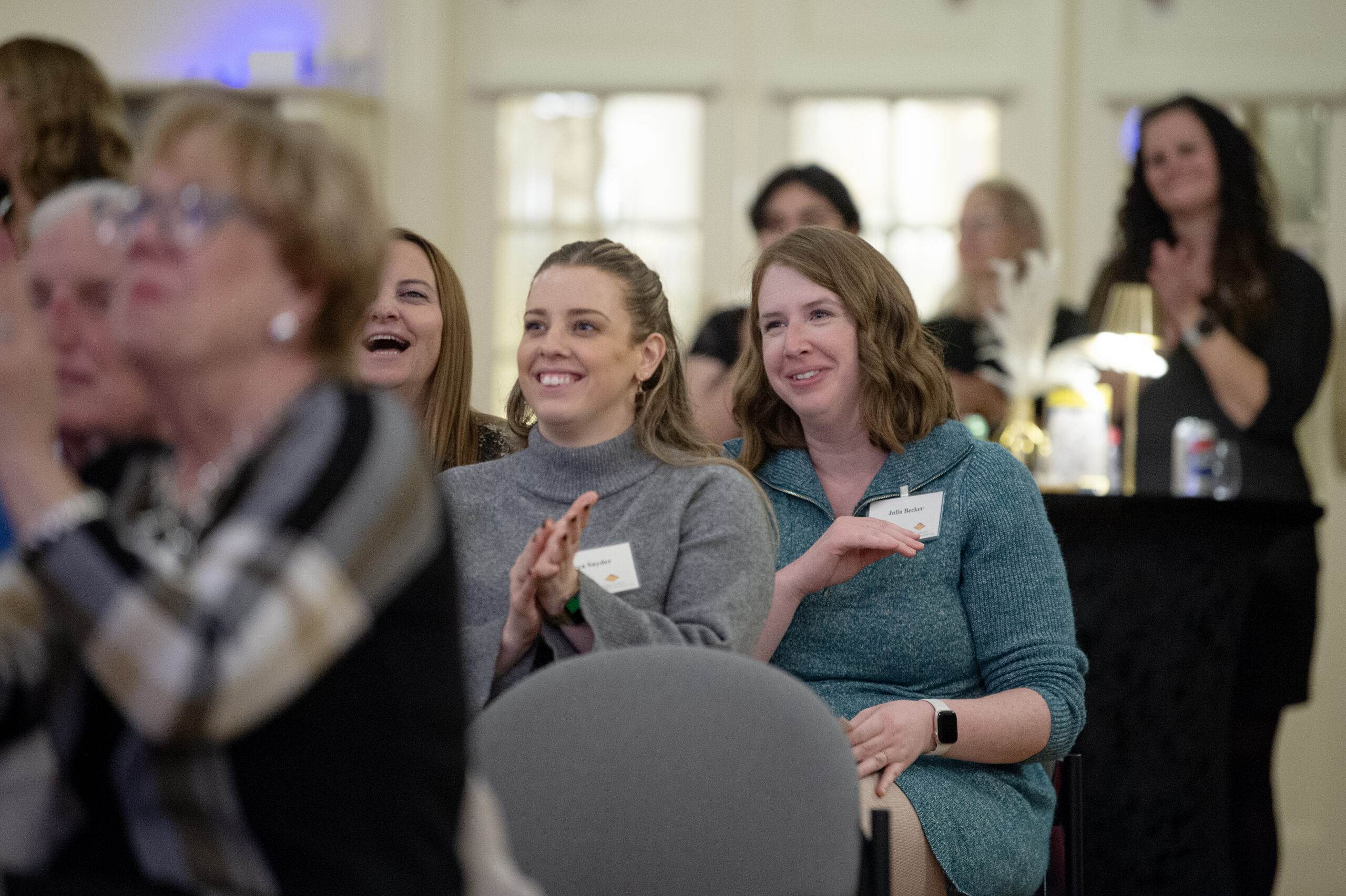
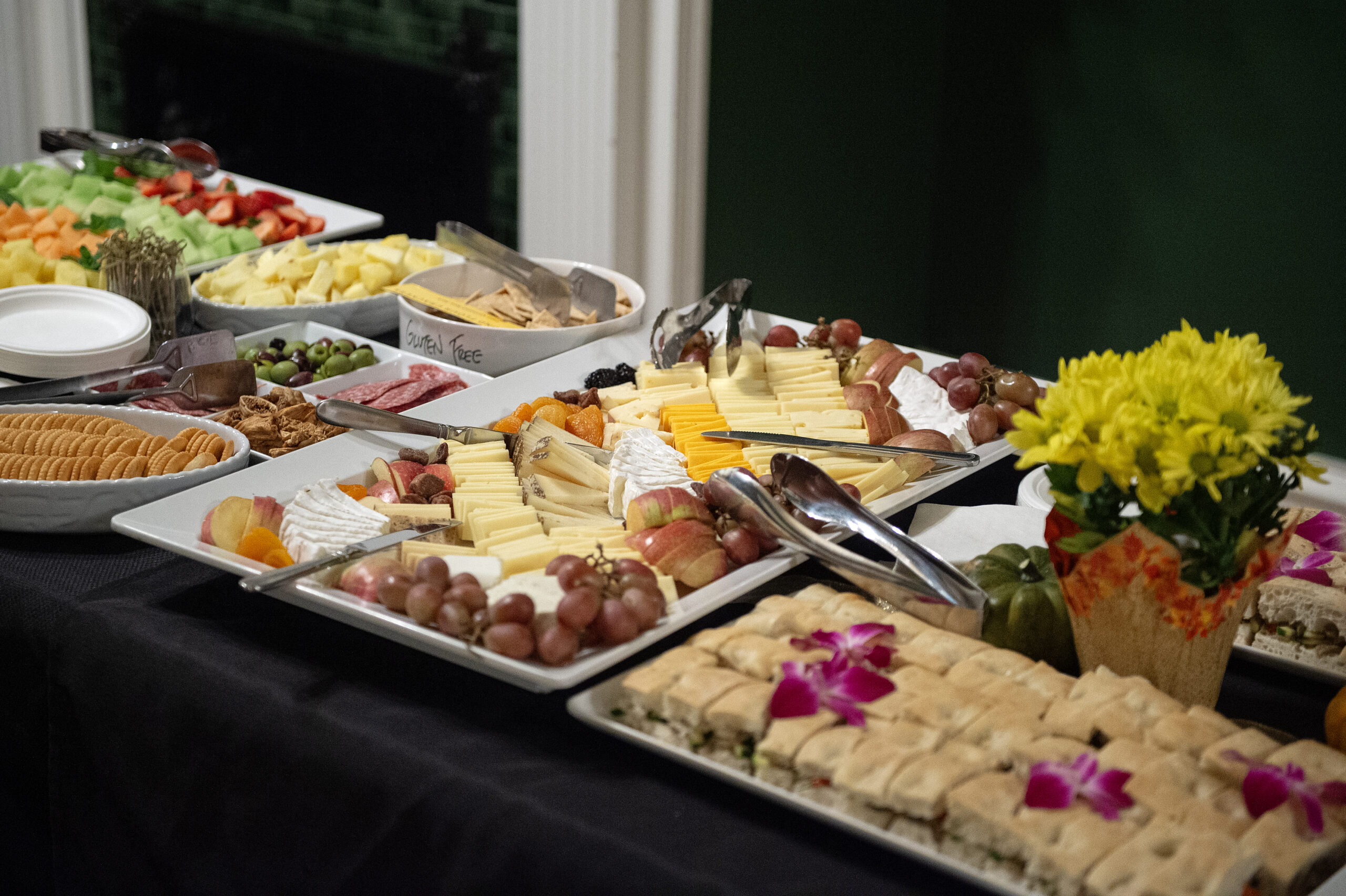
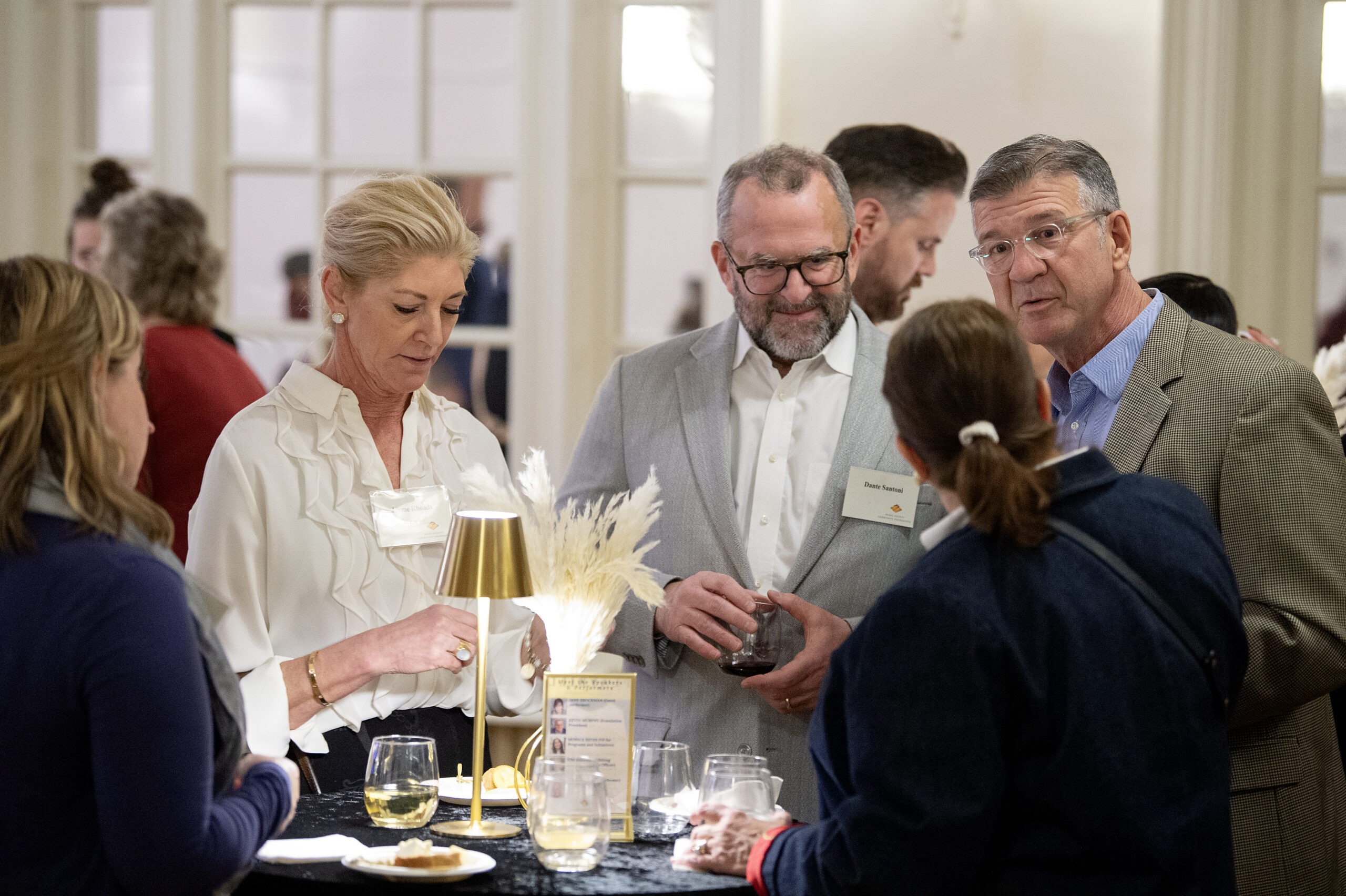
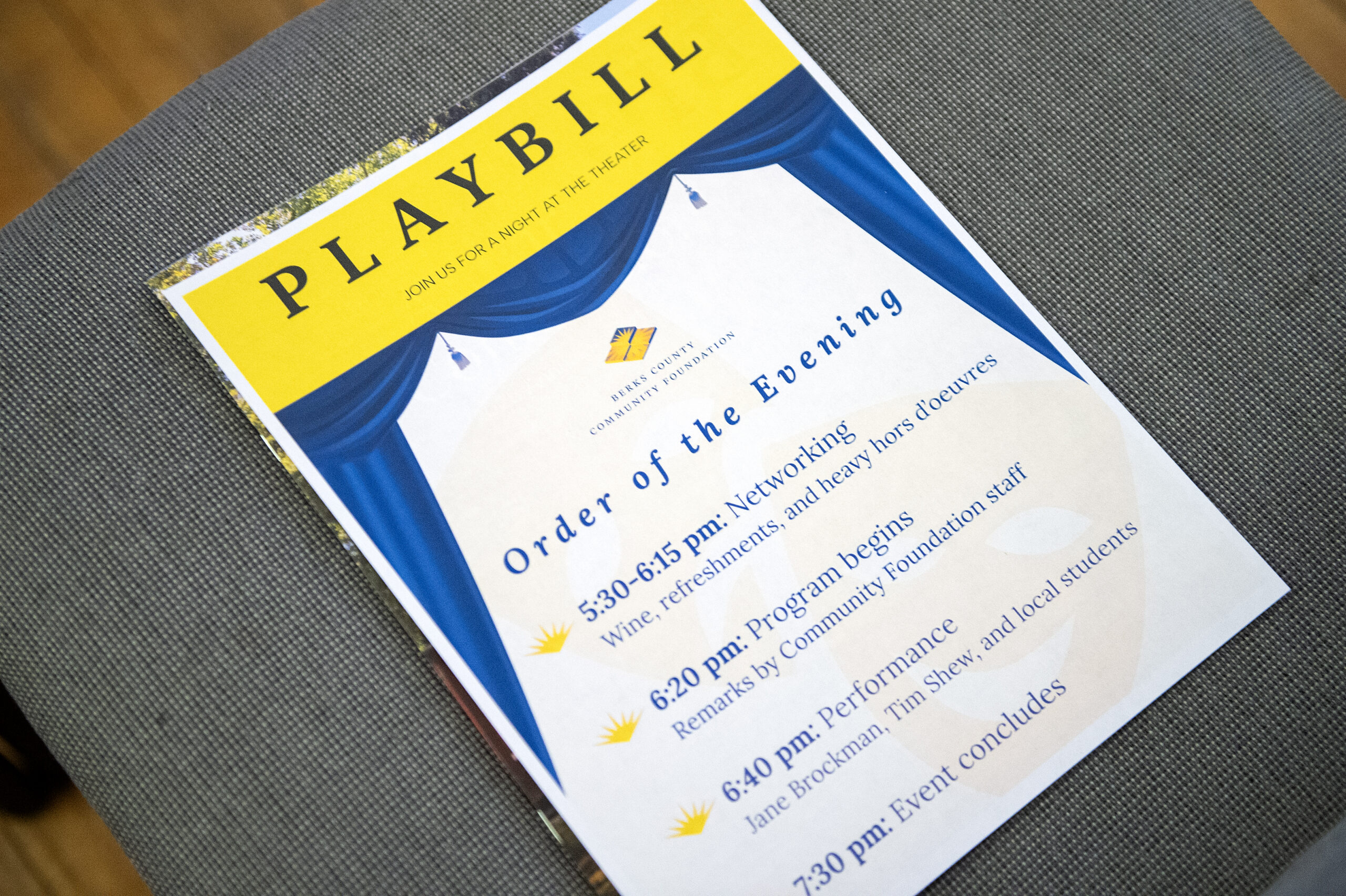
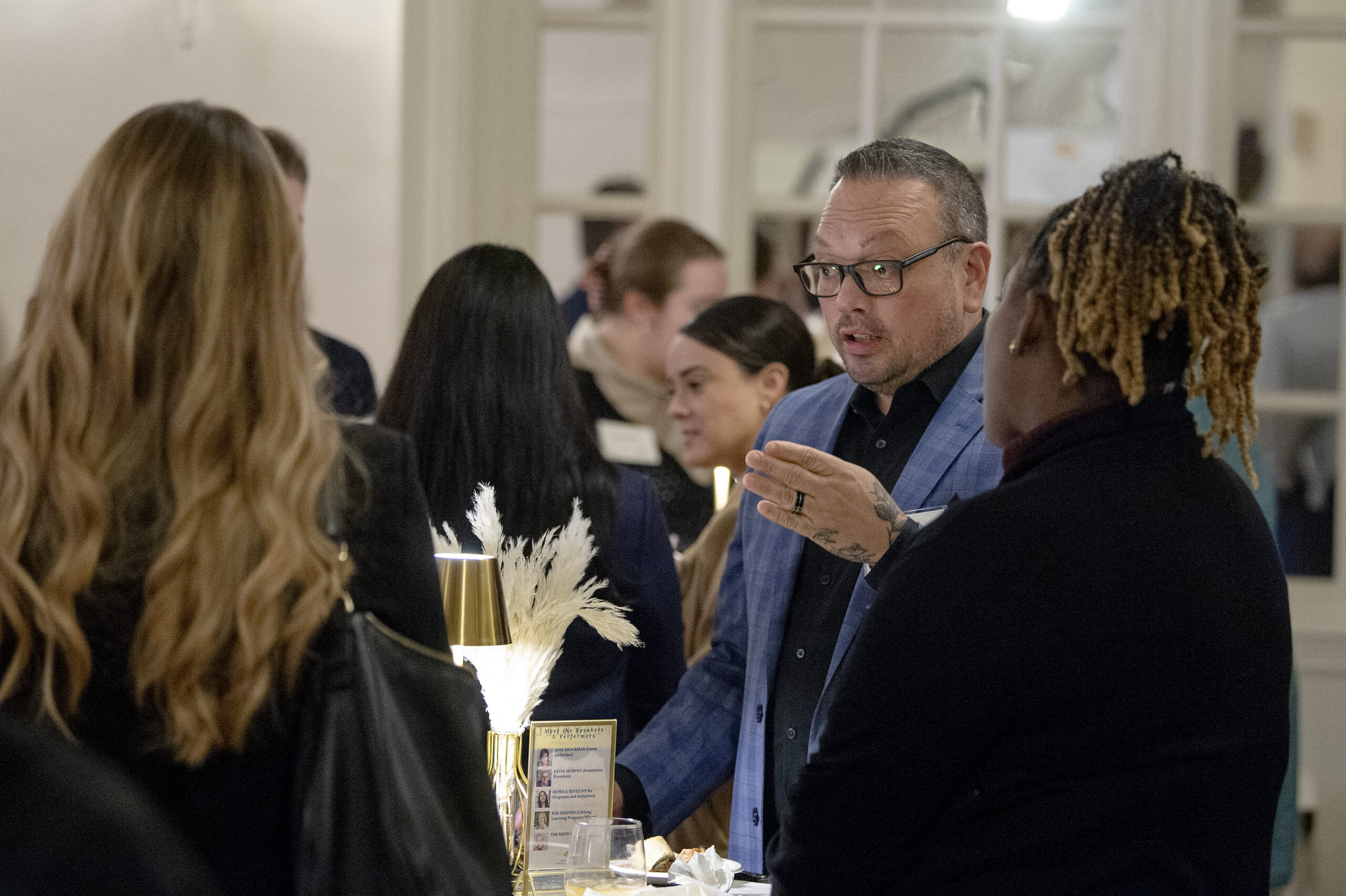
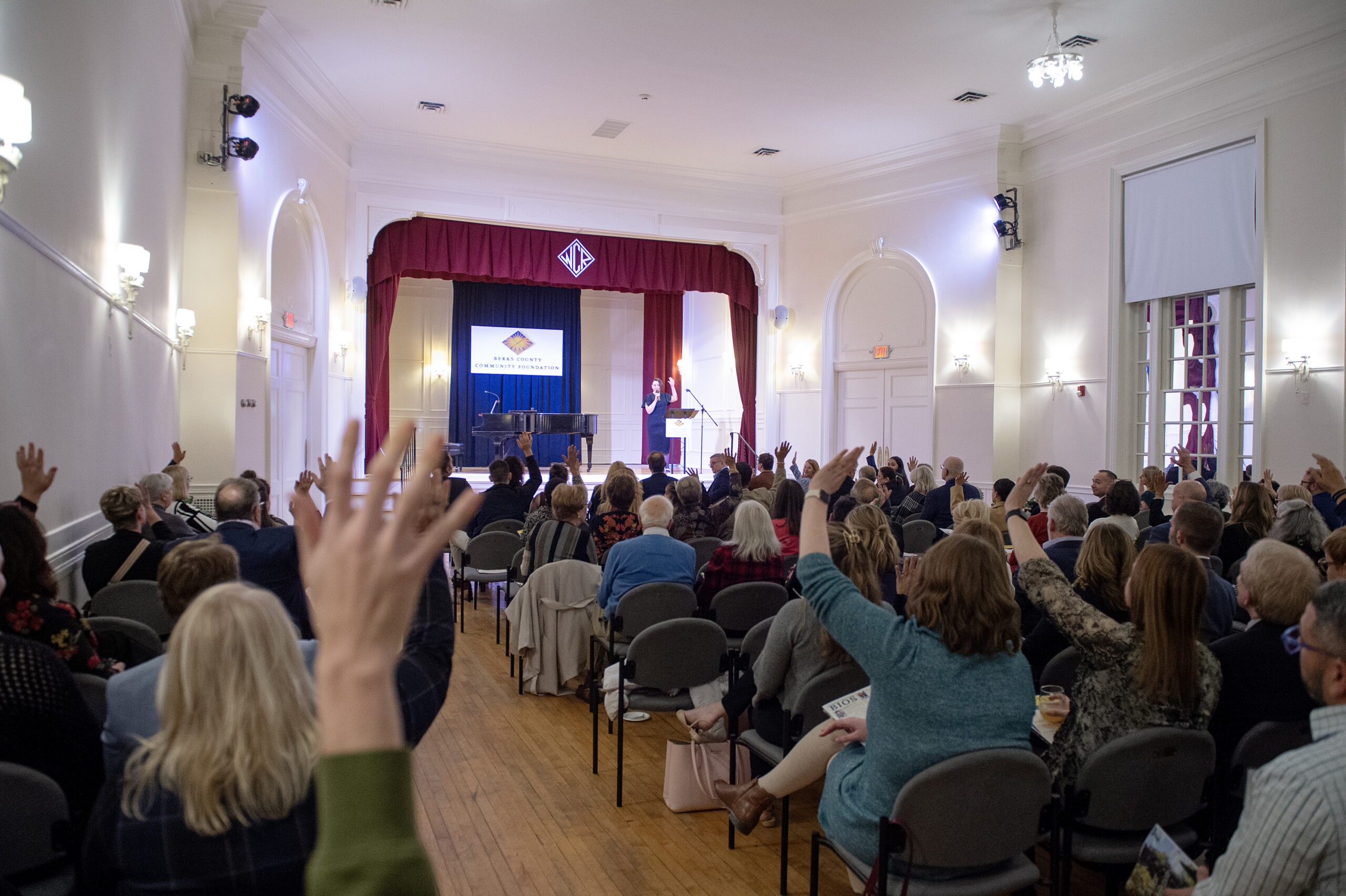
On Wednesday, November 19th 2025, the Berks community gathered at WCR Center for the Arts in Reading, PA, for Berks County Community Foundation’s annual meeting, “A Night at the Theater”.
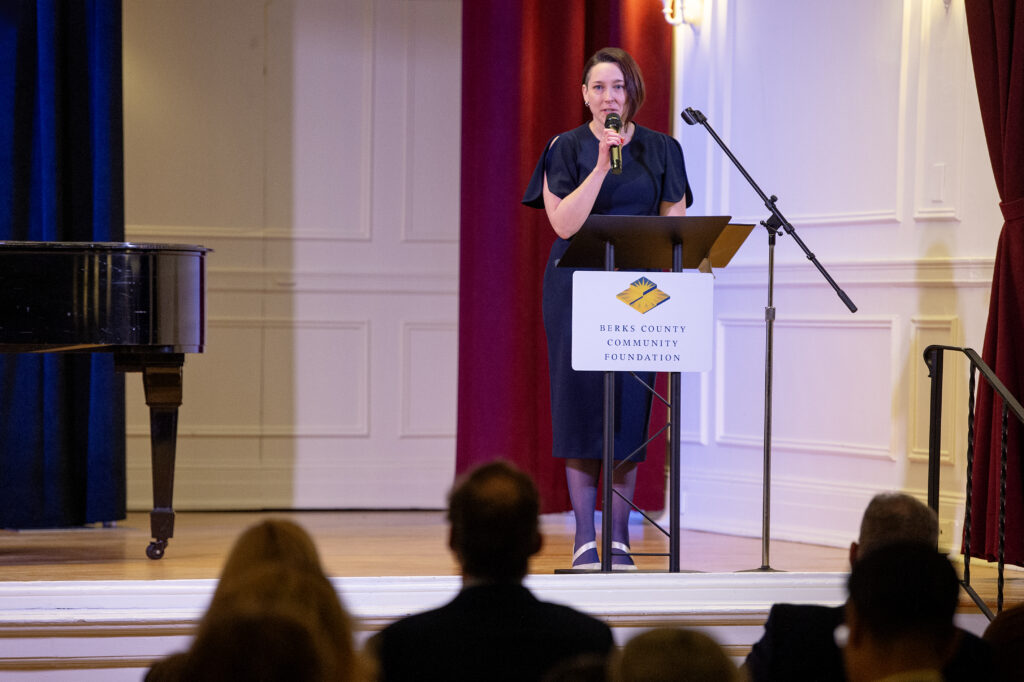
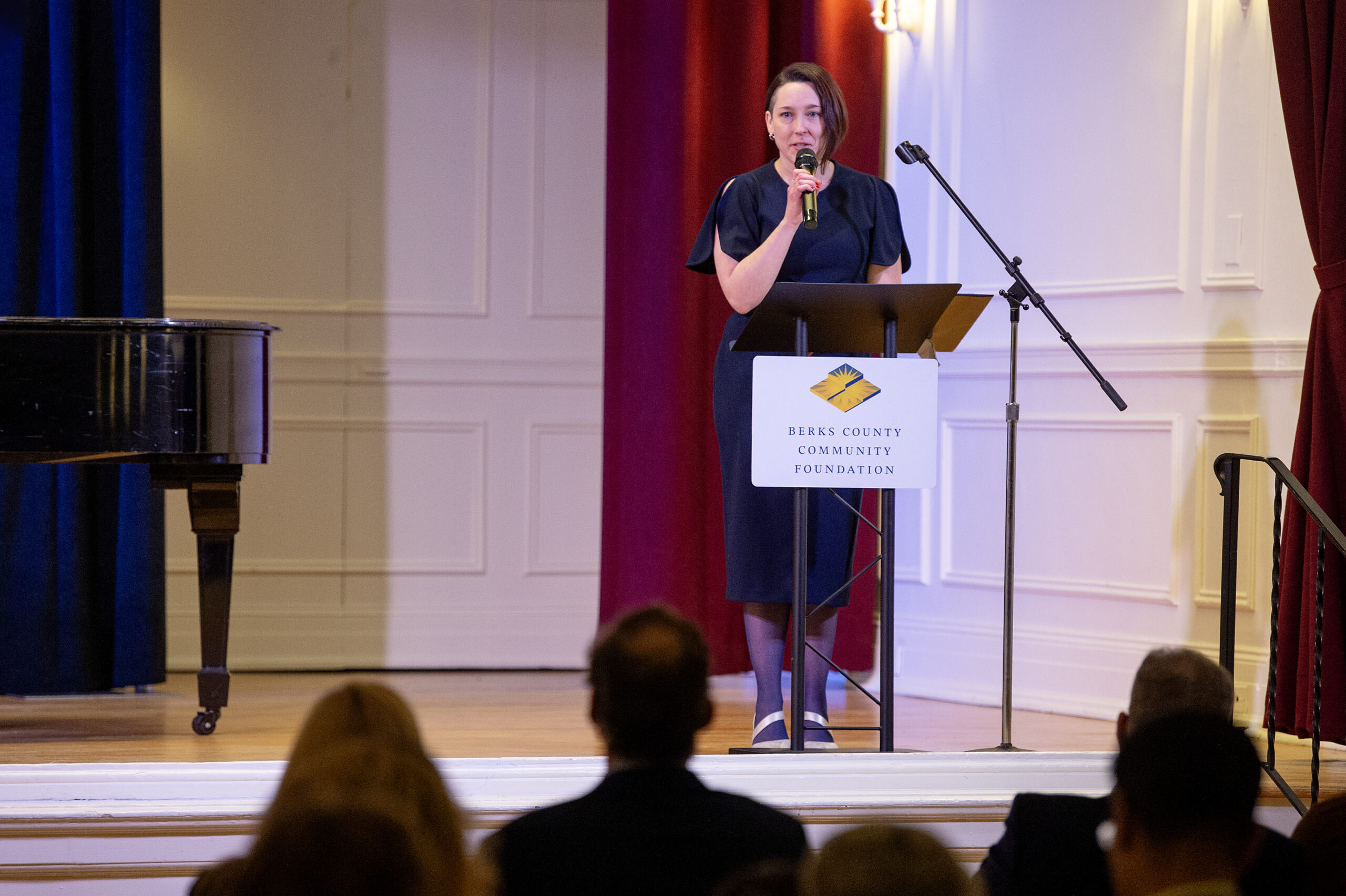
Monica Reyes, Vice President for Programs and Initiatives, welcomes attendees. Photo by Jeremy Drey
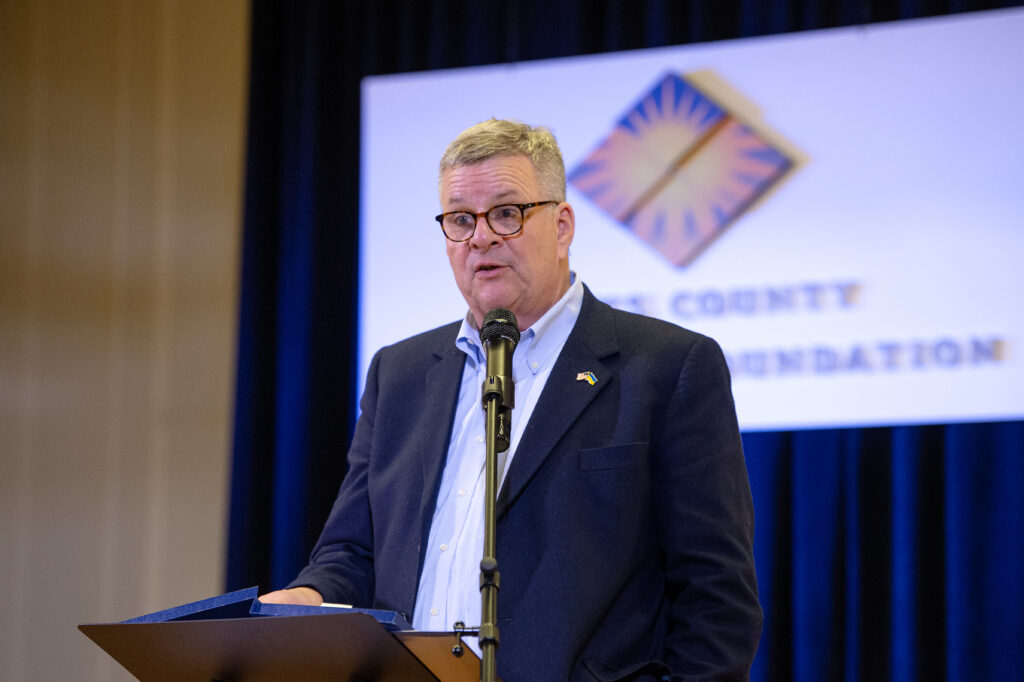
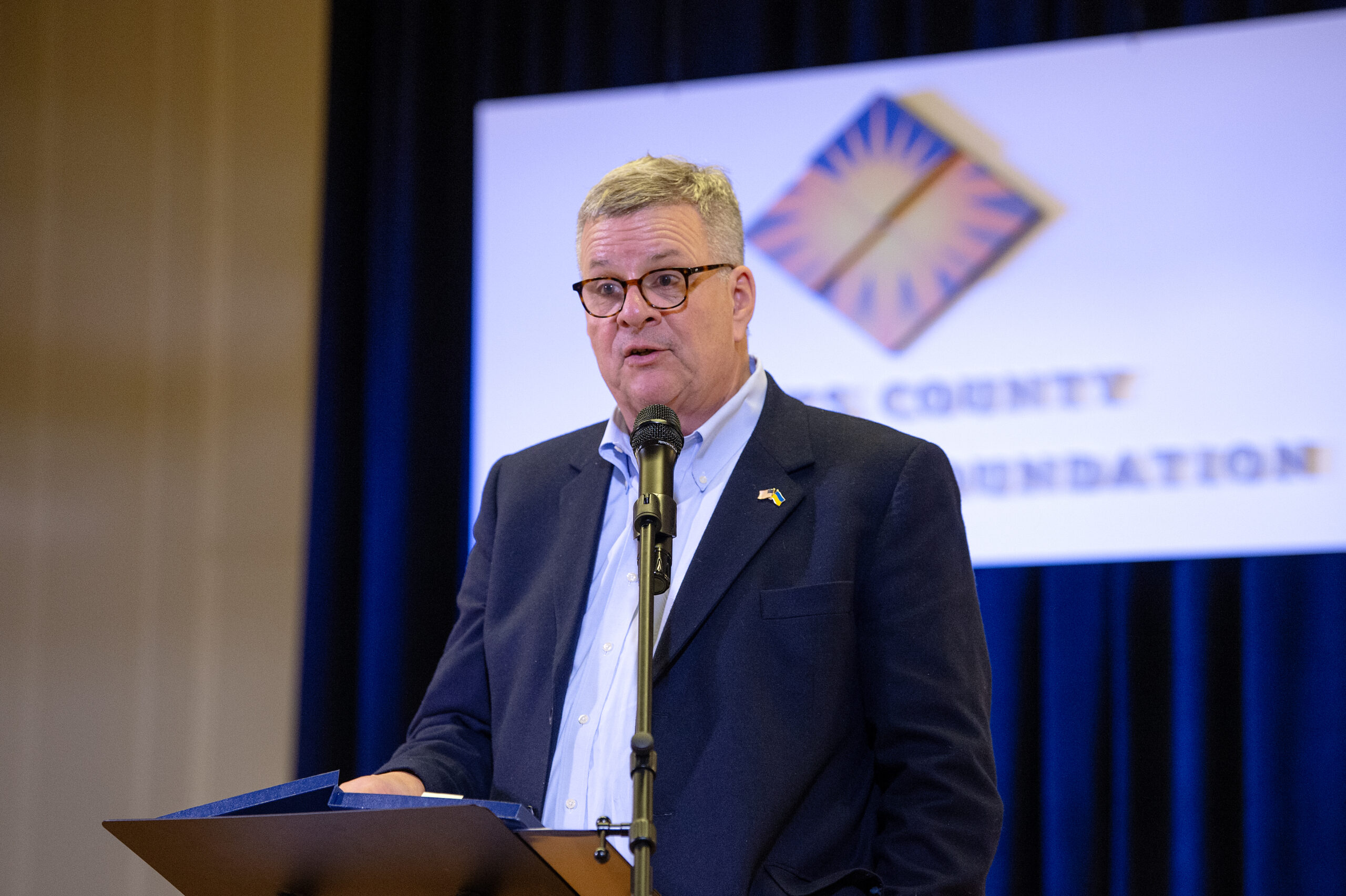
Foundation President Kevin Murphy gave opening remarks and shared a broad overview of the foundation’s work during the previous fiscal year.
“But the assets we manage only represent our potential for making progress,” said Kevin Murphy. “What we do with those assets is what really matters.” Building community partnerships and supporting our local nonprofits are what really matters, now more than ever.
Foundation President, Kevin Murphy, gives opening remarks. Photo by Jeremy Drey
Keynote speaker Kim Sheffer, Lifelong Learning Program Officer at the foundation, expanded on the topic of community engagement and collaboration. Over the past year, Kim convened with local businesses, higher education institutions, and nonprofits to develop a strategic plan for retaining more Berks County college and university graduates.
Kim brought Generation Impact, a program of VOiCEup Berks focused on engaging, connecting, and retaining 18–24-year-olds in Berks County, into the conversation. The foundation is proud to announce that we are supporting Generation Impact’s pilot program, which will hire campus ambassadors, manage annual signature events, and provide networking opportunities for students and employers.
“If our collective goal is to make it compelling for college students and young professionals to say “yes” to Berks,” said Kim Sheffer, “we must work together to make it a vibrant and livable place.”
Kim Sheffer, Lifelong Learning Program Officer, delivers the interactive keynote speech. Photos by Jeremy Drey.
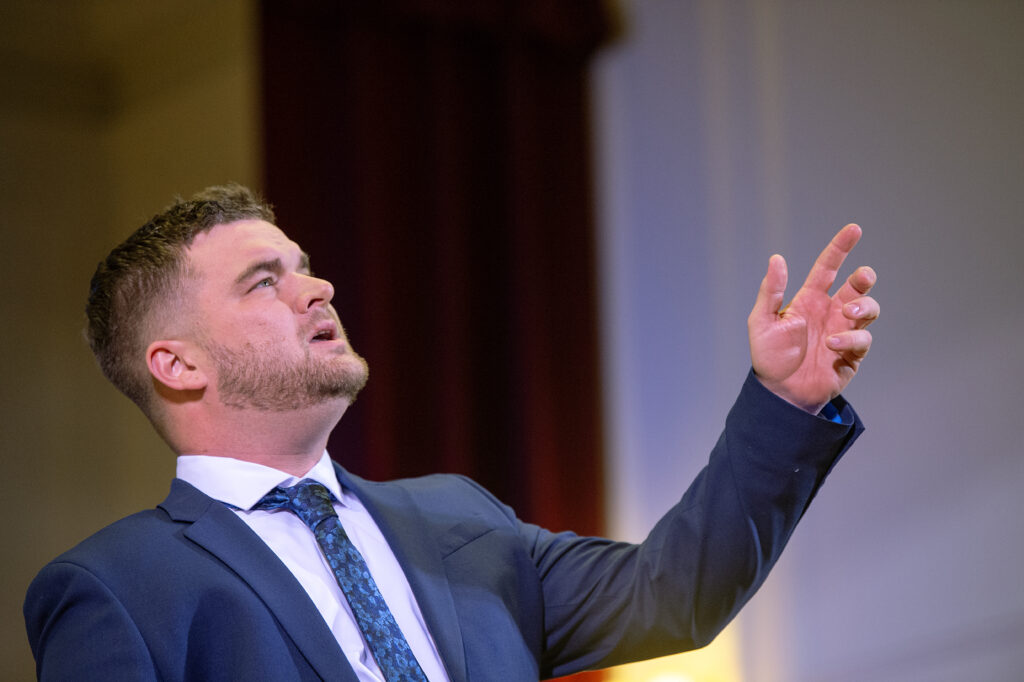
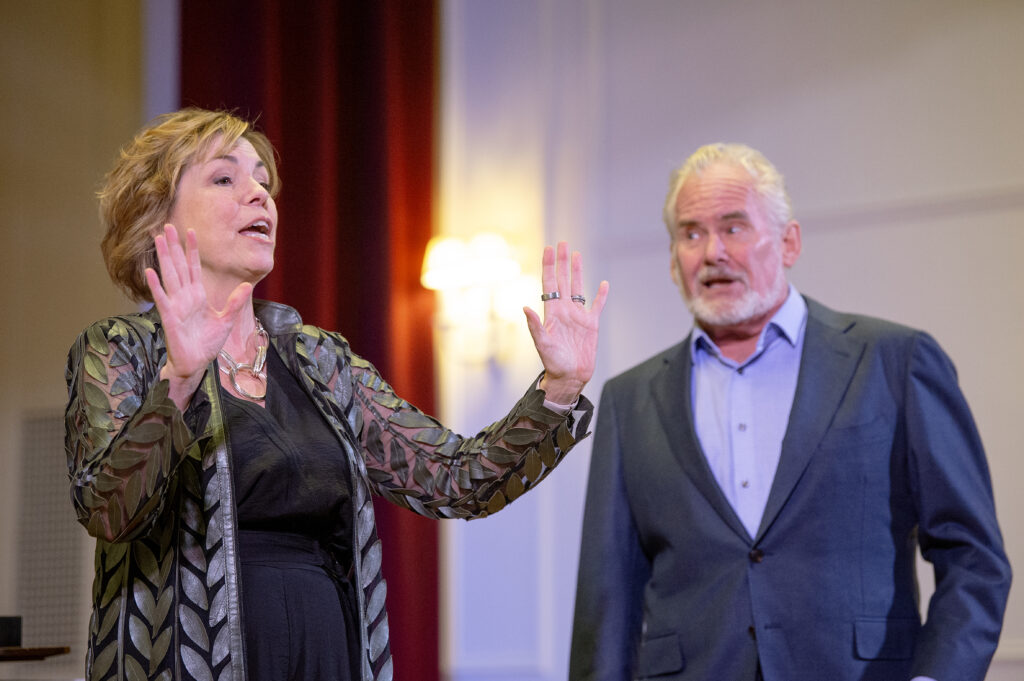
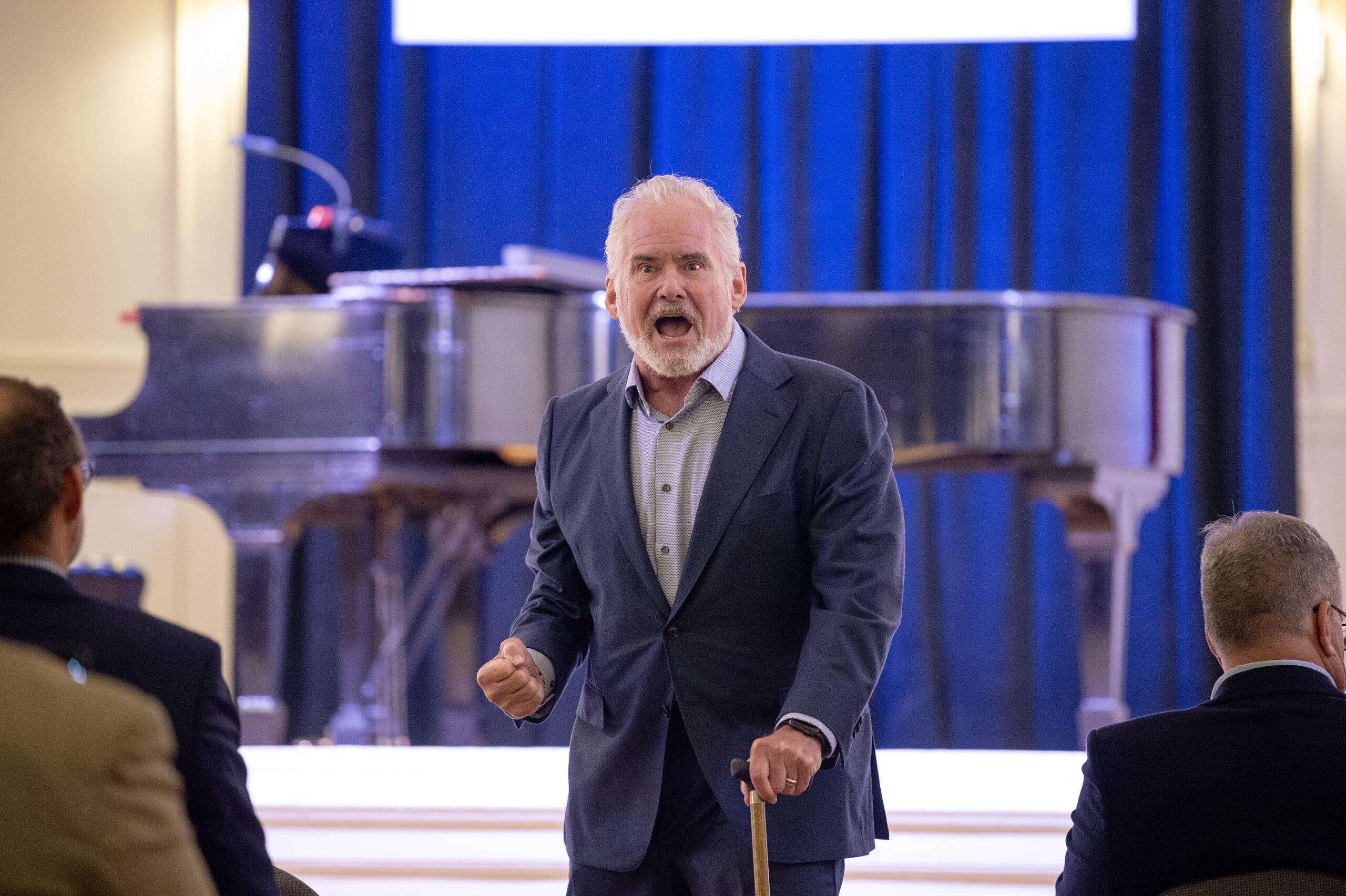
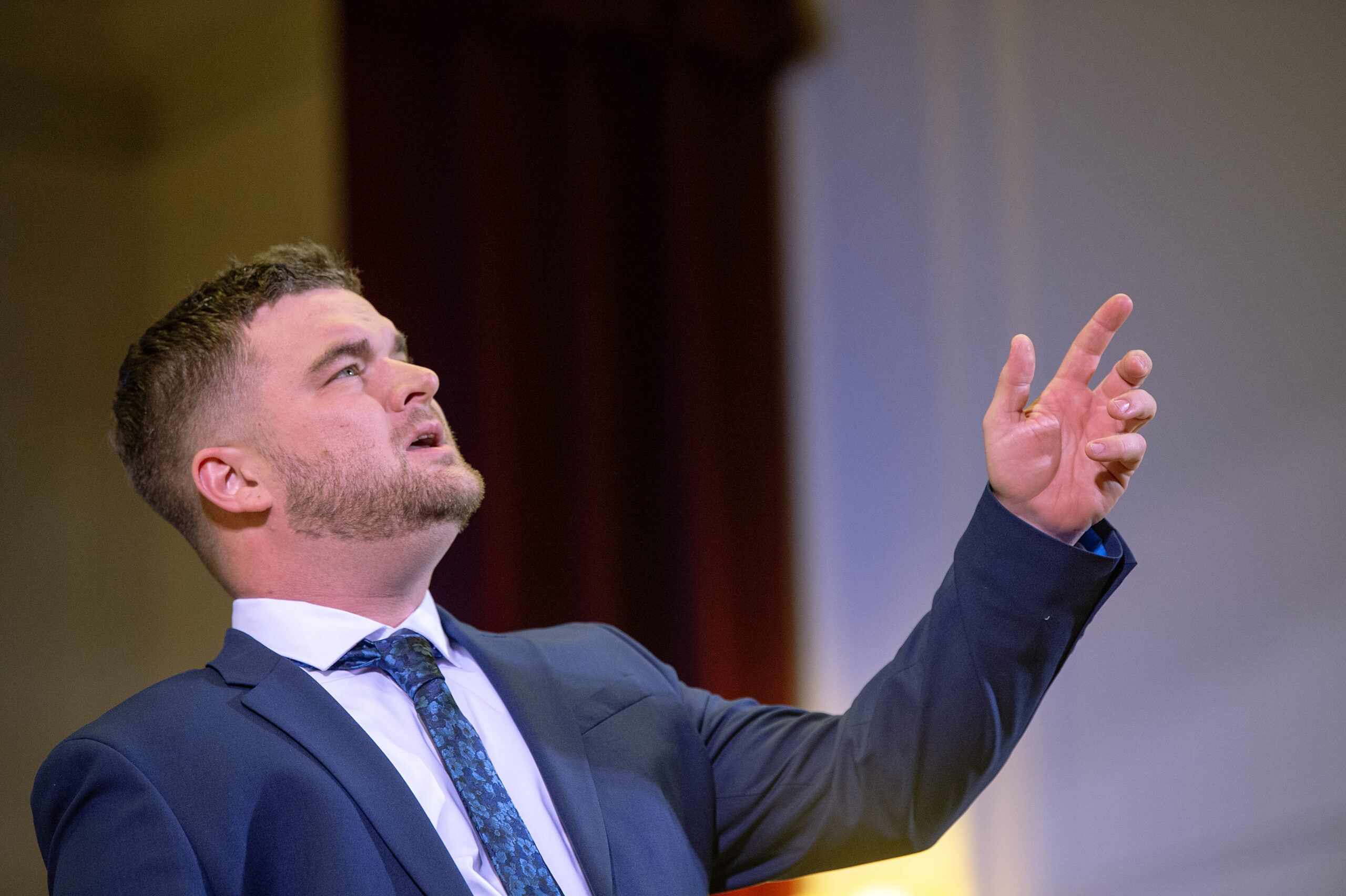
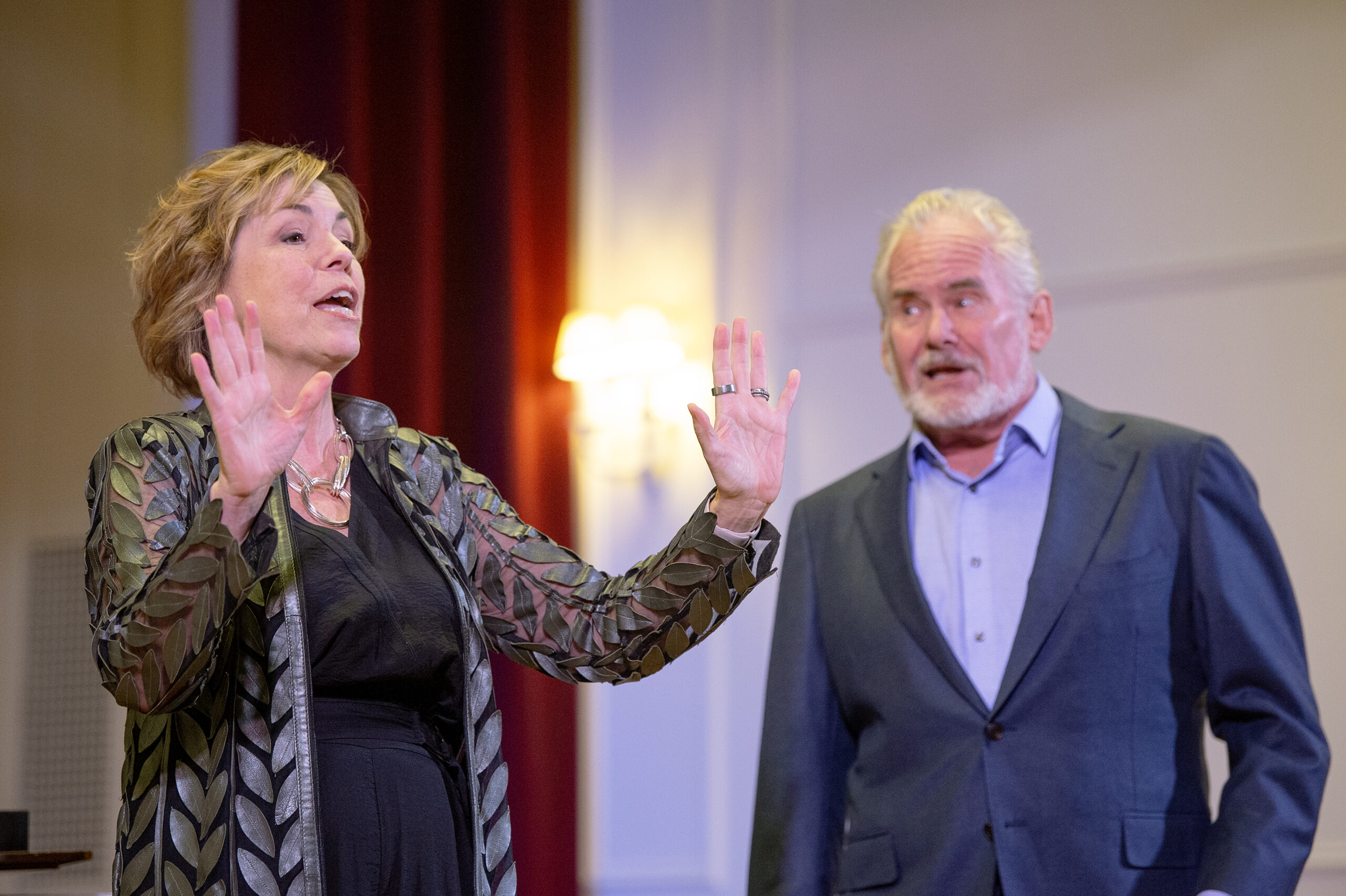
Contributing to our community vibrancy are Tim Shew and Jane Brockman, the guest performers for the annual meeting. Credited with decades of lead roles in Broadway productions, Tim and Jane are experts in their respective fields.
Broadway veterans Tim Shew and Jane Brockman perform a musical number. Photo by Jeremy Drey
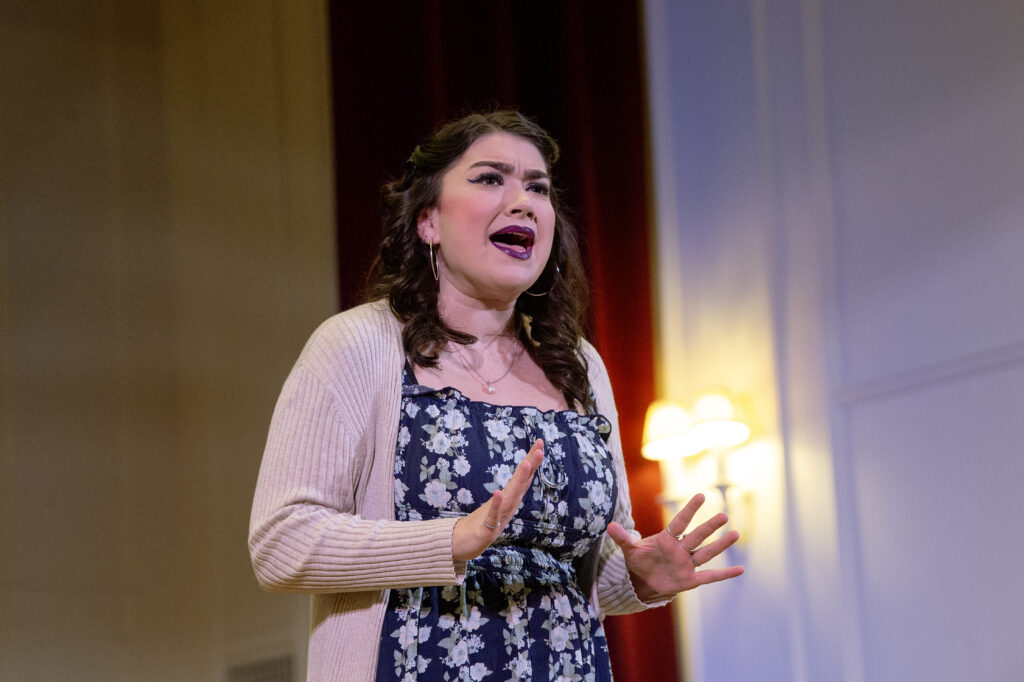
They are also the perfect people to host and direct local musical theater workshops—which they are currently doing at Alvernia University. In the spirit of collaboration, these workshops—and the community musical theatre production they will stage in the Spring of 2026—are open for any Berks County college/university student to attend. Independent community actors are also welcome to join.
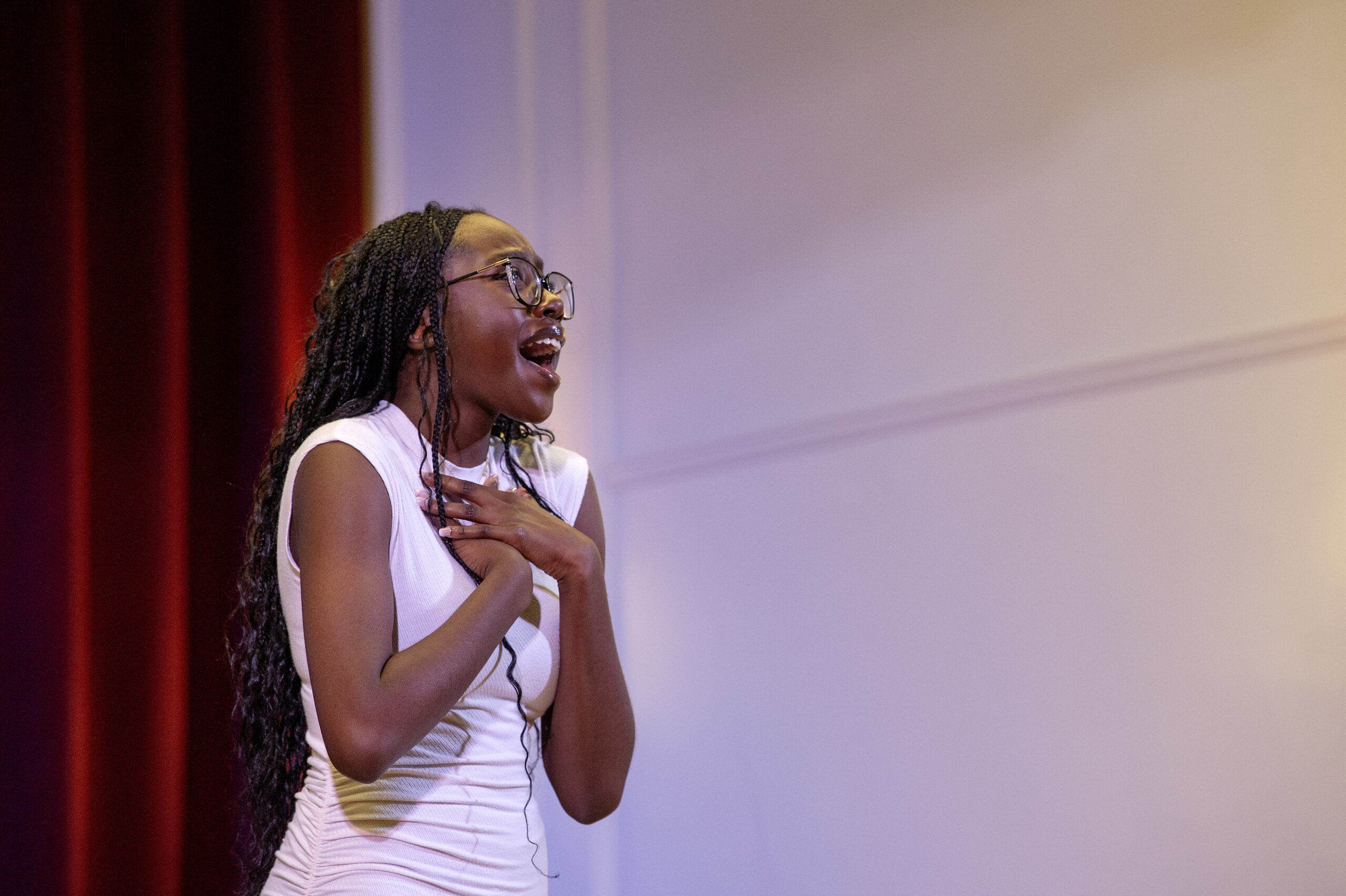
From right to left, the above photos feature: Musical theater workshop participant and producer of the upcoming community musical theater production performs “Beautiful City” from the musical Godspell; Musical theater workshop participant and current Alvernia University student performs “Diva’s Lament (Whatever Happened to My Part?)” from the musical Spamalot; Musical theater workshop participant performs “On the Steps of the Palace” from the musical Into the Woods. Photos by Jeremy Drey
READING, PA (October 1, 2025) – Berks County Community Foundation has elected three new members to its Board of Directors, effective July 1, 2025.
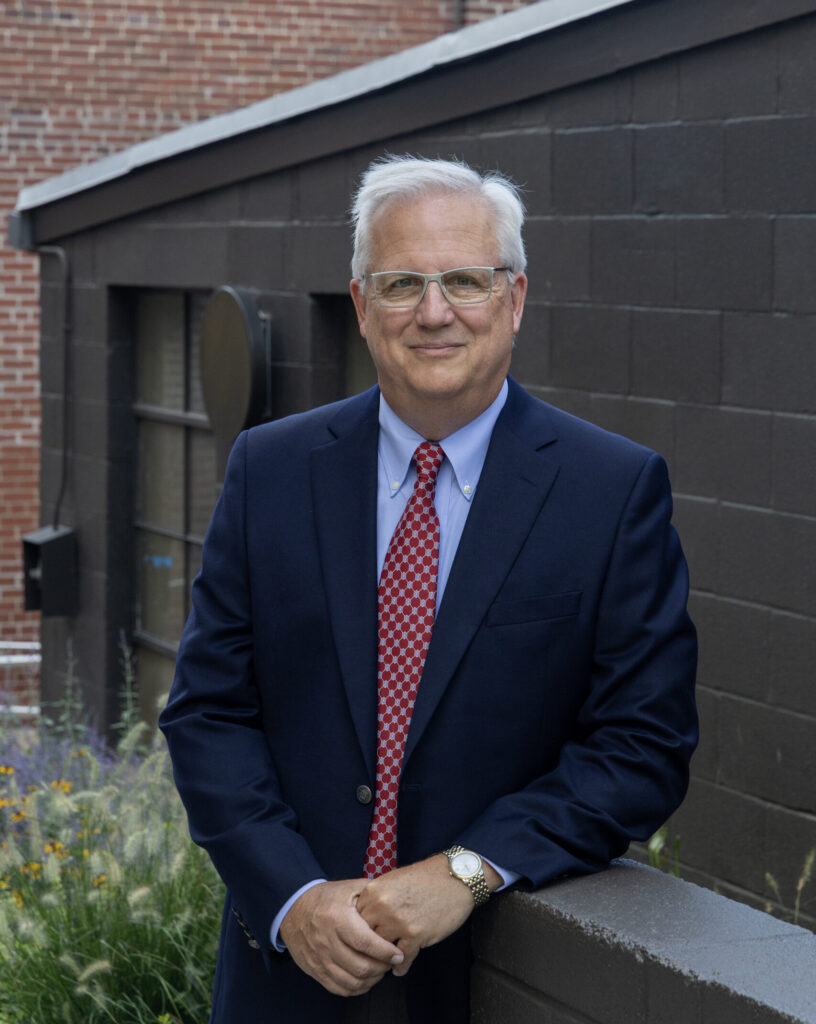
Steven Fritz began his career in Reading as a CPA with EY (then Ernst & Whinny,) and was employed by VF Corporation for 30 years in positions which included General Auditor, several division CFO/COO roles, President of Jantzen and finally, Preside of VF Outlet.
He has served on the board of Luthercare of Lititz, as well as the board of a medium-sized manufacturer located in Reading, PA. Previous NFP board roles included the Berks County Chamber, RiverPlace, and Berks Economic Partnership.
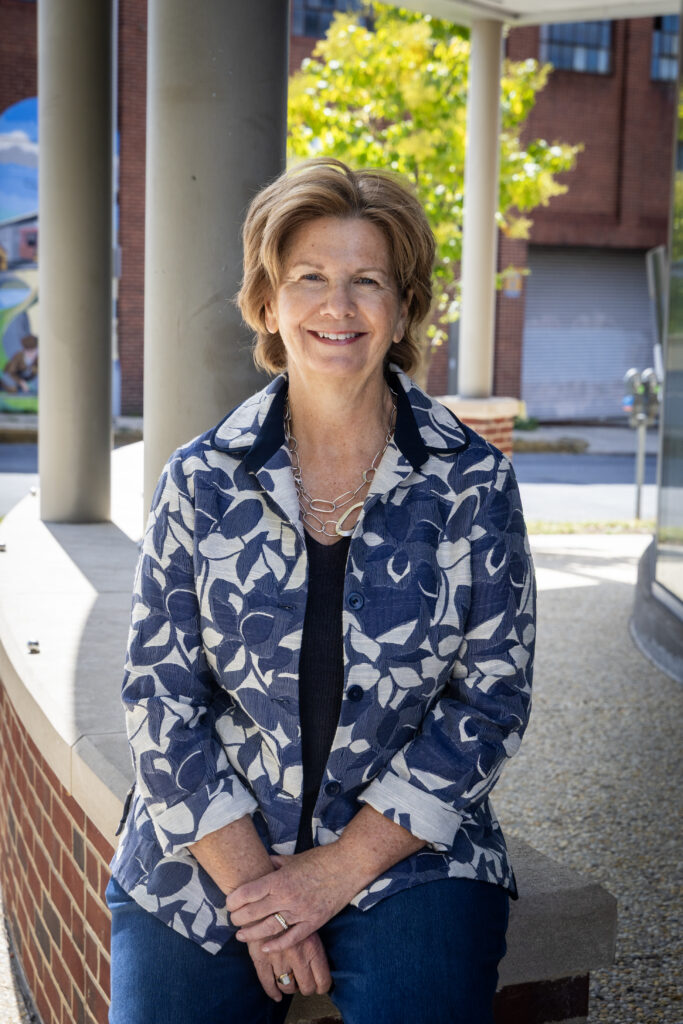
Julia H. Klein is a retired entrepreneur and the former Chairwoman of C.H. Briggs Company. She is an independent board director at Eastern States Group, the College of Wooster, and an advisor with the Delaware Valley Family Business Center.
Julia is a former director of the Philadelphia Federal Reserve Bank, former board chair of Berks County Community Foundation, and many other business and philanthropic boards.
Rabbi Brian I. Michelson is the rabbi of Reform Congregation Oheb Sholom in Reading, PA, where he has served since 1998. Previously, Brian spent six years as a rabbi at Temple Beth Israel in Melbourne, Australia. In 2017, he was awarded a Doctor of Divinity by the Hebrew Union College in honor of twenty-five years of service to the Jewish community.
Brian serves as a chaplain with the Reading Police Department and as the Jewish chaplain at the Reading Hospital. He is president of Easy Does It, Inc. and the past chair of the Home Health Care Foundation. He has served as a member of the board for Opportunity House and Berks Youth Chorus. He is one of the founders of “A Common Heart” Jewish, Catholic, and Muslim Dialogue. Brian was awarded the Franciscan Prize by Alvernia University in 2016.
Board members may serve three, three-year terms.
###
Berks County Community Foundation is a nonprofit corporation that serves as a civic leader for our region by developing, managing and distributing charitable funds aimed at improving the quality of life in Berks County.
The Community Foundation manages more than 380 charitable funds. Each year, those funds distribute scholarships and grants to support local students and assist a variety of nonprofit organizations and causes. More information is available at www.bccf.org.
The Met-Ed/Penelec SEF distributes funds to promote the development and use of renewable energy and clean energy technologies, energy conservation and efficiency, and projects that improve the environment in the Met-Ed and Penelec service territories. The Met-Ed/Penelec SEF is co-managed by the Berks County Community Foundation and the Community Foundation for the Alleghenies, respectively.
The funds are seeking nominations for the following positions:
Weatherization
Commercial Customer
At-Large
The Advisory Board consists of no fewer than seven and no more than nine positions. Board members can serve six two-year terms. The Advisory Board meets four times per year on a quarterly basis. Meetings are typically held via Zoom, with the possibility of in-person meetings within the Met-Ed and Penelec rate districts.
For consideration, candidates should meet the following criteria:
Be a resident of Pennsylvania that is affiliated with the Met-Ed or Penelec rate district.
Have interpersonal skills that foster a creative and positive work environment for Board meetings.
Have the ability to work with fellow board members and fund staff to evaluate incoming projects and programs for their mission-fit, participate in technical and financial due diligence discussions, and determine project impact.
Have demonstrated experience in working with Pennsylvania’s sustainable energy sector.
Interested candidates should submit a brief letter of interest and a resume to Emily Smedley (Berks County Community Foundation/Met-Ed) or Mark Keim (Community Foundation for the Alleghenies/Penelec.) Their contact information is below. The letter should provide details on how the candidate fulfills the nomination criteria and the skills they bring to the advisory board. The resume should provide contact information and the candidate’s educational and work experience.
Nominations should be submitted by Friday, November 7, 2025.
All candidates will be notified via email upon receipt of their letter of interest and resume. The advisory board will submit the successful nominee(s) to the Pennsylvania Public Utilities Commission for final approval.
Contact Information
In the Met-Ed rate district, please contact Emily Smedley:
Environment and Energy Program Officer, Berks County Community Foundation Fund Manager, Met-Ed Sustainable Energy Fund Emilys@bccf.org
In the Penelec rate district, please contact Mark Keim:
Program Officer, Community Foundation for the Alleghenies Fund Manager, Penelec Sustainable Energy Fund mkeim@cfalleghenies.org
This announcement is made in keeping with the best practices of the Pennsylvania Sustainable Energy Board (PASEB) and is being distributed on the websites of the Public Utility Commission and the Met-Ed / Penelec Sustainable Energy Fund, as well as relevant newsletters and other sources. This notice may be forwarded to interested parties.
Reading, PA (August 25, 2025) – Health and Human Services Program Officer of Berks County Community Foundation, Cindy Milian, gave the keynote speech at the Community Wellness Department of Reading Hospital Tower Health’s “Voices for Health” event. This event launched the Community Wellness Department’s week-long celebration of community health workers. Tanieka Mason, MPH, Director of Health Equity at Tower Health, asked Cindy to address the health needs of Berks County residents, impart her expert knowledge, and provide a testimonial to the vital services our community health workers provide.
Event attendees and speakers included Helping Harvest Fresh Food Bank’s President, Jay Worrall; Reading Hospital President and CEO, Dr. Charles F. Barbera, MD, MBA, MPH, FACEP; Secretary of Human Service of the PA Department of Health, Dr. Valeria Arkoosh, MD, MPH; Executive Deputy Secretary of the PA Department of Health, Kristen Rodack; Senator Judy Schwank; various local health service and pharmaceutical providers, and of course, a cohort of dedicated community health workers who serve Berks County.
According to the Tower Health website, “Reading Hospital’s Community Wellness Department works to identify and address key health issues in the community by leading a variety of programs and initiatives, collaborating with community partners, and investing in the overall health of our community.”
Cindy Milian’s keynote speech for the Community Wellness Department of Reading Hospital Tower Health’s “Voices for Health” event can be found below. Please note that certain photographs and last names of individuals have been omitted to maintain anonymity.
###
“Thank you to the Community Wellness Department of Reading Hospital Tower Health for having me as a speaker for this event.
It is an honor to address esteemed hospital leadership, the stewards and officials of our local community, and of course, the cohort of community health workers present today.
My name is Cindy Milian, and I am the Health and Human Services Program Officer at Berks County Community Foundation. After 25 years of working as an Early Intervention Specialist, Therapeutic Staff Support, Home Health Aide Supervisor, Caseworker, and Casework Supervisor in Pennsylvania, I decided to take a well-deserved break by joining the foundation and overseeing hundreds of grants for individuals, public health initiatives, and human services initiatives.
Before I talk to you about community health, patient advocacy, or social determinants of health, I want to talk about my grandson.
This is Alexander (image omitted). He loves Baby Shark, Reggaeton, and being carried on my husband’s shoulders. If anyone here has a one-year-old child in their lives, then you know that they assert themselves and their needs loudly and with conviction. Alexander is no exception to this—we always know when he’s hungry, or wants Papa, or isn’t feeling well. Being a grandmother to Alexander means witnessing community health initiatives in action; it means fielding a lot of requests for help and hugs; it requires the inspection of the tangible and intangible world around him, and evaluating how it will affect his mental, physical, and spiritual health.
But the real inspection I want to conduct today is on the health of Berks County. My current work with the Community Foundation places me in a position of power and privilege: the power—or burden—of saying no to grant applicants, and the privilege of witnessing the life-changing impacts our donors have on their fellow Berks residents.
With the foundation, I’ve met with Hamburg community leaders who are struggling to identify mental health clinics for their at-risk populations; in Reading, I’ve guided a monolingual, Spanish speaking resident through the process of applying for a grant that could save her child’s life; and all over Berks County,
I’ve talked with countless individuals who are one paycheck away from homelessness. They are our neighbors, our coworkers, our friends. They are the patients we see in our offices, clinics, at-home visits and hospital beds every day.
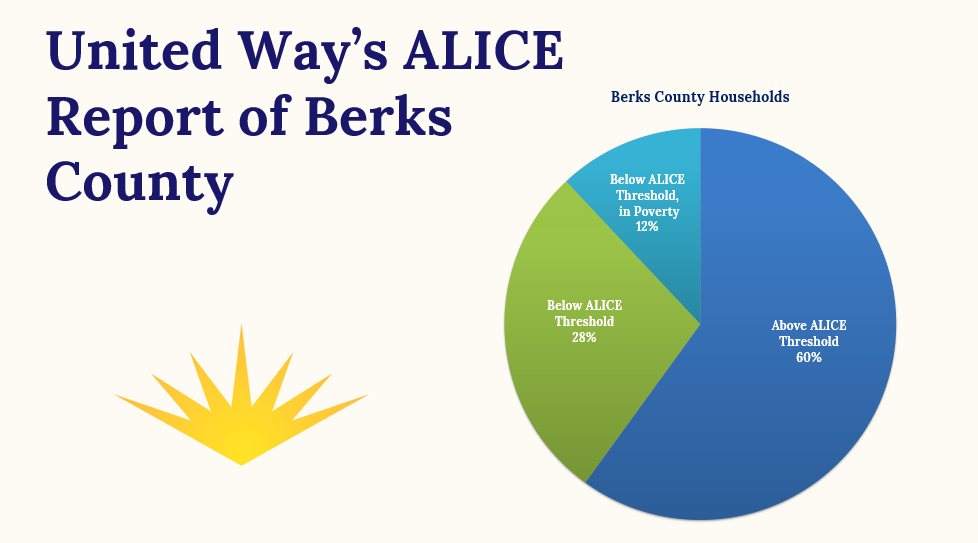
Before we can talk about community health, we must talk about the community. In 2023, the United Way’s ALICE Report, which stands for Asset Limited, Income Constrained, Employed, showed that over 40% of Berks County households earned less than the county’s basic cost of living. This means that more than 47,000 Berks County working households are one paycheck away from a severe financial crisis, and more than 18,000 households are living in poverty.
For those 18,000+ households, the cost of a survival budget is unattainable. Meaning 12% of Berks Countians cannot afford the following:
Housing
Childcare
Food
Transportation
Health care
Technology
Taxes and
Unanticipated, one-time costs within the other categories.
So, what budget item would you cut to make ends meet? Would you call out from work and miss a paycheck because you couldn’t afford the bus fare? Would you skip a mammogram appointment to pay your rent this month? These aren’t hyperbolic questions designed to scare you – these are questions that tens of thousands of our community members ask themselves every day.
Some people in Berks County might hear these numbers and think, “well, that’s just a City of Reading issue.” This belief is false.
The need to improve access to equitable care, particularly for marginalized populations
The need to provide behavioral/mental healthcare to both adults and youth
The need to focus on health education and health literacy, especially resources and information tied to wellness and disease prevention
The need to address health disparities and increase the focus on health equity
Based on the information provided in this report, I’d like to share with you a story that highlights the need for these improvements. Last names have been omitted to maintain anonymity.
Ms. Susan is a grandmother, just like me. She lives in Boyertown, and, like so many families in our county, has been tasked with the guardianship of her grandson, who was diagnosed with Joubert Syndrome at birth. This genetic disorder affects part of the brain that controls balance and coordination. The disorder requires extensive therapy and services to manage daily living. Missing these appointments can have severe impacts on health – so why would Susan skip them? Ms. Lauren, a community health worker assigned to Susan’s family, noticed a trend of skipped appointments and decided to check in with the family.
Lauren found that Susan’s husband is wheelchair bound and in need of constant care, just like their grandson. Between providing 24/7 care for both her husband and grandson, Susan struggled to manage the paperwork and scheduling necessary for her grandson to attend school and therapy. Lauren discovered that the family didn’t have readily available access to a computer, where most of this paperwork could be found. That’s when Lauren reached out to the foundation.
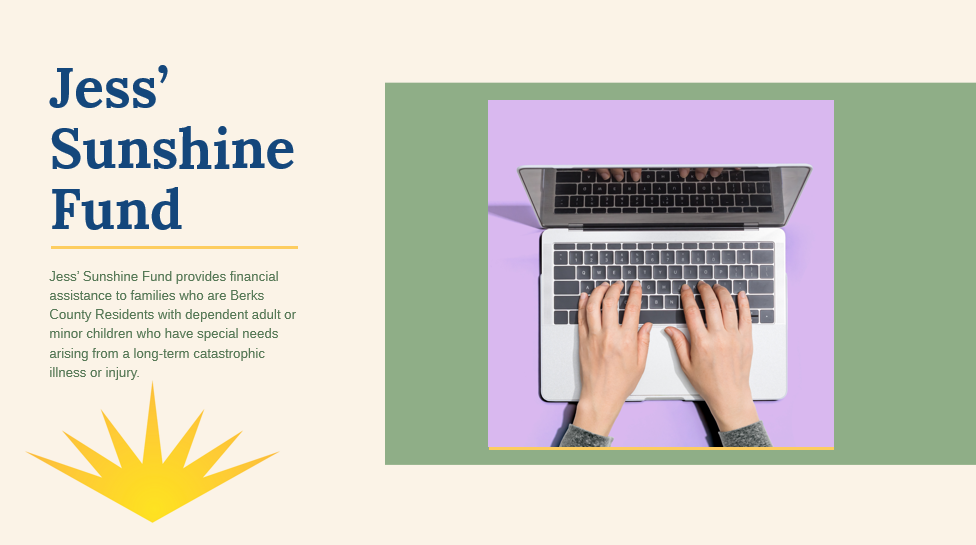
For less than $200, Jess’s Sunshine Fund provided a laptop for Susan to manage her grandson’s care. The no more missed appointments led to no more unnecessary declines in her grandson’s health. Susan’s grant is one of the smallest distributions made by Jess’s Sunshine Fund, but it was profoundly impactful.
This technological barrier reveals a much larger truth: when we have a dedicated community health worker committed to the recognition, investigation, and improvement of the conditions that people are born, raised, and grow in, we can work together to create a healthier future.
Stories like Susan’s are just one of hundreds that I’ve been a part of at Berks County Community Foundation. Our relationships with community health workers in the county allow us to allocate donor dollars to essential health initiatives.
I’d like to give you another example of how collaboration with a community health worker made a positive impact on a family.
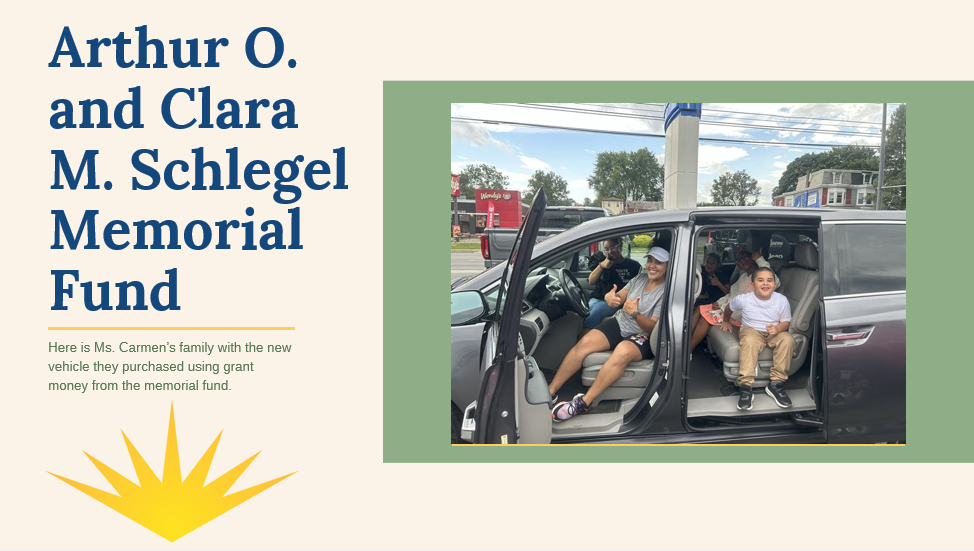
In 2024, a Berks County community health worker, Ms. Bobbi, noticed that Ms. Carmen, whose son has sickle cell anemia and Lowe syndrome, often rescheduled or missed her son’s necessary, recurring appointments in Philadelphia. After talking with Carmen, Bobbi discovered two things: first, Carmen’s car was in constant need of repair and wholly unreliable. Second, Carmen is a single mom, tasked with providing constant care for her son. As a young boy who is blind, non-verbal, and non-ambulatory, Carmen’s son has total dependence on his mother.
With Bobbi’s help and a written letter of recommendation, Carmen applied for our Arthur O. and Clara M. Schlegel Memorial Fund and was awarded the grant money needed to purchase a reliable vehicle. In Carmen’s case, and too often in Berks, non-medical factors impede our community’s health. We’ve all heard the cliché statement of, “I can’t afford to get sick right now.” Right now, it is our job to make a healthy life attainable and affordable for all.
Addressing the social determinants of health in Berks decreases health issues and lessens the burden on our community. Having a community health worker on your care team to identify both non-medical and medical needs is vital to ensuring positive health outcomes.
Berks County is a beautiful, diverse, and complicated region. We speak different languages, experience different life stressors, and hold vastly different beliefs. But our personal health is fundamentally interconnected with our community’s health. We need community health workers in our offices, clinics, hospital rooms, and mobile health services. Now more than ever, for ourselves and for future generations.
In closing, I want to leave you with one final thought. At Berks County Community Foundation, we have a quote on the wall of our boardroom from local philanthropist and industrialist Louis R. Thun; that reads,
“We remind ourselves constantly that we are heirs of an exceptional past, custodians of a challenging present, and architects of a limitless future.”
I believe that together, we can rise to the challenges presented to us today. I believe that we can build a more equitable, healthy, and vivacious Berks County. And to the community health workers of Berks County – thank you. Your work is invaluable and necessary. True change can start with a single spark, and we need yours.